
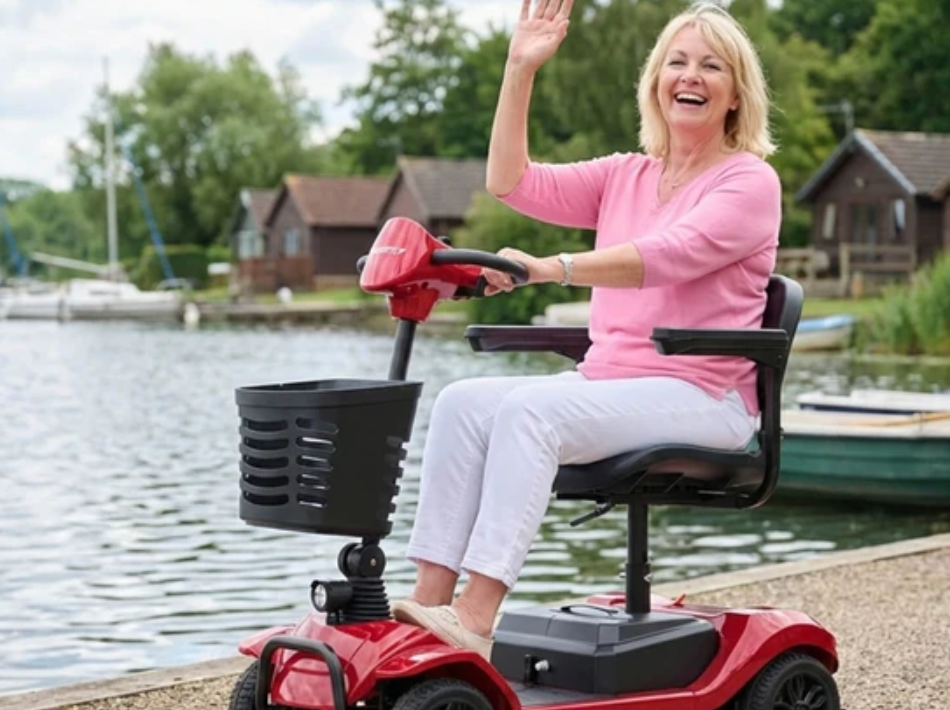
Choosing the right size motorized scooter for seniors isn’t about picking small, medium, or large off a shelf.
It comes down to matching the scooter’s dimensions to where you’ll actually use it. A scooter that works well indoors can struggle outdoors, while a larger outdoor model may feel bulky inside your home.
This guide breaks down the real-world measurements that matter most, so you can choose a scooter that fits your space, lifestyle, and mobility needs.
Quick rule of thumb: Indoor use depends on width and turning radius. Outdoor performance relies on wheel size and ground clearance. Travel convenience comes down to foldability and the heaviest piece weight.
What "Scooter Size" Really Means

When shopping for a motorized scooter for seniors, "size" encompasses more than physical dimensions. Four specific measurements determine whether a scooter will work in your daily life.
Overall width controls whether your scooter passes through doorways, hallways, and elevators. Standard residential doorways measure 30-36 inches, while bathroom doors often narrow to 28-30 inches. Your scooter needs at least 2 inches of clearance on each side, meaning a 24-26 inch scooter width works for most homes.
Turning radius determines how tight a circle the scooter can make, ranging from 32 inches on compact three-wheel models to 70+ inches on larger four-wheel scooters. The difference between a 40-inch and 60-inch turning radius can mean confidence versus frustration in confined spaces.
Wheel size and ground clearance affect how well your scooter handles real-world surfaces. Small 6-8 inch wheels struggle with sidewalk cracks, while 10-12 inch wheels roll over obstacles smoothly. Ground clearance typically ranges from 1.5 to 4 inches, preventing scraping on curb cuts and rough terrain.
Weight and the heaviest piece weight determine portability and storage practicality. Total weight ranges from 35 pounds for ultra-compact travel models to 200+ pounds for heavy-duty outdoor scooters. If you'll be loading the scooter into a vehicle, the heaviest piece of the scooter matters most.
Which Scooter Size Is Best for Your Use Case?
Mostly Indoor (apartments, hallways, elevators)
Seniors living in apartments or homes with narrow hallways need scooters that prioritize maneuverability.
The best indoor scooters measure 20-24 inches wide with turning radii under 45 inches. Three-wheel configurations typically turn tighter than four-wheel models, making them popular for indoor use.
Pay attention to low-speed control quality. Indoor navigation requires frequent speed adjustments as you approach walls, furniture, and corners. Measure your tightest turning points before shopping.
Mixed Use (home + grocery + neighborhood errands)
Most seniors need a scooter that handles both indoor spaces and outdoor trips. Mid-size scooters offer the best balance, typically measuring 22-26 inches wide with 8-10 inch wheels and turning radii between 45-55 inches.
Prioritize comfort features since you'll spend extended periods on the scooter. Padded seats, adjustable armrests, and front suspension make longer trips more pleasant.
Battery range becomes more relevant here; you'll want at least 8-12 miles per charge for daily errands.
Mostly Outdoor (uneven sidewalks, parks, longer rides)
Seniors who want to explore neighborhoods or travel longer distances need scooters built for outdoor performance.
Larger wheels (10-14 inches), higher ground clearance (3-4 inches), and wider wheelbases provide the stability outdoor environments demand.
These scooters typically measure 24-28 inches wide, weigh more (often 100-150 pounds), and feature four-wheel configurations.
Full suspension systems absorb bumps from cracked sidewalks and rough surfaces. Lighting and visibility features gain significance for outdoor travel.
Travel & Transport (frequent trunk loading, trips, hotels, malls)
Seniors who travel frequently need compact, lightweight models that fold or disassemble easily. The key measurement is folded dimensions or disassembled component sizes.
Many travel scooters fold to roughly 25 x 20 x 15 inches, small enough for most sedans.
Heaviest-piece weight determines whether you can manage loading independently. Models separating into pieces with the heaviest component weighing 30-40 pounds are manageable for most seniors.
Automatic folding mechanisms work with a button press, perfect if you have limited hand strength.
What Should You Measure First Before Buying a Scooter?

Doorways and Narrowest Points
Measure every doorway your scooter will pass through: front door, bedroom door, bathroom door, and storage areas.
Identify your home's narrowest passage, whether it's a hallway with furniture or a tight bathroom entry. Add a 2-inch clearance buffer to your measurements.
Turning Space Where You'll Use It Most
Map out where you'll need to make turns or U-turns. Common tight spots include your entryway, kitchen corners, and bathroom approaches.
Physically measure the space available for turning and consider furniture that reduces usable space.
Elevators, Ramps, and Thresholds
If you live in an apartment, measure the elevator door width and interior dimensions. Check threshold heights at entry doors.
Most scooters handle 1-2 inch thresholds without difficulty. Measure any ramps you'll use regularly.
Storage and Charging Setup
Decide where the scooter will live when not in use and whether it can charge there. Measure your storage space dimensions.
Does the space have adequate clearance for opening doors or removing batteries?
Car Trunk Fit (if you'll transport it)
Measure your trunk opening and interior space. Test whether you can physically lift the scooter or its heaviest component to trunk height.
Be honest about whether you can safely manage this repeatedly.
What's the Difference Between Travel, Mid-Size, and Heavy-Duty Scooters?
Compact / Travel Scooters
These scooters weigh 35-65 pounds, fold or disassemble for transport, and prioritize portability.
Wheel sizes typically measure 6-8 inches with turning radii around 32-42 inches.
They work perfectly for seniors who need mobility solutions while shopping or traveling.
Trade-offs include shorter battery range (6-10 miles) and less cushioned rides.
Mid-Size Scooters (Best All-Around Choice)
These scooters balance indoor maneuverability with outdoor capability, weighing 80-120 pounds with 8-10 inch wheels.
They provide better ride comfort than travel scooters while remaining manageable for most residential environments.
Battery range improves to 10-15 miles, and weight capacities reach 300 pounds.
Heavy-Duty / Outdoor Scooters
Built for outdoor performance, these scooters weigh 120-200+ pounds with 10-14 inch wheels, full suspension, and weight capacities from 300-500 pounds.
They handle slopes, rough terrain, and longer distances with confidence.
The primary trade-off is size, often measuring 26-28 inches wide with turning radii over 60 inches.
Which Comfort and Safety Factors Depend Most on Scooter Size?

Seat Fit and Easy Entry/Exit
Seat width ranges from 14 inches on compact scooters to 22+ inches on heavy-duty models.
Measure from hip to hip while seated to determine your minimum width needs. Seat height adjustment lets you position yourself for comfortable leg angles and easier entry/exit.
Swivel seats rotate to let you approach from the side rather than backing in.
Wheels, Tires, and Suspension
Larger wheels roll over obstacles more easily. An 8-inch wheel might stop at a 2-inch sidewalk crack, while a 12-inch wheel rolls over smoothly.
Air-filled tires absorb bumps beautifully but require pressure checks. Solid tires never go flat but transmit more vibration.
Suspension systems range from none on travel scooters to full front and rear on outdoor models.
Stability Basics
Wheelbase length affects tipping resistance. Longer wheelbases feel more stable on slopes but turn wider. Anti-tip wheels prevent backward tipping when climbing inclines.
Braking systems include electronic brakes that engage when you release the throttle and manual brakes for additional stopping power.
How Much Battery Range Do You Need, and How Does Size Affect It?
Battery range varies from 6 miles on compact travel scooters to 20+ miles on large outdoor models.
Bigger scooters accommodate larger batteries, which provide an extended range. Think about your typical daily travel and add a 30% buffer.
Real-world range differs from the advertised maximum. Expect to achieve 70-80% of the advertised range in typical use.
Temperature affects battery performance significantly. Cold weather can reduce range by 20-30%. Lithium-ion batteries are lighter, charge faster (4-6 hours), and last longer (3-5 years) than lead-acid batteries.
What Are the Most Common Mistakes Seniors Make When Choosing Scooter Size?
- Ignoring doorway width and turning radius tops the list. Seniors often focus on features while overlooking basic fit measurements. Always measure your space before shopping.
- Buying too large "just in case" occurs when seniors prioritize maximum stability but overlook daily maneuverability. Right-sizing for your actual usage prevents buyer's remorse.
- Buying too small for outdoor confidence occurs when seniors prioritize indoor use but then feel unstable on outdoor terrain. If you'll use the scooter outdoors regularly, invest in an appropriate wheel size and stability.
- Underestimating transport weight and caregiver lifting causes problems when seniors choose scooters that they can't physically manage. Be realistic about lifting capabilities when choosing between models.
Final Thoughts
The right size motorized scooter for seniors matches your physical environment, intended usage, and lifestyle needs. Start by measuring your space, then shop for scooters that fit those measurements while offering the performance you need.
Visit showrooms when possible to test different sizes in person. Measurements tell you whether a scooter will fit, but physical experience reveals how it actually feels to operate. Explore our complete selection of mobility scooters to compare sizes and specifications. If portability is your priority, browse our foldable mobility scooters designed for travel convenience.
FAQs
1. 3-wheel vs 4-wheel: which is safer/better for seniors?
Four-wheel scooters provide better stability, particularly on slopes and uneven terrain. They're the safer choice for outdoor use and for seniors concerned about tipping. Three-wheel scooters turn tighter and maneuver better in confined spaces, making them practical for indoor-focused use.
2. What wheel size is best for uneven sidewalks?
Ten to twelve-inch wheels handle uneven sidewalks most effectively, rolling over cracks and bumps that would stop smaller wheels. Eight-inch wheels work for moderately maintained surfaces, while six-inch wheels are best for smooth indoor floors.
3. Which type is usually more comfortable for longer rides?
Mid-size and heavy-duty outdoor scooters provide the most comfort for longer rides due to larger seats, better padding, suspension systems, and bigger wheels. Travel scooters sacrifice comfort for portability.
4. What size scooter is easiest to put in a car trunk?
Travel scooters weighing 35-50 pounds when folded or with the heaviest piece under 35 pounds are easiest for trunk transport. Check your trunk dimensions and test-lift comparable weights before purchasing.
5. What's more important: turning radius or overall width?
For indoor use, turning radius matters more since you'll constantly maneuver around furniture and corners. Overall width becomes critical only at your narrowest passage points. For outdoor-only use, stability and wheel size take priority.




Leave a comment
All comments are moderated before being published.
This site is protected by hCaptcha and the hCaptcha Privacy Policy and Terms of Service apply.