

Choosing a mobility scooter isn’t always easy, and we hear this question all the time: Should I get a 3-wheel or a 4-wheel scooter?
Both can make your daily life easier. You just need the one that matches where you ride and how you ride.
At Hoverfly, we’ve tested our scooters in grocery aisles, neighborhood sidewalks, park trails, and even tight apartment hallways (yes, those narrow corners are no joke).
Read with us. You'll know the differences between 3-wheel and 4-wheel scooters (including turning radius, stability, legroom, portability, battery options, and more). So, you can choose the ride for your everyday routine.

What’s the Main Difference Between 3- and 4-Wheel Mobility Scooters?
A 3-wheel scooter gives you tighter steering and more legroom up front. It is great if you spend most of your time indoors or weaving through narrow spaces.
A 4-wheel scooter spreads the weight across four contact points. It feels steadier, especially outdoors or on uneven paths.
In short terms, these are the factors that make them different:
-
Ease of Maneuvering: 3-wheel turns sharply in tight aisles; 4-wheel feels smoother on open routes.
-
Legroom: 3-wheel scoots offer more space in the front, helpful if you have knee or hip limitations.
-
Stability: 4-wheel models stay steady on bumps, grass, bricks, and slopes.
- Portability: 3-wheel scooters are usually lighter and fold into a smaller shape.Turning
- Radius: 3-wheel scooters win here—they can handle sharp corners with less effort.
-
Everyday Use:
3-wheel for indoors and crowded areas;
4-wheel for outdoors and longer rides.
-
Battery Options: 3-wheel models tend to prioritize light weight; 4-wheel models often support larger batteries.
- Weight Capacity: 4-wheel scooters typically handle heavier loads and offer more stability for taller riders.
Not clear enough? Check this table.
| Feature | 3-Wheel Scooter | 4-Wheel Scooter |
| Turning Radius |
Tighter, ideal for indoor spaces | Wider but smoother outdoors |
| Stability | Good on flat surfaces | Best for uneven or bumpy terrain |
| Legroom | More open front area | Standard front space |
| Portability | Lighter and folds smaller | Heavier and bulkier |
| Outdoor Performance | Light outdoor use | Excellent for parks, pavements, slopes |
| Weight Capacity | Moderate | Higher |
| Overall Feel | Agile and flexible | Stable and confident |
Should I Choose a 3-Wheel Mobility Scooter?
A 3-wheel scooter is best for its flexibility. The single wheel in the front gives it that sharp, bicycle-like turning feel.
If your daily routine includes elevators, narrow aisles, or tight apartment hallways, this scooter often fits your life better than anything else.

Advantages of 3-Wheel Scooters
1. More Legroom
The open front area gives you extra space to stretch your legs. If you’ve got stiff knees or limited hip mobility, that extra room can feel like a breath of fresh air.
One of our testers is 6'2". He joked that his knees didn’t feel like they were auditioning for a yoga pose.
2. Tighter Turning Radius
The biggest win for 3-wheel models is their ability to turn in tight spaces.
Grocery aisles, hospital corridors, small elevators. They slip through places a 4-wheel model would struggle with.
3. Lighter and More Compact
These scooters fold down smaller, weigh less, and are easier to lift into a trunk.
One customer told us she stores hers beside the shoe rack because it folds too narrow. Honestly, she’s not wrong.
4. Better Maneuverability
Your daily errands feel smoother with a 3-wheel scooter. You can weave around displays, glide through busy mall corners, and make sharp turns without adjusting your angle.
Disadvantages of 3-Wheel Scooters
What are the disadvantages of a 3-wheel mobility scooter?
1. Less Stability on Uneven Ground
There’s only one front wheel. The scooter can feel a little shaky on rough terrain, grass, or brick paths.
2. Lower Weight Capacity
Many 3-wheel models may support slightly less weight. They are better for short-to-medium-distance rides (just around your community).
Where 3-Wheel Scooters Perform Best?
If your everyday life revolves around indoor or semi-indoor spaces, a 3-wheel scooter fits right in. It performs its best in:
- Grocery stores and malls
- Hospital corridors
- Elevators and doorways
- Apartment halls
- Smooth sidewalks and park paths
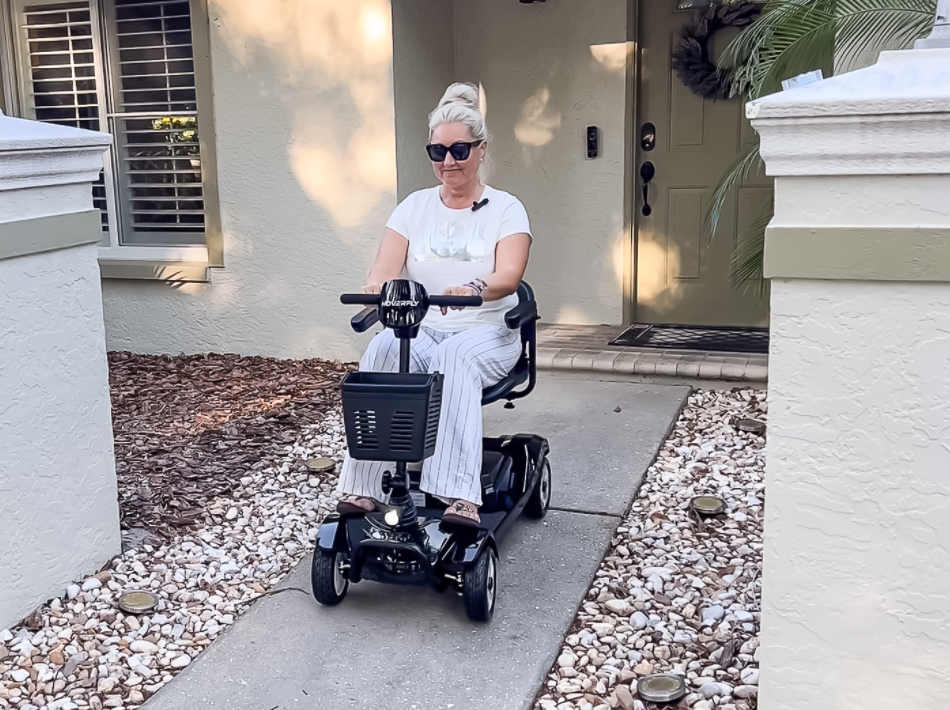
One example: We tested a Hoverfly 3-wheel scooter in a supermarket, and it handled those tight snack aisles like a champ. No awkward reversing. No bumping into cereal shelves.
What Safety Features Should You Look For?
Riding a 3-wheel mobility scooter, you should focus on the wheels, speed, braking system, tires, etc.
- Anti-Tip Wheels: Added stability when you turn quickly.
- Speed Limiter: Keeps your speed controlled in crowded areas.
- Electromagnetic Braking System: Smooth stopping power without sudden jerks.
- Good Tire Grip: Essential for polished floors, tiled surfaces, and smooth outdoor paths.
Should I Choose a 4 Wheel Scooter?
A 4-wheel scooter is built for riders who want a steady, confident ride (especially outdoors).
If a 3-wheel scooter is like zipping around on a nimble bike, a 4-wheel scooter feels more like a small, sturdy SUV.
It stays balanced on uneven paths, handles bumps better, and gives you that “solid underfoot” feeling the moment you start moving.

Pros of 4-Wheel Scooters
1. More Stability
The biggest advantage is stability. Four contact points keep the scooter planted on the ground, even when you’re riding over rougher spots.
One of our testers said it reminds him of “driving a golf cart: slow, steady, and hard to tip.”
2. Better for Rough Outdoor Terrain
Grass, gravel, brick walkways, uneven park trails... 4-wheel scooters handle these much better than 3-wheel models.
During our outdoor testing, the 4-wheel Hoverfly climbed small slopes without hesitation, while the 3-wheel needed a more careful approach.
If your neighborhood sidewalks have “character” (meaning: cracks everywhere), a 4-wheel model will feel like the safer choice.
3. Greater Mileage
4-wheel scooters often come with stronger motors and larger batteries.
For instance, Hoverfly T4 uses a 24V 12AH lead-acid battery for a longer range (while T3 uses a 25.6V 8AH Lithium Iron Phosphate battery).
If you want to go farther (like real outdoor explorations, weekend markets, or long park loops), a 4-wheel scooter usually keeps up without losing power halfway through.
Some riders even told us they prefer 4-wheel scooters because they don’t need to recharge as often (fewer reminders that you forgot to plug it in).
Cons of 4-Wheel Scooters
1. Less Agile in Tight Spaces
It has a wider front end, so you won’t get the same sharp turns as a 3-wheel scooter.
You’ll notice it in small elevators or older buildings with narrow doorways. It’s still perfectly usable—it just requires a bit more angle adjustment.
2. Heavier & Bulkier
With the extra wheel and sturdier frame, 4-wheel scooters weigh more.
They take up more room in the trunk, and folding them may require a bit more effort.
Where 4-Wheel Scooters Perform Best
4-wheel scooters shine outdoors and in open areas where stability matters most:
- Outdoor parks and gardens
- Neighborhood sidewalks
- Brick pathways and gravel trails
- Farmers’ markets and open plazas
- Long-distance routes or sloped paths
We once tested a 4-wheel scooter on a mixed path—grass, pavement, and then a patch of uneven bricks. It powered through without a wobble, like it was saying, “Is that all you got?”
What You May Also Get from 4-Wheel Models?
1. Suspension Systems
Small shocks help soften bumps. Think of it as the difference between rolling over a speed bump in a shopping cart versus a golf cart.
2. Higher Ground Clearance
This prevents scraping on uneven ground or sloped driveways.
3. Larger Wheels
Bigger tires grip better and roll smoother over cracks, grass, and pebbles.
4. Enhanced Anti-Tip Features
Hoverfly adds stability-focused designs so you can ride with confidence, even when turning on outdoor paths.
5. Headlights for Night Use
Stronger headlights help you see (and be seen) when the sun goes down.
Trust us. Good headlights at night feel like upgrading from candlelight to a flashlight.
Summary: Your Best Ride Depends on Your Lifestyle
| Your Needs | Recommended Scooter |
|---|---|
| Want something lightweight and convenient for daily use | 3-wheel or 4-wheel mobility scooter |
| Frequently indoors (e.g., malls, elevators, tight spaces) | 3-wheel mobility scooter |
| Prefer a more stable ride for longer trips | 4-wheel mobility scooter |
| Mostly riding in parks or on community roads | 4-wheel is more comfortable, but 3-wheel works well for light outdoor use |
Choosing between a 3-wheel and 4-wheel scooter really comes down to how you live your day-to-day life.
If you spend most of your time indoors, weaving through aisles, elevators, and apartment halls, a 3-wheel scooter gives you the agility and legroom to move freely.
If you ride outdoors more often, a 4-wheel scooter handles bumps, grass, and longer routes with ease.
The best scooter isn’t the most expensive one. It helps you move comfortably, safely, and independently.
If you’re not sure which model fits your routine, we’re here to help. Reach out to the Hoverfly team, and we’ll match you with the scooter that fits your lifestyle, your daily mileage, and your comfort needs. No guesswork, no pressure.
Your next ride should feel easy. Let’s find the right one together.
FAQ
1. Why would someone choose a 3-wheel scooter over a 4-wheel scooter?
Most people choose a 3-wheel scooter because it’s lighter, more compact, and fits through narrow spaces without a struggle.
If you often ride in malls, apartments, doctors’ offices, or stores, a 3-wheel model usually feels more natural and less bulky.
2. Are 3-wheel mobility scooters safe?
3-wheel scooters are safe when used on flat indoor or outdoor surfaces.
Just avoid rough terrain, steep slopes, or broken sidewalks, since one front wheel doesn’t absorb bumps as evenly.
3. Do 4-wheel scooters work well indoors?
Yes, but it won’t turn as tightly as a 3-wheel version.
You’ll be fine in wide hallways, shopping centers, and open areas.
Small elevators or older buildings with narrow doorways might require a little extra maneuvering.
4. Which scooter fits in a car trunk more easily?
A 3-wheel scooter is usually lighter and folds into a smaller shape, so it’s easier for solo loading.
4-wheel scooters can still fit, but they require more space and strength to lift.
5. Are foldable scooters durable enough for daily use?
Yes. Folding designs are for everyday riding. Just make sure the hinge, locking mechanism, and battery compartment stay clean and well-secured.
(We’ve seen riders fold and unfold theirs every day for years without issues.)



Leave a comment
All comments are moderated before being published.
This site is protected by hCaptcha and the hCaptcha Privacy Policy and Terms of Service apply.