
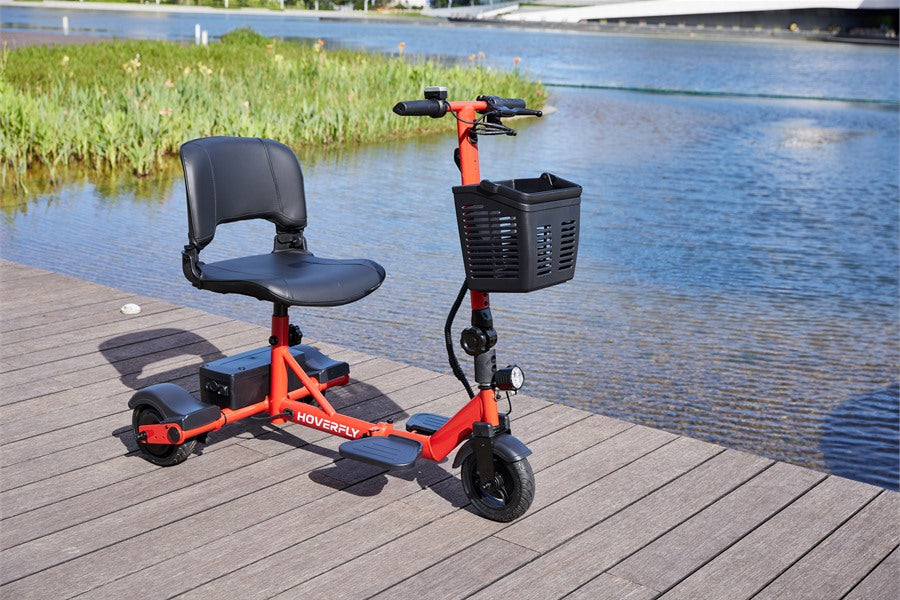
Choosing the right mobility aids for seniors is not about buying the biggest device or the most expensive one. It is about matching the aid to the person's strength, balance, home layout, travel needs, and daily routine. At Hoverfly, we work in this space every day, and one pattern we often see is that seniors use different aids for different parts of life. For example, a walker may handle indoor movement, while a scooter may make outdoor errands, neighborhood rides, or longer family outings much easier.
For seniors with disabilities, arthritis, limited endurance, post-surgery weakness, balance concerns, or chronic pain, the right aid can reduce strain and support safer movement. It can also make ordinary routines easier, including walking to the mailbox, getting through a grocery store, visiting family, moving around a park, or staying active in the neighborhood. Below are six useful options to consider, plus practical guidance on when each one makes sense.
Quick Senior Mobility Aid Selection Guide
| Senior's Main Need | Best Aid to Consider | Best For / Next Step | Watch Out For |
|---|---|---|---|
| Light balance support for short walks | Cane | Indoor rooms, porches, and short familiar routes | Not enough if the person grabs furniture or walls for support |
| More stability while walking indoors | Walker or rollator | Home movement, recovery, and short trips with rest breaks | Still requires strength, balance, and hand control |
| Bathroom and home fall-risk reduction | Grab bars, handrails, shower chair | Bathrooms, stairs, entryways, and key transfer points | Must be installed in the right transfer points |
| Difficulty standing from chairs, beds, or cars | Transfer aids | Bed-to-standing, chair-to-standing, toilet, and car transfers | Choose based on the hardest daily movement |
| Assisted outings and long appointments | Wheelchair or transport chair | Medical visits, airports, large venues, and caregiver-supported outings | May require caregiver pushing or lifting |
| Outdoor independence, errands, and longer distances | Mobility scooter for seniors | Outdoor errands, neighborhood rides, parks, and longer daily distances | User must be able to sit upright, steer, transfer, and charge safely |
1. Canes for Light Walking Support
A cane can be useful when a senior still walks fairly well but wants extra confidence during short, familiar movements, such as crossing a room, stepping onto a porch, or walking from the car to the front door. It can help with mild balance concerns, sore knees, hip discomfort, or one-sided weakness. A good cane is simple, light, and easy to use in small rooms, on porches, or during short walks.
In our experience, a cane is best when the senior only needs a little support. If a person is leaning heavily, shuffling, freezing before steps, or reaching for furniture, a cane may not offer enough stability. That is usually the point where families should look at a walker, rollator, or a more supportive mobility aid.
2. Walkers and Rollators for Better Stability
Walkers and rollators give seniors a wider support base than a cane. A standard walker is steady and controlled, which can be helpful during recovery or inside the home. A rollator adds wheels, brakes, and usually a seat, making it a strong option for seniors who can walk but need frequent rest breaks.
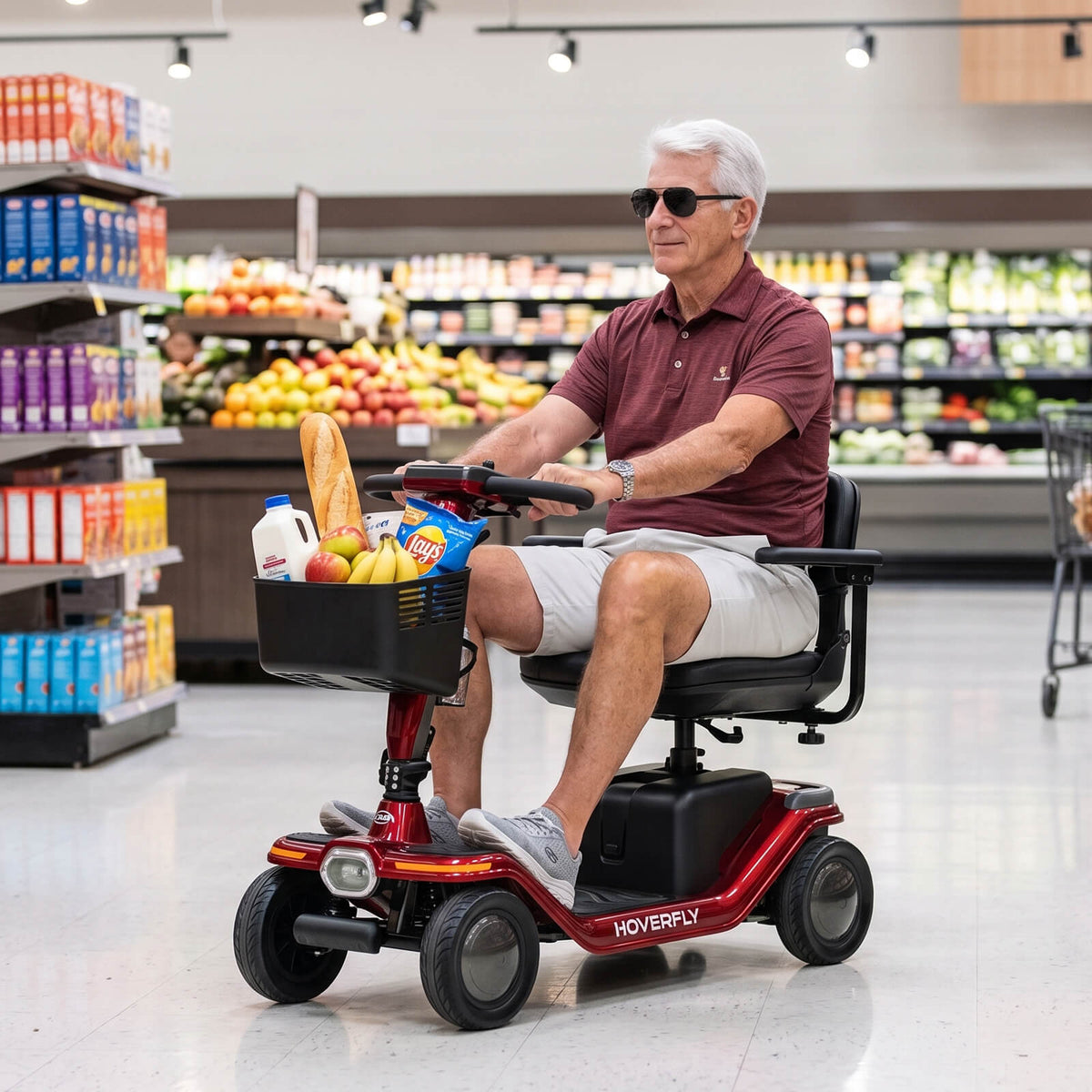
Families often ask us whether a rollator is enough for grocery trips. A rollator may be suitable for seniors who can walk around the store, use the brakes safely, and take a seat when tired. But if the problem is distance, pain, or fatigue before the shopping is done, a mobility scooter may provide a much better daily experience.
3. Bathroom Safety Aids for Seniors
Bathroom safety aids for seniors include grab bars, shower chairs, raised toilet seats, non-slip mats, and secure handrails. These are not glamorous products, but they are some of the most important mobility aids in the home.
The CDC recommends practical fall-prevention steps such as removing tripping hazards, adding grab bars near tubs, showers, and toilets, installing railings on stairs, and improving lighting. You can read the CDC guidance here: CDC fall prevention recommendations.
We suggest looking at the full bathroom routine: entering, turning, sitting, standing, bathing, drying, and reaching for towels. A senior does not need support only while showering. They often need support during the small movements before and after the shower too.
4. Transfer Aids for Beds, Chairs, and Cars
Transfer aids help seniors move from one position to another. Common options include bed rails, lift chairs, swivel cushions, transfer boards, gait belts, and portable car handles. These aids can make a major difference for seniors who can walk once upright but struggle to stand up safely.
This is a common pain point for families. A senior may still have enough independence to move around the house, but getting out of a deep chair or into a car becomes stressful. When that one movement becomes the hardest part of the day, the right transfer aid can matter more than buying a larger walking device. The best transfer aid should match the hardest movement of the day, not just the easiest product to buy.
If a senior has recently fallen, had surgery, experienced a stroke, or has a neurological, vision, or cognitive change, it is wise to ask a doctor, physical therapist, or occupational therapist before choosing new mobility equipment.
5. Wheelchairs and Transport Chairs for Assisted Mobility
Wheelchairs and transport chairs are helpful when walking is painful, unsafe, or too tiring for longer distances. A manual wheelchair may work when the senior has enough upper-body strength or a caregiver nearby. A transport chair is usually lighter, but it depends on another person to push.
These aids are excellent for medical appointments, airports, large events, and long indoor routes. The main limitation is independence. If the senior wants to move around the neighborhood, visit a local store, or enjoy outdoor time without always waiting for someone to push, an electric mobility aid for adults may be a better fit.
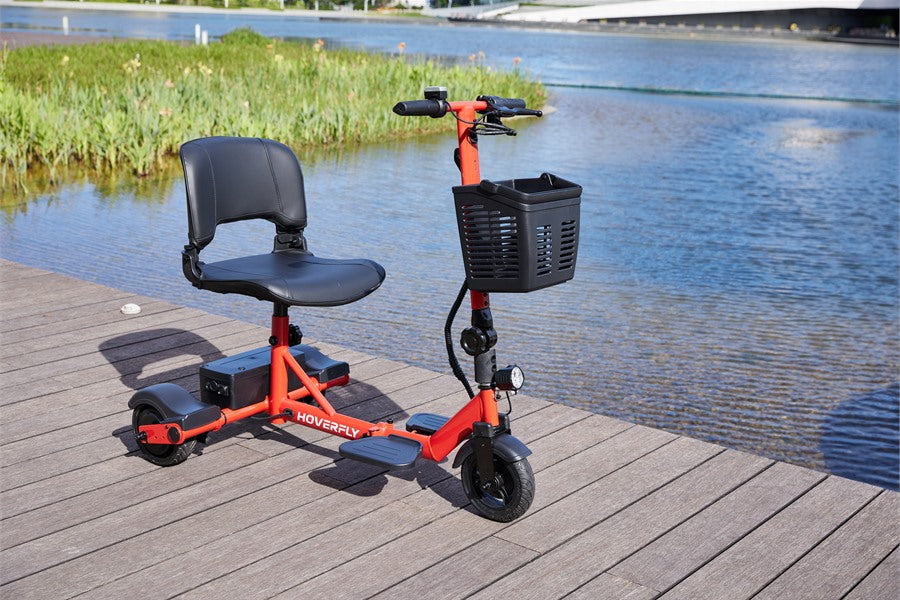
6. Mobility Scooters for Seniors Who Want More Independence
A mobility scooter for seniors can make daily outdoor movement much easier when walking distance becomes the main barrier. Some seniors can move around the house safely but start avoiding errands because the walk from the parking lot, through the store, and back again feels like too much. In that situation, a scooter can help preserve energy, reduce strain, and make outdoor routines feel more manageable.
Not every senior is ready for a scooter. The user should be able to sit upright, transfer on and off the seat, understand the controls, steer safely, and follow charging instructions. When those conditions are met, a stable, comfortable scooter can be an excellent mobility aid for seniors with balance problems, arthritis, limited endurance, or post-surgery weakness.
At Hoverfly, we build scooters for these everyday realities. Many customers come to us after realizing that a cane or rollator helps inside the home but does not solve longer trips. That is where our scooters shine: they give seniors a smoother, steadier, more enjoyable way to handle daily movement.
Our Recommended Everyday Choice: Hoverfly T4
For many seniors, the Hoverfly T4 Electric 4-Wheel Mobility Scooter is a comfortable everyday scooter for neighborhood rides, senior communities, parks, and large indoor spaces. It works especially well for older riders who get tired from walking, have weak legs, or feel stiff in the knees and hips.
The T4 has an extra-wide 360° swivel seat with supportive armrests. The wider seat gives more room and better support, so the body does not feel squeezed into a narrow sitting area. For seniors who need to sit longer, this can make the ride feel easier and less tiring.
The swivel seat also helps with getting on and off. Instead of twisting the knees or hips into an awkward position, the rider can turn the seat, sit down more comfortably, and use the armrests for support. With its steady 4-wheel design, controlled 3.7 mph speed, 330 lb max load, and up to 12.4 miles per charge, the T4 is a dependable choice for seniors who want comfort, stability, and more freedom in daily life.
Our Premium Comfort Pick: Hoverfly T5
For seniors who want a smoother and more comfortable ride, the Hoverfly T5 Mobility Scooter is our premium recommendation. It is especially suitable for older riders who feel tired easily on longer rides or feel discomfort when a scooter shakes too much on uneven ground.
One of the T5's strongest comfort features is its double shock absorption. Rough sidewalks, small bumps, and outdoor paths can be hard on seniors with back discomfort, sore hips, or general body stiffness. The T5 helps soften that impact, so the ride feels steadier, smoother, and less tiring.
Another important advantage is its 350W brushless motor. Seniors do not need a scooter that feels aggressive, but they do need one that feels steady and capable. The T5 delivers that kind of confident power, paired with an e-brake, removable LFP battery, 5 mph listed speed, up to 16.78 miles of range, and 330 lb weight capacity. It is a refined choice for seniors who want everyday mobility to feel easier, calmer, and more comfortable.
Comfort also depends on how naturally the rider can sit. The T4 emphasizes seat comfort with its extra-wide swivel seat, supportive armrests, and adjustable armrest width. The T5 gives more explicit legroom support, with spacious legroom listed for riders from 5'1" to 6'2". For taller riders or anyone who feels cramped in the front foot area, that T5 detail is worth checking before choosing.
How to Match the Mobility Aid to the Senior's Real Routine
The best mobility aid is the one that fits the senior's real life. A person who mostly needs support in the bathroom may not need a scooter yet. A person who avoids outdoor errands because walking is exhausting may benefit greatly from one. A person who travels often should think carefully about folded size, heaviest part weight, and vehicle loading. For reference, the T4 folds to 41.1 X 20 X 16.7 in and has a 60 lb heaviest part, while the T5 folds to 45.6 X 22 X 18.1 in and has a 76 lb heaviest part. Measure the trunk opening, cargo depth, and lifting height before deciding, then compare those numbers with our transport guide.
Before choosing, ask these practical questions:
- Is the main problem balance, pain, fatigue, transfers, or walking distance?
- Will the aid be used indoors, outdoors, or both?
- Are hallways, doors, elevators, and bathrooms wide enough?
- Can the senior control brakes, steering, throttle, and charging safely?
- Does the scooter need to fit in a car, SUV, RV, or small storage space?
- Will one person need to lift or load it?
If transport is part of your plan, our Mobility Scooter Transport Guide explains how to measure vehicle openings, compare heaviest-part weight, and load a scooter more safely. If you want to improve comfort or keep replacement parts ready, you can also explore our mobility scooter accessories.
Final Thoughts
Mobility aids for seniors should make daily life easier, safer, and more enjoyable. Canes, walkers, bathroom safety aids, transfer aids, and wheelchairs all have an important place. But when the real challenge is outdoor distance and independence, a Hoverfly mobility scooter can be the upgrade that changes the whole routine.
If the priority is short daily trips, steady 4-wheel support, and value, start with the Hoverfly T4. If the senior expects longer outdoor rides, wants stronger comfort features, or needs more power reserve and clearer legroom support, the Hoverfly T5 is the better model to compare closely. To compare all current options, visit our Hoverfly mobility scooters collection.
FAQ
How do I know when a senior needs a mobility aid?
Start when walking feels unsafe or unusually tiring. If a senior holds onto walls, avoids short walks, worries about falling, or needs frequent rest, it is time to consider a cane, walker, rollator, or scooter based on the real problem. A physical therapist or occupational therapist can help choose the safest option.
Can a senior use more than one mobility aid?
Yes, many seniors use different aids for different situations. A walker may work well inside the home, while a mobility scooter may be better for longer outdoor distances. The goal is not to force one device to do everything, but to make each part of daily movement safer and easier.
Is a mobility scooter better than a wheelchair for seniors who can still walk?
It depends on the senior's mobility needs. A mobility scooter may be a good fit for someone who can stand, transfer safely, and walk short distances but becomes fatigued on longer routes. A wheelchair or transport chair may be more appropriate when the person needs more support with transfers, posture, or caregiver-assisted mobility.
What features should larger or taller seniors consider in a mobility scooter?
A wider, comfortable seat, supportive armrests, adjustable seat positioning, and enough room around the feet and knees can help riders sit naturally. These features are especially useful for seniors who use their scooter regularly or spend longer periods riding.



Leave a comment
All comments are moderated before being published.
This site is protected by hCaptcha and the hCaptcha Privacy Policy and Terms of Service apply.