
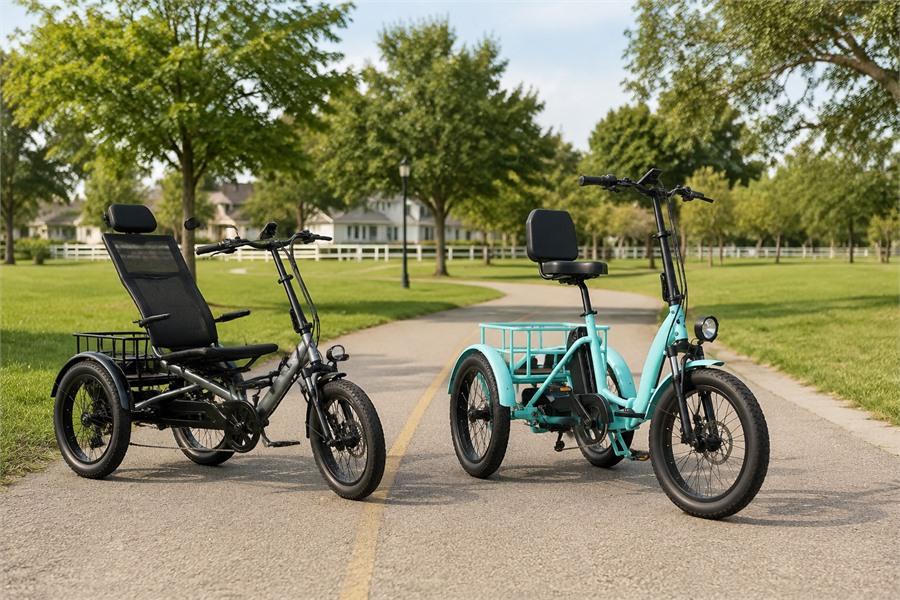
Whether you are choosing an electric trike for yourself to stay active, or researching the safest option for an aging parent, stability is the ultimate deciding factor. For seniors and their families, the choice between a semi-recumbent and an upright electric trike comes down to three non-negotiable needs: zero balance stress, effortless mounting, and predictable turning.
The right pick usually comes down to your real situation. Do you live in an apartment where the trike has to fold into a closet or a hallway? Do you need a low step-through because swinging a leg over a bar is hard on your hip or knee? Do you haul groceries every week or load the trike into an SUV for weekend trips? Answering those first narrows the choice fast. If you'd like a wider view of the options before diving in, you can also browse the full range of electric trikes for adults to see how different frames are built.
What Is an Upright Electric Trike?
An upright electric trike keeps the rider in a more traditional seated position, similar to a comfortable cruiser bike. The pedals sit below you, the handlebars are easy to reach, and the overall feel is familiar to most people.
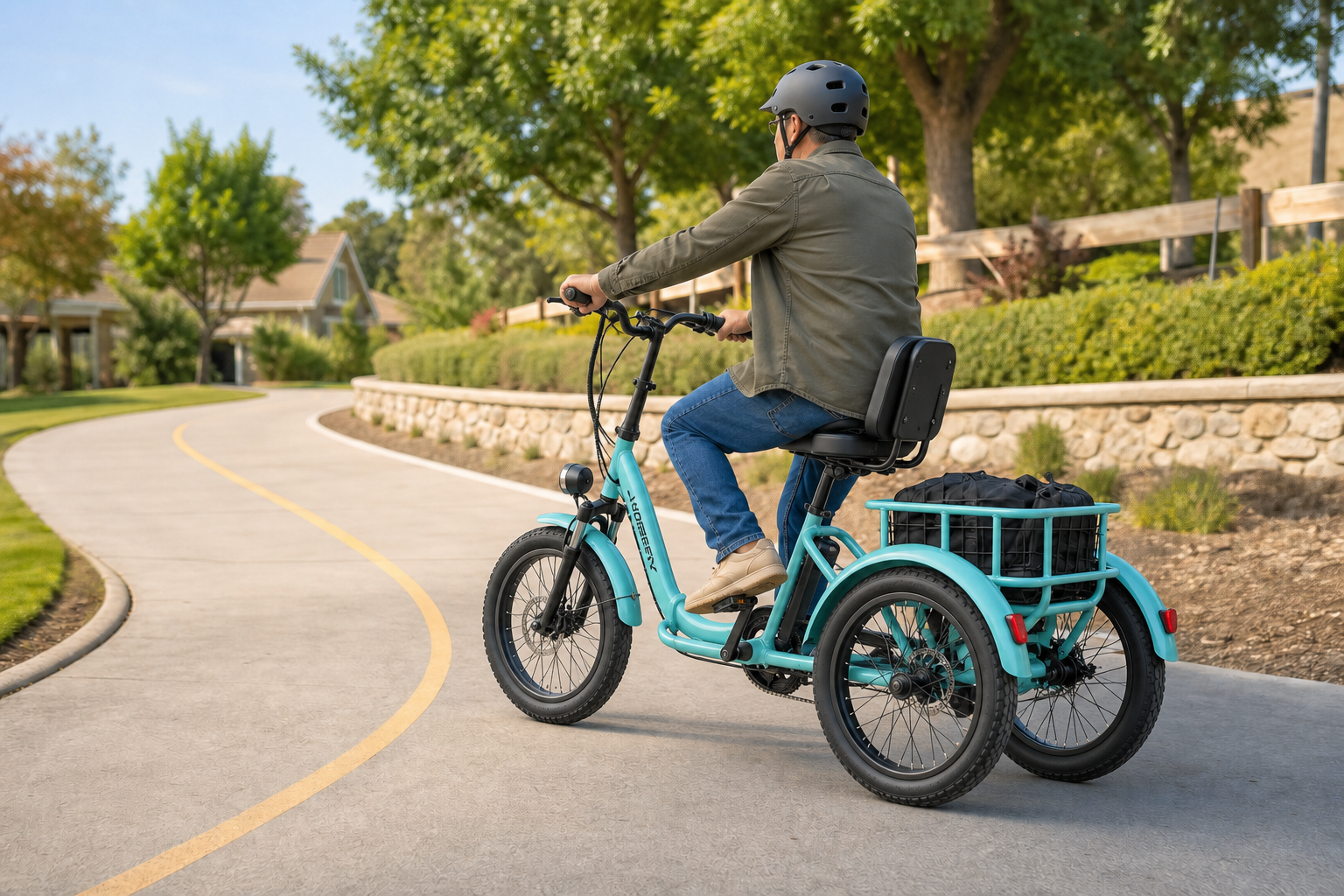
Many upright electric trikes also use a step-through frame, so you can step into the bike instead of swinging a leg over a high bar. The upright posture gives a higher line of sight, which can help in crosswalks, parking lots, and neighborhood streets, and visibility matters. The National Highway Traffic Safety Administration notes that not being seen is a common factor in bicycle crashes. The seated geometry also tends to pair well with rear cargo space, since the rider sits ahead of the rear wheels rather than between them. Upright folding models like the Hoverfly ET1 folding electric trike are a good example of this practical, cargo-friendly layout.
Quick Comparison Table
| Factor | Semi-Recumbent Electric Trike | Upright Electric Trike |
|---|---|---|
| Riding posture | Reclined, laid-back seating angle | Vertical, familiar cruiser-style seating |
| Ease of getting on and off | Low seat, but a longer frame to step around | Step-through frame built for easy mounting |
| Turning feel | Longer wheelbase with wider turns | More compact with familiar steering |
| Storage and cargo | Longer frame needs more storage space | Often foldable, with rear cargo space for errands |
| Best for | Riders prioritizing reclined comfort and back support | Riders prioritizing utility, easy mounting, and everyday storage |
The biggest difference isn't motor power or speed. It's how each frame shapes your posture, mounting experience, storage needs, and confidence at low speeds.
Comfort, Stability, and Everyday Use
Seat design is the first comfort factor, but fit, tire width, suspension, and handling all matter too. A semi-recumbent seat supports your back and spreads your weight over a larger area, which many riders find easier on the spine and lower back. An upright seat feels more familiar and makes stopping, starting, and getting on and off simpler.
Tires matter too. Wider tires soften bumps on cracked pavement, gravel, and rough roads, though how much depends on tire pressure and the frame.
Both styles are stable at a stop because three wheels don't need balancing. The difference shows up in turns. Semi-recumbent trikes have a longer wheelbase and need more room to corner; upright trikes feel more compact and easier to steer. A rear differential also helps: it lets the two back wheels spin at different speeds through a turn, since the outer wheel travels farther than the inner one. Without it, the back end can scrub or skip, especially at low speed or with a loaded basket. With it, tight turns and cornering with cargo feel smoother. If stability is your top priority, our guide to the safest three-wheeled electric bicycles explains how weight capacity, braking, and rear-wheel design affect the ride.
Storage is the other practical factor. Semi-recumbent trikes are longer, so they need a garage or similar space. Upright folding trikes fold down smaller, making them easier to store in an apartment or take on trips.
Which Style Is Better for Seniors?

There is no single best choice for every senior rider. A semi-recumbent trike may be a good fit for older adults who want stronger back support and a more relaxed seating position. An upright trike may be better for those who prioritize easy mounting, familiar handling, and practical cargo space, especially if it has a low step-through frame that makes getting on and off simpler. For riders dealing with balance, hip, or knee limitations, our overview of electric tricycles for adults with mobility needs explains which frame features tend to help most.
The most important factor is whether the rider feels comfortable and confident enough to use the trike regularly. According to the Centers for Disease Control and Prevention, older adults benefit from a mix of physical activity types that improve physical function and help reduce the risk of falls or fall-related injuries. To be clear, that guidance is about staying active in general. An electric trike can support light activity and easier outings, but it isn't a substitute for the balance and strength exercises the CDC describes, or for your doctor's advice. In that sense, the best electric trike is the one that matches the rider's body, mobility, and daily routine.
Where the Hoverfly ET1 Fits
After comparing the two styles, some riders may find that an upright folding electric trike is the more practical fit. If you prefer a familiar riding position and need a trike that is easy to mount, store, and use day to day, our Hoverfly ET1 folding electric trike is a useful model to consider.
- Step-through frame: Ultra-Low Step-Through Frame: Completely eliminates the need to swing a leg over a high bar. This protects sensitive hips and knees, preventing accidental falls just from getting on and off. Riders with limited mobility, or frequent stop-and-go rides.
- Foldable design: Helps reduce the storage footprint, making the trike easier to keep in a garage, apartment, SUV, RV, or shared storage space.
- Rear basket: Provides convenient cargo space for groceries, bags, or daily essentials.
- 20" x 3.0" wider tires: Add more contact with the ground and help improve comfort on uneven pavement, gravel, or neighborhood roads.
- Front suspension: Helps absorb small bumps and makes daily rides feel smoother.
- Integrated Rear Differential (Anti-Tip Tech): Allows the rear wheels to rotate independently, keeping the trike firmly planted and drastically reducing the risk of tipping during sharp turns.
- Parking brake: Keeps the trike steady when stopping, parking, or loading cargo.
- MAX Payload Capacity: 400 lbs. This is Hoverfly's rated maximum load for the ET1, which comfortably covers everyday errands and regular use. If you plan to carry cargo along with the rider, keep the combined weight under this limit, and check Hoverfly's current specification for how it defines the rating.
- Range of about 30 to 60 miles per charge: Real range varies with rider and cargo weight, terrain, speed, and which pedal-assist level you use, so treat the top figure as a best case rather than a fixed number.
Overall, the Hoverfly ET1 is a strong fit for riders who want the familiar posture of an upright trike, easier mounting, cargo space, and a folding frame for more convenient storage.
Conclusion
The better choice depends on what matters most in daily use. A semi-recumbent electric trike makes sense if you want a reclined position, stronger back support, and a relaxed feel for longer rides, as long as you have room for its longer frame. An upright electric trike is likely the better fit if you prefer familiar handling, easier mounting, a higher line of sight, and a more compact setup for storage or cargo. If you are still unsure which style fits your daily routine, contact our team and we'll help you compare riding posture, storage space, cargo needs, and ET1 features before you make your final choice.
FAQs
Do electric trikes handle hills well?
Yes, but it depends on the motor, gearing, rider weight, cargo load, and braking setup. If you ride in a hilly area, look beyond wattage and choose a trike with enough climbing support and stable control on descents.
Are low semi-recumbent trikes harder for drivers to see?
They can be, especially in traffic, because the rider sits lower than on an upright trike. Lights, reflectors, and a safety flag can help improve visibility.
What should I check if I have back, knee, or hip concerns?
Start with riding posture, seat support, pedal position, and how easy it is to get on and off. A semi-recumbent layout may feel better for some riders, while an upright step-through frame may be easier for others.
How do I know if an electric trike fits my daily routine?
Measure your storage space, consider where you ride most often, and decide whether you need cargo room, folding storage, or easier mounting. For a broader checklist, this guide to choosing the best electric trike for adults is a useful related read.



Leave a comment
All comments are moderated before being published.
This site is protected by hCaptcha and the hCaptcha Privacy Policy and Terms of Service apply.