
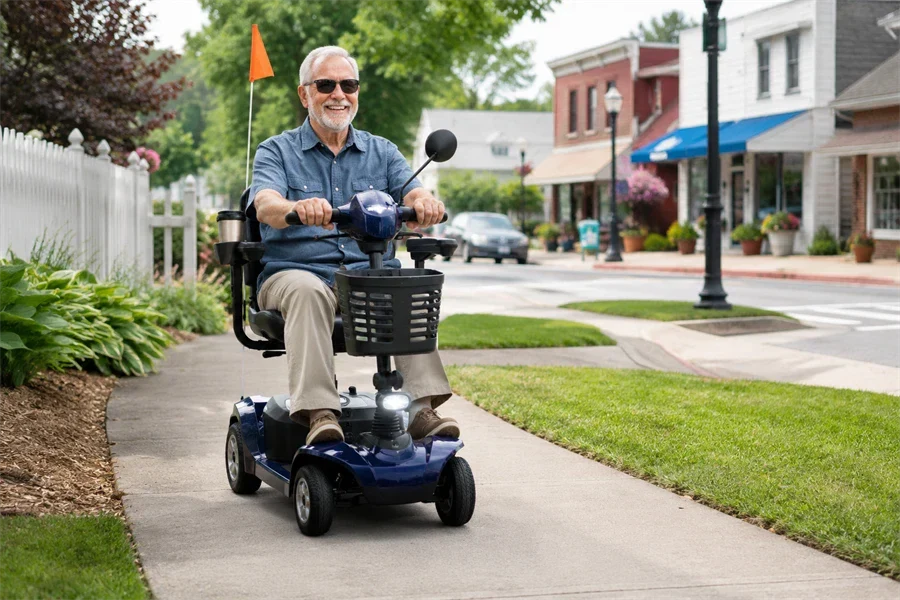
If a rider mostly uses a scooter for pharmacy trips, groceries, and neighborhood sidewalks, the first accessories to consider are storage, visibility, and weather protection. A basket, mirror, cover, and brighter lights solve the everyday problems most new riders notice within the first month: carrying bags one-handed, getting noticed at crosswalks, and protecting the scooter through a season of outdoor parking. This guide covers 10 practical handicap scooter accessories in roughly the order most riders need them.
Why These Mobility Scooter Accessories Matter in Daily Life
For riders with limited mobility, scooter accessories are also important. The right add-ons make everyday tasks easier: carrying a bag, keeping a drink within reach, or making the scooter easier to see in low light.
This list focuses on practical accessories that solve real daily problems - storage, weather protection, and simple convenience. Start with the two or three that match your routine, then add more only when they make your rides easier or safer.
1. Storage Basket for Daily Errands

A front basket is one of the simplest upgrades for everyday errands. Instead of letting grocery bags swing from the tiller or crowd the deck, it gives riders a steady place to carry small purchases while keeping both hands free for steering. The Hoverfly T4 and T5 already include a built-in front basket, making pharmacy runs, grocery trips, and neighborhood errands easier from the start. For other scooters, a secure clamp-on basket can offer similar convenience, as long as the mount fits the tiller firmly.
2. Weatherproof Cover for Outdoor Storage
Outdoor storage can be hard on a scooter, even if it is only parked on a porch, patio, or under a carport. Dust, rain, dew, and direct sun can wear down the seat, controls, and tiller area over time. A fitted weatherproof cover helps protect the scooter between rides and keeps it cleaner for daily use. Since many covers are universal, measure the scooter's length, width, and seat-back height before choosing one.
3. Cane or Crutch Holder
A cane or crutch holder keeps mobility aids secure and within easy reach during a ride. Instead of letting a cane slide onto the footboard or shift around near the rider's feet, a proper holder keeps it upright with a base cup for the tip and a clip or strap for the shaft. Riders who use their scooter often should choose a sturdier design over simple stretchy straps, since elastic holders can loosen with repeated use. Folding crutches usually need a wider holder with two retention bands for better support.
4. Rearview Mirror
Is it hard to see behind you while riding? And turning the head feels unsteady and unsafe? In a parking lot, store aisle, or busy sidewalk, that quick check can throw off steering or strain the neck. That's why a rearview mirror is worth adding. A small convex mirror offers a wider field of view than a flat one and lets a glance replace a full shoulder turn.
5. USB Charging Port
A long afternoon out can drain a phone quickly, especially with GPS running or family calls coming in. A USB charging port mounted near the tiller keeps a phone, GPS, or small device powered between stops. Dual-port models are useful for more than one device. Make sure the charger matches the scooter's battery voltage, and leave any direct battery wiring to the manual or a qualified dealer.
6. Cup Holder
A cup holder keeps water, coffee, or a travel mug within reach without forcing the rider to dig through a bag mid-ride. Adjustable models are the most practical because they can fit different bottle and cup sizes. Look for a holder with drainage holes so spilled liquid does not sit inside the cup well. It should be mounted where the drink is easy to reach but does not block the throttle, brake controls, or steering range.
7. Visibility Gear: Flag, Reflectors, and Lights

Visibility becomes especially important in parking lots, driveways, and low-light conditions. A safety flag, reflective tape, and a brighter headlight each help in a different way: the flag rises above nearby cars, the reflective tape catches headlights, and the stronger front light improves visibility ahead. A bright LED scooter headlight casts a wider, more even beam and stays visible to drivers from farther away, so dusk rides and shaded paths feel a lot more confident.
A practical visibility kit usually includes:
| Accessory | Placement | What to Check |
|---|---|---|
| Tall rear safety flag | Rear post or seat back | The flag should rise above nearby car hoods. |
| Retroreflective tape | Rear fender and footboard edges | Choose outdoor-rated, washable tape that reflects headlights clearly. |
| Brighter LED headlight | Existing headlight mount or auxiliary bar | Make sure it matches the scooter voltage and does not void the warranty. |
8. Padded Seat Cover

After an hour on the road, even a comfortable scooter seat can start to feel firm. Over time, that steady pressure can make the ride feel less comfortable. Hoverfly's well-padded seat cushion helps distribute pressure evenly across the seat pan, stays securely in place through turns, and absorbs bumps along uneven paths, making every ride feel smoother and easier on your body.
9. Oxygen Tank Holder
A portable oxygen cylinder can shift or tip while the scooter moves, especially over uneven ground. Carrying it loose on the lap or in the basket isn't safe, and reaching back for it mid-ride is awkward. That's why an oxygen tank holder is worth adding. It usually mounts behind the seat with a base cup and one or two retention straps to keep the cylinder upright and stable, without interfering with steering, braking, or getting on and off.
10. Lap Belt
Have uneven sidewalks, sloped driveways, or bumpy outdoor paths ever left you feeling unsteady in the seat, as if a stronger bump could shift you out of position? Long or rough trips often feel more tense without that extra support. That's why a lap belt is worth considering. It attaches to the seat frame at two anchor points, sits across the hips, and adds a steady sense of security without restricting movement. Look for a one-handed side-release buckle for easy transfers, and make sure the belt lies flat across the lap and stays clear of the mounting and dismounting path.
How to Pick the Right Combination of Mobility Scooter Accessories

Match your starter set to your most common route:
| Use Case | Best Accessories | Why It Helps | Compatibility Check |
|---|---|---|---|
| Mostly errands (grocery, pharmacy) | Basket, cup holder, USB port | Hands-free carry and hydration on short routes. | Tiller diameter, basket weight limit, battery port voltage. |
| Mostly neighborhood loops | Safety flag, lights, weather cover | Visibility in mixed light and protection during outdoor parking. | Rear mounting point, light voltage, cover dimensions. |
| Longer or mixed-surface rides | Cushion, mirror, lap belt | Comfort, situational awareness, and seated stability. | Seat post diameter, mirror clamp size, seat frame type. |
What Dealers Check Before Installing Accessories
Before installing anything beyond a clamp-on accessory, most mobility dealers check the main fit points first: tiller diameter, seat post style, rear mounting points, and battery system voltage. These details decide whether baskets, mirrors, cushions, oxygen holders, and wired accessories will fit safely.
Warranty is the final check. Some wired modifications can affect controller coverage, so it is worth asking your dealer before installing USB ports, lights, or other powered add-ons.
Before You Buy: Check Compatibility
Before ordering handicap scooter accessories, check your scooter's tiller diameter, seat post style, basket mount, battery connection, and available rear mounting points. Clamp-on items are usually easier to install, while wired accessories should match the scooter's voltage and warranty rules.
Also, make sure the accessory does not block steering, braking, the seat swivel, or the rider's path when getting on and off the scooter. For wired or battery-connected items, follow basic safety guidance like the CPSC battery charging safety tips.
FAQs
How much should I budget for a starter accessory kit?
A practical starter kit will usually run you between $75 and $150 total. A basket, cover, mirror, cup holder, and visibility gear are usually enough at first; oxygen holders or lap belts should only be added if you actually need them.
What mobility scooter accessory should I buy first?
Start with the accessory that solves your biggest daily problem. For most riders, that is usually storage, visibility, or weather protection, such as a basket, lights, reflectors, or a fitted cover.
Can I install accessories myself, or do I need a technician?
You can usually install simple clamp-on accessories yourself. For wired items like USB ports, lights, or powered horns, check the manual or ask a mobility dealer because battery voltage and warranty rules vary.
Do accessories drain the battery faster?
Most accessories do not noticeably affect battery life. Only powered items use electricity, and their impact is usually small, but check the manual if you plan to add several wired accessories at once.
Conclusion
The best handicap scooter accessories are the ones that make daily riding easier without adding new problems. They should feel practical, easy to use, and compatible with the way the rider already uses the scooter.
Start with the accessories that solve your most common need, then add more only when they improve comfort, safety, storage, or convenience. Before ordering, always check fit, mounting points, and warranty rules for your scooter model.



Leave a comment
All comments are moderated before being published.
This site is protected by hCaptcha and the hCaptcha Privacy Policy and Terms of Service apply.