
Choosing the right bike size helps you ride safely and comfortably. Many people buy a bike that is too big or too small. This can cause knee pain, back pain, neck strain, or poor balance. These issues make riding less enjoyable and can lead to extra costs for adjustments or a new bike.
This guide shows you a simple 5-step process to measure a bike correctly. You will learn how to check frame size, set saddle position, review key measurements, and look at real-world examples including e-bikes. The steps work for adults, seniors, road bikes, mountain bikes, hybrid bikes, and electric bikes. By the end, you will know how to measure a bike at home and feel confident choosing the right size.
Quick Choice: Who are you buying for?
Adults: Focus on efficiency, leg extension, and aerodynamics.
Seniors: Focus on stability, ease of mounting (Step-through), and "feet-flat-on-ground" safety.
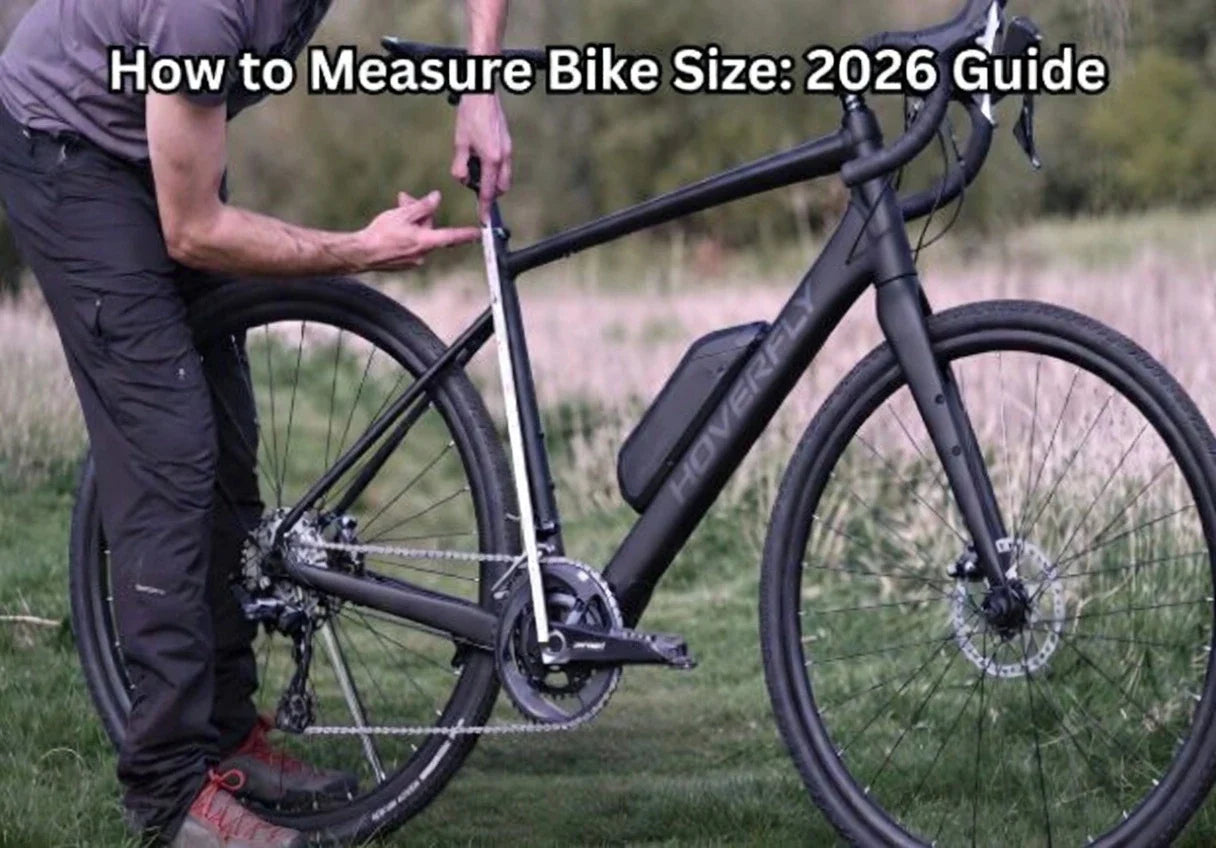
Step 1: How to Measure Bike Frame Size

- Find the center of the bottom bracket (where the pedals attach).
- Find the top of the seat tube.
Measure the straight distance between these two points. This number is your bike frame size.
How to Know If the Bike Size Fits You?

Stand over the bike with both feet flat on the ground. There should be 2 to 5 cm (about 1 to 2 inches) of space between the top tube and your body. This is called standover clearance. Too little space makes it hard to get on and off safely.
For step-through frames, which are very common on bikes for seniors and e-bikes, the standover height is the main measurement. This helps ensure the riding position is not too stretched.
Compare your height and leg length with the bike’s size chart. For example, a rider between 5’6” and 5’10” often needs a medium frame on hybrid or mountain bikes. Always check the specific chart for the brand and model because sizes can differ between brands.
If you already own a bike that feels comfortable, measure its frame size and use it as a guide when buying a new one.
Road bikes are usually measured in centimeters (48–60 cm or more).
Mountain bikes are often measured in inches (16–22 inches is common for adults).
Step 2: Measure the Saddle Position

- Find the center of the bottom bracket (same point as in Step 1).
- Find the top surface of the saddle.
- The straight distance between these two points is your saddle height.
Or

Easy Formula (LeMond Method)
Measure your inseam in centimeters (barefoot, standing against a wall) in cm. Multiply this number by 0.883. The result is a good starting saddle height.
Note: Elderly riders do not need to follow the 0.883 formula strictly. This method is designed for maximum pedaling power, but it often places the saddle too high for seniors. Instead, choose a lower saddle height so that when seated, both feet can rest flat on the ground, or at least the entire ball of your foot can touch the ground comfortably. This greatly improves stability and confidence when stopping.
How to Check If the Saddle Height Is Correct?
Saddle height affects leg extension. A simple method is the heel-to-pedal test.
- Sit on the bike (usually against a wall) with your hands on the handlebars.
- Place your heel on the pedal at its lowest point.
- Your leg should be almost straight. If it is too bent, the saddle is too low. If you cannot reach the pedal without tilting, the saddle is too high.
When you move your foot to the normal pedaling position (ball of foot on pedal), your knee should have a slight bend of about 25 to 30 degrees.
For elderly riders, a lower saddle height is usually better. It allows both feet to touch the ground easily when stopped. This gives more stability and confidence.
You can also move the saddle slightly forward or backward. When the pedal is in the forward horizontal position, your knee should line up roughly above the pedal axle. Make small changes and test how it feels while riding.
Step 3: Other Important Bike Measurements to Check
Several measurements work together to create a good fit.
- Standover height: As mentioned, 2–5 cm of clearance is ideal for road and hybrid bikes. Mountain and e-bikes may need more.
- Reach: This is the horizontal distance from the saddle to the handlebars. Too much reach causes back or shoulder pain. Too little makes the position feel cramped.
- Stack: This is the vertical distance from the bottom bracket to the top of the head tube. A higher stack creates a more upright posture, which many riders, especially elderly, prefer.
- Wheel size: Common sizes are 26”, 27.5”, and 29” for mountain bikes, and 700c for road and hybrid. Smaller wheels (24” or 26”) can make a bike easier to handle for smaller adults or seniors. Larger wheels roll better over bumps but can feel less stable at low speeds.
- Effective top tube length: This shows the real riding length even if the top tube is sloped.
- Bottom bracket drop and chainstay length: These affect stability and pedaling efficiency but are harder to measure at home. Look at the manufacturer’s geometry table.
Compare these numbers to your body. A good fit lets you ride with a slight bend in the elbows, a neutral back, and no pressure points.
Step 4: Measuring for Elderly Riders
Elderly riders have different needs than younger adults. When choosing a bike for elderly riders, start by measuring inseam and standover height the same way as for adults. After that, focus on three key factors that matter most for seniors.
First, the bike should have a low standover height with a step-through frame so seniors can get on and off easily without lifting a leg high over the frame.
Second, the saddle must be low enough that both feet can rest flat on the ground, or touch the ground with slightly bent knees when the rider is seated. This provides stability at every stop.
Third, the bike should offer an upright riding position with short reach and high stack. This keeps the back, neck, and shoulders comfortable and makes the bike easy to control in daily use.
Step 5: Sizing Tips for Electric Bikes
Research shows that e-bike riders tend to be older adults. According to a major 2018 North American study by MacArthur et al. (NITC-RR-1041, Transportation Research and Education Center), many e-bike owners are 55 years and older. Similar findings appear in studies from the Netherlands and Australia, where 70–73% of surveyed e-bike riders were over 50 or 55. These results highlight why e-bikes are becoming a popular choice for seniors.
Measuring an e-bike uses the same basic steps as a regular bike. The extra weight of the battery and motor makes proper fit even more important for safe control. Use the same inseam and height measurements. Always check the manufacturer’s e-bike size chart.
E-Bike Size Quick Reference Calculator
Use the calculator below to estimate a suitable frame size range, saddle height, and standover clearance before comparing specific Hoverfly models.
Common Mistakes to Avoid
Many people only check their height and forget to measure their inseam. This often leads to the wrong frame size.
Some set the saddle too high, which causes hip rocking and knee pain. Others ignore reach and stack, leading to numb hands, sore shoulders, or back pain.
Elderly riders sometimes choose a bike that is too tall, making stops unsafe. Not checking standover clearance is another common mistake.
If a bike feels uncomfortable after a short ride, stop and make adjustments. Pain is a clear sign that the fit needs improvement. When in doubt, visit a local bike shop for professional help.
Final Thoughts
Measuring a bike does not need to be complicated. Follow the five steps in this guide: measure the frame, set the saddle correctly, consider elderly needs, check the key measurement factors, and understand e-bike sizing. Take time with your measurements and test the bike when possible.
A correctly sized bike makes riding more enjoyable, reduces injury risk, and helps you ride more often. Whether you are an adult looking for a daily bike or a senior wanting safe and comfortable rides, the right size makes the biggest difference. Use this guide, compare size charts, and choose with confidence.
Recommended E-Bikes With Easy Sizing
|
Model |
Best For |
Height Range |
Key Features & Benefits |
Weight & Capacity |
|---|---|---|---|---|
|
Hoverfly Ourea Electric Bike |
Daily commuting & adults |
5'2" – 6'2" |
Lightweight, easy to lift with one hand, one-size-fits-most design |
53.5lbs; max load 264 lbs |
|
Hoverfly Nephele Foldable E-Bike |
Storage & portability |
5'1" – 6'2" |
Powerful 500W motor, 3 riding modes, UL certified, up to 28+ miles range |
56.89lbs; max load 264lbs |
|
Hoverfly T5 Electric Scooter |
Seniors & mobility |
5'1" – 6'2" |
Adjustable swivel seat, built-in suspension, long legroom, smooth ride over bumps |
125lbs; max load 330 lbs |
These models are suitable for both elderly riders and adults. Choose the one that best matches your daily needs and height.
FAQs
What is the easiest way to measure bike size at home?
Use the standover test and measure your inseam with a book against a wall. Compare the numbers to the manufacturer’s size chart.
Should I measure a bike in inches or centimeters?
Most brands now use centimeters for frame sizes. Use whichever unit the chart provides and stay consistent.
How do reach and stack affect bike fit?
Reach controls how far you stretch to the handlebars. Stack controls how upright or low your riding position is. Together they determine comfort for your back and arms.
What if I am between two bike sizes?
Check your riding style. Size down for better control and easier handling. Size up for a more stable and upright feel. Test ride both when possible.
Can I ride a bike that is slightly the wrong size?
Small differences can often be fixed with saddle and handlebar adjustments. Large differences usually cause pain or safety issues. It is better to get the correct frame size.
Why do many elderly riders choose e-bikes?
E-bikes provide motor assistance that reduces strain on knees and hips. They make starting, stopping, and climbing easier while keeping the health benefits of cycling. The Hoverfly Nephele Foldable Electric Bike is a good example of a stable and easy-to-use option designed with seniors in mind.
How important is wheel size for elderly riders?
Wheel size is very important for elderly riders because it directly affects stability, ease of control, and safety at low speeds. Smaller wheels (20" to 24") make the bike easier to control, lower to the ground, and more stable when starting or stopping. They are ideal for seniors who ride in neighborhoods, parks, or on flat city paths. Larger wheels (27.5" or 29") roll more smoothly over bumps and are better for adults who ride longer distances or on rougher roads, but they can feel less stable at very slow speeds.




Leave a comment
All comments are moderated before being published.
This site is protected by hCaptcha and the hCaptcha Privacy Policy and Terms of Service apply.