
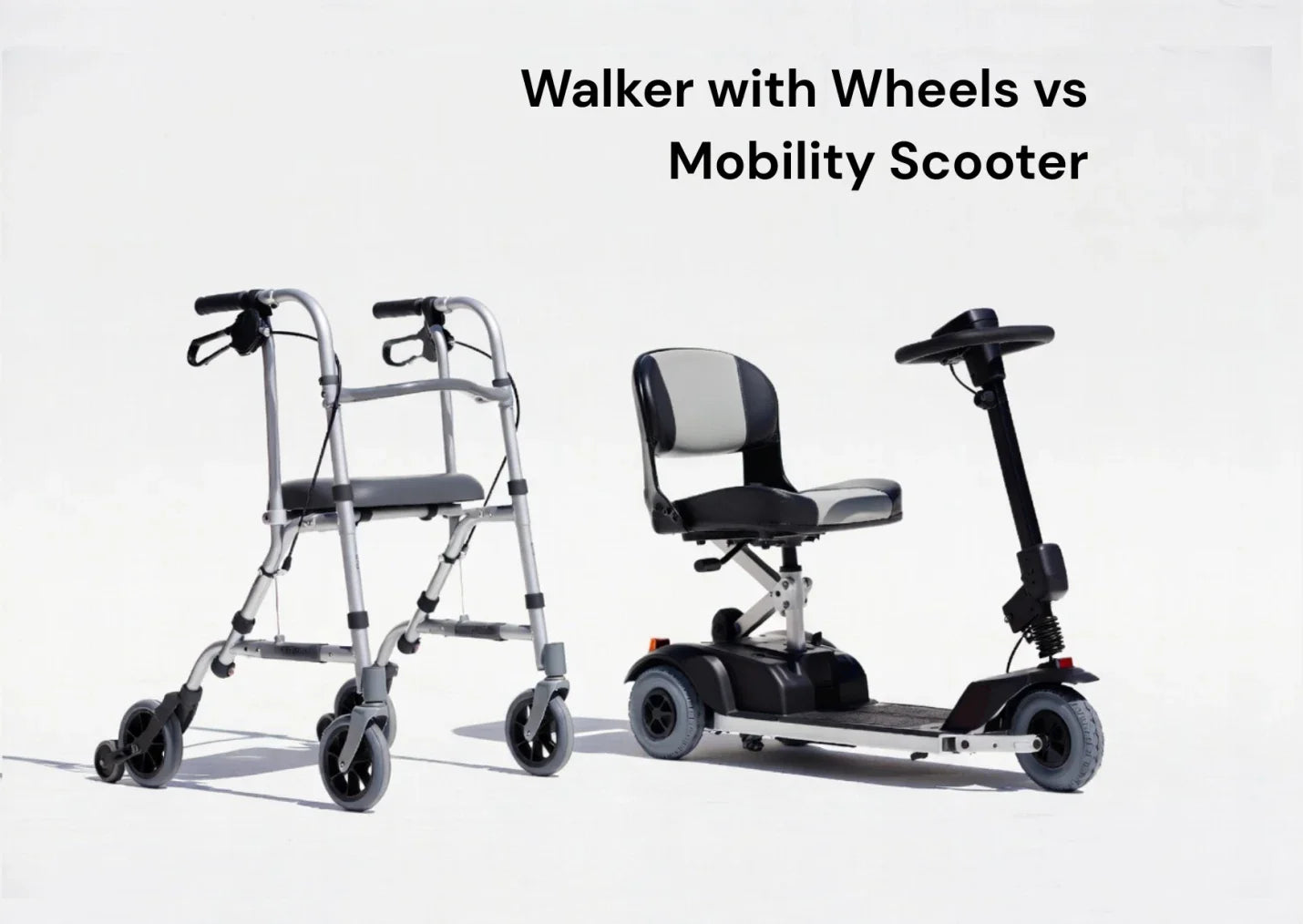
For many seniors and individuals recovering from injury or surgery, maintaining mobility is essential to independence and confidence. When it comes to mobility aids, two popular options dominate the market: walkers with wheels and mobility scooters. Walkers with wheels offer varying degrees of support for those who can still bear weight on their legs. Mobility scooters, on the other hand, provide powered assistance for users who need to conserve energy or travel longer distances without fatigue. This guide helps you understand who can benefit from each option, the main categories available, and how to match the right mobility aid to your specific needs and lifestyle.
What is a Walker with Wheels?
A walker with wheels is a mobility aid designed to provide balance, stability, and support while allowing smoother, more natural movement than a traditional fixed-leg walker. Instead of lifting the entire frame with every step, the wheels let users glide the device forward, reducing strain on the arms, shoulders, and back while encouraging an upright posture. They are built for both indoor and outdoor use, with lightweight aluminum frames that balance durability and portability.
Who Can Benefit from a Walker with Wheels

A walker with wheels is designed for anyone who needs added balance or support while walking but still wants to maintain mobility. Typical users include seniors with mild to moderate balance loss, people recovering from knee, hip, or leg surgery, and those with conditions such as arthritis or multiple sclerosis that affect stability.
Unlike crutches or canes, walkers distribute body weight more evenly and encourage an upright walking posture. People who tire easily may also benefit, as wheeled walkers reduce the energy needed to move forward. For caregivers, these mobility aids also provide safety reassurance, as they help prevent falls and encourage safe ambulation during recovery or daily activity.
8 Types of Walkers
There is no one-size-fits-all walker. Each design serves a unique function and level of support. Below are the main types available in 2026, along with their strengths and ideal users.
Standard Walker (No Wheels)

The standard walker has four stable legs and no wheels. It offers maximum support and is best for users who need significant balance assistance or upper-body strength building. It's ideal for short distances, indoor use, and post-surgery rehabilitation. Because it must be lifted slightly with each step, this walker is not suited for those who lack arm strength or have long distances to cover.
Front-Wheeled Walkers (Two Wheels in Front)

A front-wheeled walker offers a blend of stability and mobility. The two front wheels allow smoother forward movement without needing to lift the walker completely off the ground. The back legs, typically capped with rubber tips, prevent the device from rolling away. It's easy to control, lightweight, and often foldable for storage or travel. It's useful for moderately active seniors who need stability but prefer not to exert excessive effort. Many patients in physical therapy begin with this type before moving to a rollator.
Three-Wheel Walker

The three-wheel walker or tri-rollator offers a nimble, narrow design suited for tight spaces such as hallways or small apartments. Typically featuring a single wheel in front and two in back, it allows faster turns and improved maneuverability. Many models include handbrakes, small baskets, and folding frames for compact storage. However, since it has fewer balance points, it requires more control from the user. It's best suited for those with mild balance issues who prioritize portability and easy navigation.
Four-Wheel Rollator Walker

The rollator is the most popular walker with wheels due to its all-in-one functionality. With four smooth-rolling wheels, height-adjustable handles, and often a built-in seat, it suits active seniors who need light support but want to move effortlessly indoors or outside. Most rollators have ergonomic handbrakes for safety on slopes or uneven surfaces, and many include a storage compartment for bags or groceries. For those who walk longer distances, the seat is a practical feature that provides rest breaks without requiring a separate chair.
Knee Walkers

Knee walkers, or knee scooters, are a modern alternative for people recovering from foot, ankle, or lower-leg injuries. Instead of placing weight on the injured limb, users rest their knee on a padded platform and propel themselves using the other leg. Four large wheels and handbrakes ensure stability and control. These are efficient for short-term recovery when crutches are too uncomfortable or unstable. They're also suitable for both indoor and outdoor mobility thanks to their larger, often air-filled wheels.
Hemi-Walkers (Side Walkers)

Hemi-walkers, sometimes called side walkers, are designed for individuals with limited strength or mobility on one side of the body. They provide more support than a cane but take up less room than a full-frame walker. Used with one hand, the hemi-walker offers balance while allowing support on only one side, making it a practical solution for those regaining limb coordination or recovering from partial paralysis.
Upright Walkers

An upright walker, also known as a stand-up walker, promotes better posture by positioning the handles higher so users can walk in a more natural, upright stance. Unlike traditional models that require a forward-leaning grip, these have forearm supports or padded armrests that reduce back and wrist strain. Upright walkers are ideal for users who experience slouching or back pain with standard designs and seek improved comfort and posture alignment.
When a Walker Is No Longer Enough: Choosing Mobility Scooter
The transition from walker to scooter doesn't mean giving up mobility. It means reclaiming it in a sustainable, pain-free form that supports long-term independence.
Who Can Benefit from a Mobility Scooter
For seniors recovering from hip or knee replacement surgery, individuals managing chronic arthritis pain, or older adults experiencing age-related muscle weakness, long walking can become exhausting and painful. According to a 2024 study published in the National Library of Medicine, most older manual wheelchair users turn to mobility scooters because they need sufficient arm and upper body muscle strength.
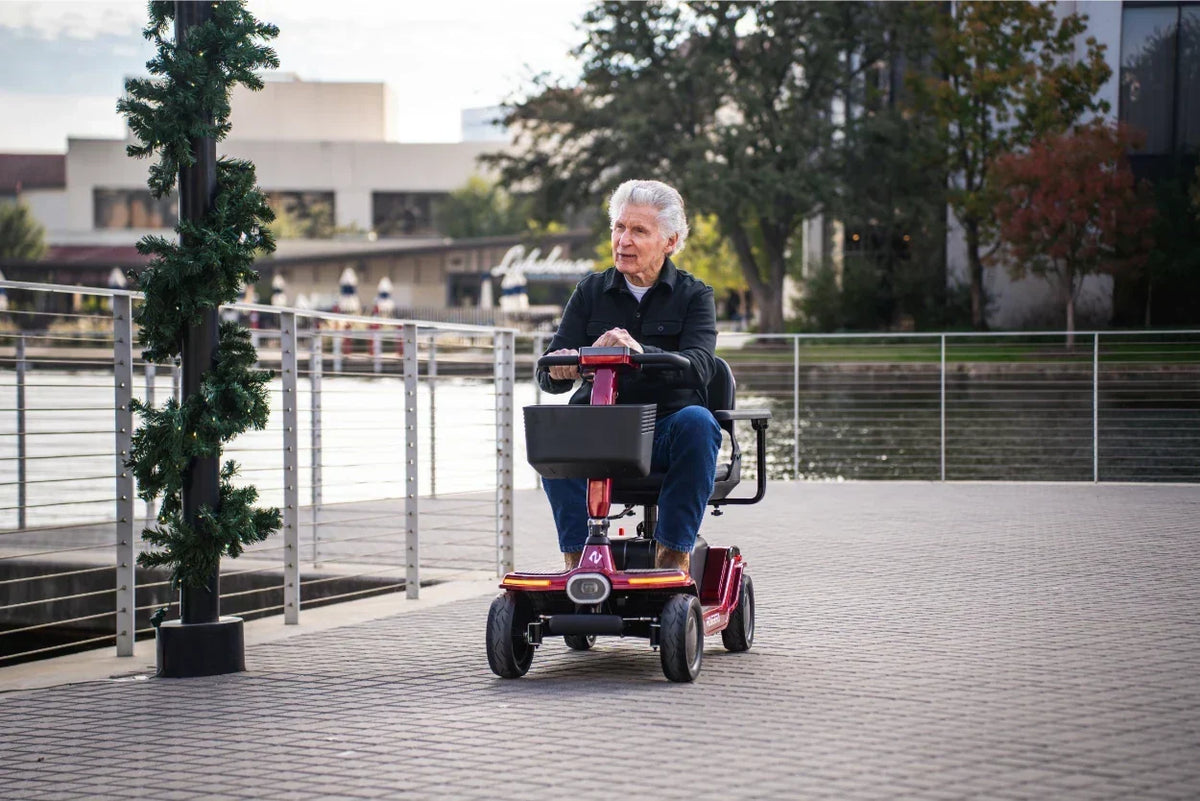
Mobility scooters provide seated, powered transportation that conserves energy and reduces joint stress. Unlike walkers that require continuous leg strength and endurance, scooters allow users to travel longer distances comfortably, whether navigating grocery stores, visiting family, or enjoying outdoor parks.
Mobility Scooter Options
Three-Wheel Mobility Scooters: Agility Meets Powered Convenience
Three-wheel mobility scooters combine tight-turning capability with the convenience of powered assistance. Their narrow profile and single front wheel make them exceptionally easy to navigate in crowded spaces, grocery aisles, or small apartments. Most models feature adjustable seats, simple throttle controls, and adequate storage for personal items.

Option 1: If you need tight-turning agility with powered assistance for longer distances or outdoor paths, the Hoverfly T3 Electric 3-Wheel Mobility Scooter is an excellent choice. It travels up to 13 miles on a single charge at a safe 3.7 mph top speed, perfect for shopping trips or neighborhood walks. The compact design folds in about 20 seconds to fit in any car trunk or closet, while the all-terrain 8.5-inch PU solid tires and 10° slope capability handle gravel or slight inclines with ease.

Option 2: For users who want enhanced power and all-terrain capability, the Hoverfly ET1 Folding Electric Trike delivers superior three-wheel stability with a 1000W peak motor that handles hills and heavy loads effortlessly. The 48V/13.5Ah removable battery and durable 20" x 3" fat tires provide excellent shock absorption and grip on pavement, gravel, or grass, with a quick-folding frame that fits easily into car trunks or small storage spaces.
Four-Wheel Mobility Scooters: Maximum Stability and Range
Four-wheel mobility scooters are the gold standard for users prioritizing stability, comfort, and extended range. With a wider wheelbase and enhanced suspension, they provide a smooth, secure ride on both indoor and outdoor surfaces. These models typically include larger seats, higher weight capacities, anti-tip systems, and ample storage, making them ideal for daily errands, outdoor recreation, and all-day use.

For users who love the stability and storage of a four-wheel rollator but want powered assistance to go farther with less fatigue, the Hoverfly T4 Electric 4-Wheel Mobility Scooter offers a natural upgrade. This smooth-riding model provides up to 12.4 miles of range at 3.7 mph, making errands and outdoor time much more enjoyable. Adjustable armrests, suspension, an e-brake, and a 4-wheel anti-tip system deliver reliable safety and comfort, while the front basket and 5-minute folding design keep it practical for daily use or travel. It supports up to 330 lbs and remains one of the most user-friendly powered options for everyday mobility.
Portable Folding Scooters: Travel-Ready Mobility Without Compromise

For users who need to travel frequently, visit family, or maintain an active lifestyle involving car trips, medical appointments, or vacations, portability becomes a critical concern. Bulky scooters that don't fold or require disassembly can create frustration, limit independence, and make spontaneous outings nearly impossible. Portable folding scooters solve this problem by combining full mobility functionality with compact, travel-friendly designs. These models typically fold in under 30 seconds without tools, fit easily into car trunks, and are light enough for caregivers or family members to lift. Despite their compact size, they maintain sufficient range, stability, and comfort for daily use.
What Our Customers Say
Don't just take our word for it. See how Hoverfly mobility scooters are helping people stay active, connected, and independent in real life.
Great for quick trips and daily errands!
Richard T. | March 17, 2026
"Absolutely love my new foldable e-trike. It's sturdy, accelerates smoothly, and has plenty of power for riding up slight hills in my area. I use it mostly for quick trips to the grocery store, and the basket space is very practical. Being able to fold it and store it easily inside my apartment without taking up too much room is a huge plus. Worth every penny."
Stable & Reliable E-Trike for Daily Use
Sarah K. | March 28, 2026
"Perfect for seniors or anyone needing stability. It's well-built, looks nice, and has made my daily trips so much easier."
A gift for my mom
Susan R. | February 4, 2026
"Ordered this for my mother who lives in a retirement community. She wants to be able to visit her friends without getting tired, and this trike gives her exactly that freedom. Easy to use and very safe."
Walker with Wheels vs Mobility Scooter: Which One Fits Your Lifestyle?
Choosing between a walker with wheels and a mobility scooter depends on your current physical abilities, lifestyle needs, and mobility goals. The table below provides a comparison across key factors:
| Feature | Walker with Wheels | Mobility Scooter |
|---|---|---|
| Physical Effort | Requires continuous walking and leg strength | Effortless; powered motors (500W) do all the work |
| Balance Required | User must maintain balance and coordination | Stable seated ride; no balance needed |
| Speed | 1–3 mph (walking pace, varies by user fatigue) | Consistent 3–5 mph; controlled and steady regardless of user condition |
| Travel Distance | Short trips only | 10–20+ miles per charge |
| Indoor Use | Excellent in tight spaces; 2- and 3-wheel models navigate easily | Excellent; multiple wheel design perfect for narrow hallways and doorways |
| Outdoor Use | Limited; terrain and user fatigue restrict range | Superior; Hoverfly T4 handles 10° slopes, gravel, and uneven paths with suspension and all-terrain tires |
| Portability | Very light (5–20 lbs); folds flat easily | Folds for travel (40–80 lbs); Hoverfly T3 folds in 20 seconds |
| Weight Capacity | 250–300 lbs | 250–330 lbs |
| Maintenance | Low; check wheels and brakes occasionally | Moderate; battery charging and tire checks; minimal compared to the benefits gained |
| Best For | Short indoor distances; users with good leg strength | Longer trips, outdoor activities, chronic pain, limited endurance, or anyone wanting effortless mobility |
Bottom Line: While walkers provide basic support for those who can still walk, mobility scooters deliver superior freedom, comfort, and range without physical strain. For users ready to reclaim independence and explore beyond their front door, Hoverfly Mobility Scooters combine powerful motors, long battery life, and travel-friendly designs to make every day easier.
Key Feature Breakdown: Safety, Comfort & Adjustability
Safety and Braking Systems
Reliable brakes are essential. Most rollators feature loop-style handbrakes that lock the wheels in place for steady seating or secure stops. Check that the brake cables are easy to reach and adjustable. For seniors who rely heavily on grip stability, ergonomic handles reduce wrist fatigue and improve control.
Adjustability and Fit
Proper height adjustment prevents strain on the shoulders and back. When standing upright with arms relaxed, the walker handles should align with the crease of the wrist. Some advanced models also offer adjustable backrests and seat heights to accommodate different users.
Comfort Features
Cushioned hand grips, padded seats, and backrests add comfort, especially for prolonged use. Storage accessories such as under-seat baskets or side pouches can help reduce clutter and make errands easier. For users recovering from surgery, wide frames and steady wheels offer stability without excessive pressure on joints.
Weight Capacity and Frame Build
Standard walkers usually support up to 250 pounds, while heavy-duty rollators may handle up to 400 pounds. Aluminum frames balance strength and lightness, whereas steel models provide maximum durability for heavy or outdoor use. The choice depends on both user weight and activity level.
Maintenance & Storage Tips for Long-Term Use
To keep a walker performing well, periodic maintenance is key. Clean the frame regularly to prevent debris buildup on wheels and joints. Check that all screws and bolts remain tight and that grips are not worn or loose. Wheels should roll smoothly without wobbling—if friction increases, apply a small amount of silicone lubricant.
For storage, fold the walker and keep it in a dry place to prevent rusting. Avoid leaving it outdoors or in damp environments. Brake cables should remain free of moisture or dust to maintain responsiveness. Users who frequently travel can benefit from carrying a small toolkit for quick adjustments or replacements.
Proper care not only extends the lifespan of the walker but also ensures user safety over time.
FAQs About Walkers with Wheels
Who should use a walker with wheels instead of a regular walker?
Anyone who can bear partial weight on their legs and desires smoother movement may benefit from a wheeled walker. It's ideal for people who no longer need maximum support but still value balance and mobility help.
What's the main difference between a three-wheel and a four-wheel walker?
A three-wheel walker is lighter and easier to maneuver in tight spaces, while a four-wheel rollator provides more stability, a seat, and better weight distribution. The choice depends on the user's balance and space needs. For users seeking powered assistance with the same agility, the Hoverfly T3 Electric 3-Wheel Mobility Scooter offers excellent maneuverability with up to 13 miles of range.
Can walkers with wheels be used outdoors?
Yes, especially rollators and all-terrain walkers with larger wheels. Always check tire type—solid wheels are best for smoother surfaces, while air-filled wheels work better on uneven ground. For more demanding outdoor use, the Hoverfly T4 Electric 4-Wheel Mobility Scooter with all-terrain tires and strong suspension is a reliable powered option.
How important are handbrakes?
Handbrakes provide control on inclines and prevent rolling when sitting or stopping. They are particularly valuable for users who walk outdoors or on sloped areas. Many powered models also include advanced e-brakes for added safety and ease, such as the Hoverfly T4 Electric 4-Wheel Mobility Scooter.
What is the best walker for travel?
Folding rollators or lightweight aluminum two-wheel walkers are ideal for travel. Look for models that collapse easily and fit inside a car trunk or overhead compartment. If you want even greater convenience for longer trips, the Hoverfly X3 Electric Scooter folds quickly and offers up to 18 miles of range in a compact design.
When should someone upgrade to a mobility scooter?
If long walks cause fatigue, or if a user needs to cover greater distances with consistent support, a mobility scooter may be the next logical step. Hoverflys offers a variety of compact and full-size mobility scooters suitable for this transition, from nimble 3-wheel to stable 4-wheel models. Browse All Hoverfly Scooters Now.



Leave a comment
All comments are moderated before being published.
This site is protected by hCaptcha and the hCaptcha Privacy Policy and Terms of Service apply.