
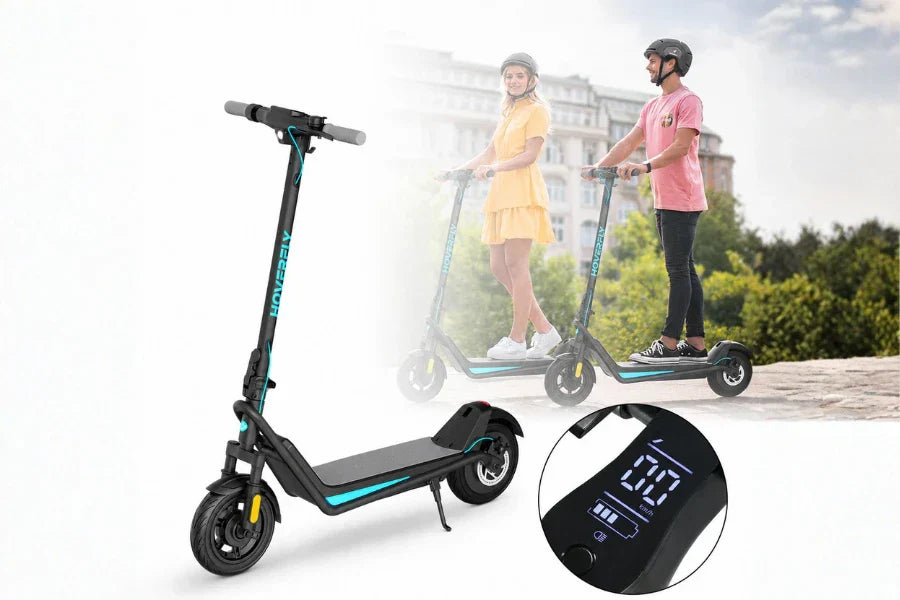
Most electric scooter batteries last 2 to 3 years, or roughly 300 to 500 full charge cycles, whichever comes first. Daily commuters on folding scooters, parents shopping for teens, and first-time buyers all run into the same uncertainty over what counts as normal wear. The real answer depends on chemistry, charging habits, and temperature exposure, with a few specs on the box doing most of the work in setting expectations.
Average Electric Scooter Battery Lifespan by Type
Battery chemistry matters more than marketing brochures imply. Sealed lead-acid packs still appear on entry-level mobility scooters, lithium-ion has become the default across most adult electric scooters, and a smaller share of premium models use lithium iron phosphate for stronger thermal stability.
| Battery Type | Cycle Life | Calendar Lifespan | Common Use |
|---|---|---|---|
| Sealed Lead-Acid | 200–300 cycles | Under 2 years | Entry mobility scooters |
| Standard Lithium-Ion | 300–500 cycles | 2–3 years | Most adult e-scooters |
| Premium Lithium-Ion | 800–1,000 cycles | 4–5 years | High-end commuter models |
| Lithium Iron Phosphate | 2,000+ cycles | 5–10 years | Safety-focused models |
Factors That Shorten Electric Scooter Battery Life
Heat Does the Most Damage
High-voltage cycling at elevated temperatures cracks the cathode grain structure inside lithium cells, accelerating capacity loss faster than cycle count alone predicts.
Cold Weather Runs a Close Second
Below freezing, internal resistance climbs, and lithium can plate on the anode if a pack is charged before it warms up. None of this stops the scooter from running. It just shortens what remains.
Charging Habits That Cost Years
Topping off to 100% every night sounds careful. It isn't. Stress accumulates fastest at the high end of the charge window, and combining nightly full charges with the occasional drain to zero can cut total pack life roughly in half. Holding the gauge between 20% and 80% is the single cheapest habit most riders skip.
Weight, Speed, and Terrain
Hills pull more current through the cells than flat pavement. A 220-pound rider on a 500W motor climbing a 10% grade burns calories faster than a 150-pound rider on level ground. Cracked sidewalks force the motor to work harder than smooth bike paths, and the difference compounds over months of daily use.
How to Extend Electric Scooter Battery Life
The 80/20 Lithium Rule
Try to plug in before the battery gauge drops below 20%, and unplug it when it reaches around 80%. This avoids the extreme ends of the voltage spectrum, which cause the most internal stress to the cells.
Charge before the gauge hits 20%. Unplug around 80% unless a long ride is planned. Small daily savings compound into extra years of useful range.
Storage at the Right State of Charge
Storing a pack at full charge or fully empty both kill cells quickly. The lithium-ion sweet spot for storage sits near 50% in a cool, dry space between 50°F and 77°F, with a quick top-up every couple of months to prevent deep discharge.
Use the Charger That Came in the Box
Aftermarket chargers sometimes push the wrong voltage. Others skip the temperature-controlled tapering that protects cells at the end of a healthy cycle. The original brick costs little and protects a pack worth hundreds. Riders who follow established lithium charging routines often add useful range.
Battery Replacement Signs and Cost
A healthy pack rarely fails overnight. The decline shows up gradually, and a few clear symptoms tell the difference between routine aging and a battery that needs to come out now.

Gradual Signs to Watch For
The earliest symptom is a shrinking range on a full charge. When a scooter that once delivered 25 miles only manages 12, the pack has crossed below the 80% capacity threshold that defines the end of useful life. Charging time stretching from 4 hours to 6 or 7 hours follows the same curve. Power loss under load is the next stage, with the motor cutting out on hills it used to climb without effort, or a battery percentage that drops 15% to 20% within the first mile after a full charge.
Urgent Signs That Demand Immediate Replacement
Visible swelling, dents, or any fluid near the casing means physical cell damage and should pull the pack from service that day. Unusual heat during charging signals an internal fault. A charger that never reaches its green indicator, or a battery that loses charge overnight while the scooter sits unused, points to one dead cell dragging the rest of the pack down. These symptoms show that you'd better change your battery.
Cost and Compatibility
Replacement packs typically run $150 to $500, depending on capacity and brand. Voltage, connector style, and Battery Management System protocols rarely cross between manufacturers. For older scooters, a fresh pack often costs 30% to 50% of a new model's price, which is the number worth comparing before deciding.
Battery Specs Worth Reading Before You Buy
Two numbers matter more than brand reputation. Voltage (V) sets how much push the motor gets. Amp-hours (Ah) set how long the pack can keep delivering. Multiply them for watt-hours (Wh), the most consistent measure for comparing across brands.
| Specification | What It Means | Typical Adult Scooter Range |
|---|---|---|
| Voltage (V) | Power delivery to the motor | 36V to 60V |
| Capacity (Ah) | Energy stored in the pack | 5 to 18 Ah |
| Watt-hours (Wh) | Total energy budget | 180 to 1,000+ Wh |
| Cycle Rating | Cycles before 80% capacity | 300 to 1,000 |
Certification to Verify
Any reputable adult scooter should carry UL 2272 certification for the full electrical system. UL Solutions documents the testing protocol, which checks the battery, charger, and wiring together under fault conditions, including overcharge, short circuit, and impact. New York City requires UL 2272 compliance for the legal sale of personal e-mobility devices, and the U.S. Consumer Product Safety Commission has urged retailers nationwide to follow the same standard.
Matching Battery Size to a Daily Commute
Short Trips Under 10 Miles
A 5 to 8 Ah pack covers it. Teen riders, neighborhood errands, and quick campus rides rarely need more. Lower capacity also keeps the scooter under 35 pounds, which matters at the bottom of a staircase. The Hoverfly X1 Electric Scooter pairs a 36V 5.2Ah pack with a 31.55 lbs frame, sized for exactly this kind of trip.
Urban Commutes Between 10 and 20 Miles
This range is where most adult riders live. Heading to work, transit, or class, a 7 to 10 Ah pack hits the value sweet spot, with enough headroom for an unplanned detour or an unexpected hill on the way home.
The Hoverfly GXL Max Electric Scooter, an 18-mile-range model with a 36V 7.8Ah pack, handles a typical week without midday charging, and partial top-ups in this range stay well inside the 20 to 80 band that protects long-term capacity.

Longer Rides and Heavier Loads
What if a commute clears 20 miles, or if grocery bags ride along most days? A 12 Ah or larger pack changes the math entirely.
Fewer full cycles per week translates directly into more total cycles available over the years, which is the single most effective way to extend a battery's useful life. Riders on the Hoverfly X5 Electric Scooter, a 25-mile-range folding model with a 36V 12Ah pack, often charge twice a week instead of nightly. That alone can stretch real-world battery years by roughly 30% compared to a smaller pack running the same route.
For broader side-by-side comparisons before purchase, recent buying guides on foldable commuter scooters walk through real-world range, fold time, and weight.
FAQ
How long does an electric scooter battery last per charge?
Most rides cover 10 to 40 miles per charge. Smaller commuter packs deliver 10 to 18 miles. Larger 12 Ah and up packs push past 25. Hills, rider weight, and cold can shorten any electric scooter battery range by 20% or more.
Can I replace the electric scooter battery myself?
Yes, on most models. Manufacturers sell direct replacements, and some packs swap in seconds. Third-party packs work safely only when the voltage and connectors match exactly. A mismatched electric scooter battery can void the warranty and create a fire risk.
Does fast charging shorten electric scooter battery life?
Yes, slightly. Fast charging creates more heat inside the cells, which accelerates aging. Occasional use is fine. Daily fast charging shaves cycles off the total an electric scooter battery can deliver, so the included standard charger is the safer everyday choice.
Is overnight charging safe for an electric scooter battery?
Generally, yes, with one caveat. Modern lithium scooters use a Battery Management System that stops charging at full charge. The electric scooter battery still sits at 100% longer than ideal. Unplugging soon after full charge protects the cells over time.
Why does my electric scooter battery drain so fast in winter?
Lithium cells lose efficiency below 40°F. Internal resistance rises in the cold, and any electric scooter battery delivers less usable energy per cycle in freezing weather. The range can drop 20% to 30% temporarily without permanent damage to the pack itself.
Conclusion
A typical electric scooter battery lasts two to three years, and 300 to 500 charge cycles before capacity falls below a useful range, with premium lithium packs reaching 800 cycles or more. Charging habits, temperature exposure, and pack chemistry matter more than any single brand promise on the spec sheet. Anyone comparing models should read voltage, amp-hours, watt-hours, cycle rating, and UL 2272 status before getting to price. A pack chosen for the right daily distance, then charged in the 20 to 80 band and stored above freezing, will deliver every cycle it was rated for.




Leave a comment
All comments are moderated before being published.
This site is protected by hCaptcha and the hCaptcha Privacy Policy and Terms of Service apply.