
For most city commuters, the best foldable electric scooter weighs under 35 lb, delivers 15–25 miles of real-world range, and folds fast enough to carry onto buses, trains, or into offices without stress.
Urban commuting rarely means riding nonstop from door to door. Stairs, elevators, public transport, and limited storage all shape what actually works day to day. Choose the wrong scooter, and it quickly feels heavy, unstable, or annoying to live with.
This guide explains what really matters for daily electric scooter commuting, how to avoid common mistakes, and when it makes sense to step up to an electric bike instead.
Why Foldable Electric Scooters Work So Well for City Commuting?

Foldable electric scooters work best because they handle transitions, not just riding.
Most commutes involve several short steps: riding, carrying, folding, rolling indoors, and storing. A foldable scooter makes those moments manageable instead of frustrating.
Commuters usually choose foldable electric scooters for four practical reasons:
- Easy Storage in apartments and offices
- Quick Transitions on buses and trains
- Lower Effort than walking long last-mile distances
- Predictable Travel Time in traffic-heavy cities
A foldable scooter doesn’t replace every part of your commute. It fits between them—and that flexibility is the real advantage.
What Features Matter Most in a Commuter Electric Scooter?
A good commuter scooter needs to get four things right: weight, folding speed, usable range, and control. Miss one, and you’ll feel it every weekday.
Folding Mechanism
Choose a folding system you can operate in under 15 seconds. Complicated latches get old fast when you’re rushing for a train.
Weight and Portability
For most commuters, 30–35 lb is the realistic upper limit for carrying without hating it.
If you climb stairs daily, aim closer to 25–30 lb.
Real-World Battery Range
Plan for 2× your round-trip distance.
If you ride 6 miles round-trip, target a scooter that reliably delivers 12+ miles in real conditions, not lab tests. Cold weather, hills, and stop-and-go riding all reduce range.
Ride Comfort
Comfort decides whether you still enjoy riding after a month.
Look for:
- Natural Handlebar Height
- Stable Deck Feel
- Basic Shock Absorption
- Wheel Size that matches your streets
How Wheel Size Affects Daily Commuting Comfort?
Wheel size determines how your scooter handles cracks, expansion joints, and rough pavement.
- Smaller Wheels: Lighter and compact, but harsher on broken sidewalks
- Medium to Larger Wheels: Roll over obstacles more smoothly and feel calmer at speed
If your route includes older sidewalks or patchy asphalt, don’t go ultra-small just to save a few pounds. Comfort issues show up quickly in real city riding.
How Much Motor Power Do You Need for City Commuting?

Wheel size affects comfort because it decides how your scooter handles cracks, expansion joints, and rough pavement.
- Small Wheels: Fine on smooth paths, rough on broken sidewalks.
- Medium/Larger Wheels: Roll over cracks more easily and feel calmer at speed.
If your route includes older sidewalks or patchy asphalt, don’t go ultra-small on wheels just to save a few pounds.
How Much Motor Power Do You Need for City Commuting?
You need enough power for your hills and your weight, not bragging rights.
- Flat Routes: Lower power works fine
- Bridges, Hills, Heavier Riders: Mid-range power feels smoother and less strained
A simple test: if your scooter slows to a crawl on the one hill you ride every day, you’ll regret it.
Which Safety Features Matter Most for Commuter Scooters?
For commuting, safety is mostly about being seen and stopping predictably.
Prioritize:
- Reliable Brakes with consistent feel
- Front and Rear Lights
- Reflective Details
- Stable Low-Speed Handling in crowds
Top speed matters far less than control in real traffic.
Who Should Choose a Foldable Electric Scooter for Commuting?
Foldable electric scooters work best for:
- Apartment dwellers with limited storage
- Office commuters who bring scooters indoors
- Riders combining scooters with buses or trains
- Short- to medium-distance urban commutes
They may feel less suitable for very long rides or routes dominated by bike lanes.
When a Foldable Electric Scooter Is No Longer the Best Fit
A foldable electric scooter stops being ideal when ride time becomes longer than carry time.
If your commute grows longer, uses bike lanes most of the way, or you want seated comfort with pedal assist, an electric bike can fit better into daily life.
Electric Scooter vs Electric Bike for Commuting
Use this quick comparison to decide.
| Commuting Situation | Better Choice |
| Under 5 miles, frequent carrying | Foldable Electric Scooter |
| 6–15 miles, mostly riding | Electric Bike |
| Limited storage, mixed commute | Foldable Electric Bike |
| Bike lanes for most of the route | Electric Bike |
Commuter-Ready Electric Bike Options (Natural Upgrade)
If your routine has outgrown a stand-up scooter, these electric bikes offer a smoother daily flow.
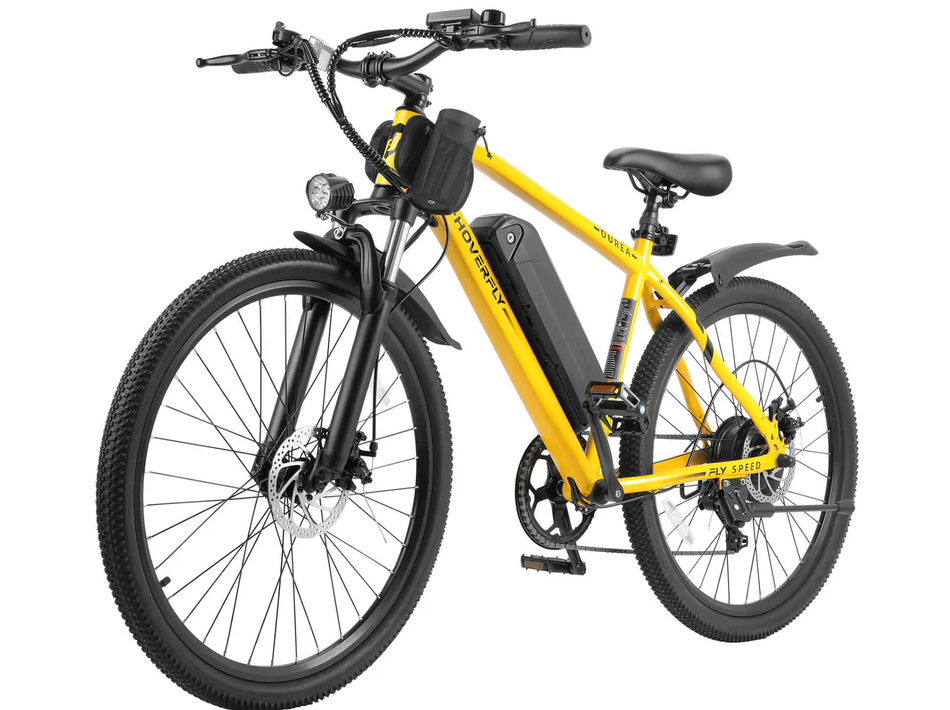
Hoverfly Ourea Electric Bike for Adults

The Hoverfly Ourea is designed for longer daily commutes where riding matters more than carrying.
- Top Speed: 26–32 km/h (region-dependent)
- Range: Up to 64 km per charge
- Battery: Removable for easy indoor charging
- Best For: Bike lanes, steady weekday commuting
It suits riders who want fewer charging cycles and a relaxed, upright ride.
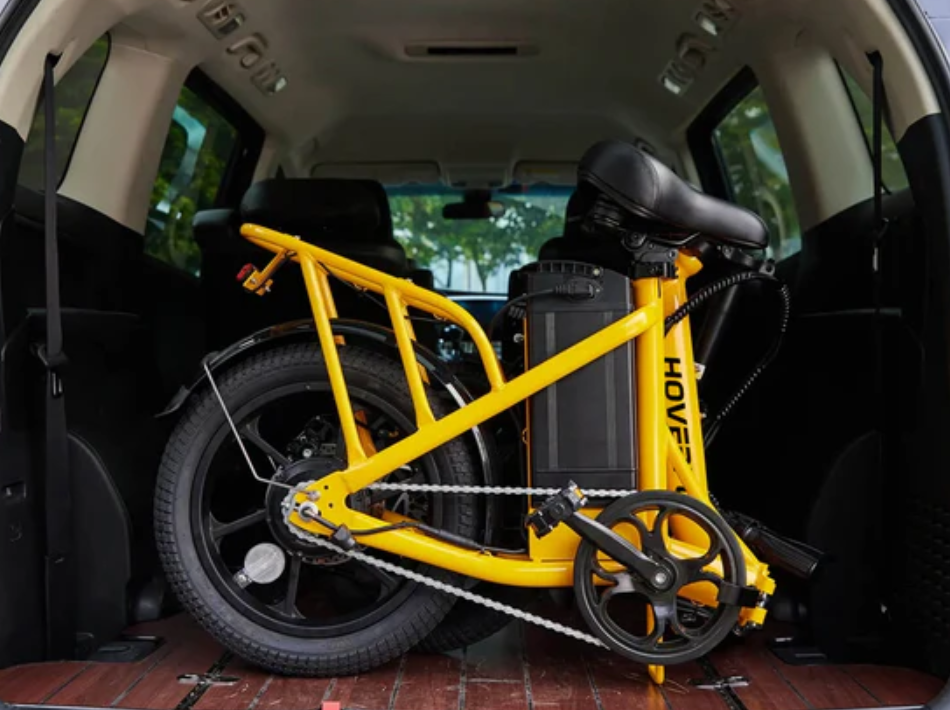
Hoverfly H3 Foldable Electric Bike for Adults

The Hoverfly H3 is built for multi-modal commuting.
- Top Speed: 16–25 km/h
- Range: Up to 40 km
- Foldable Frame: Easier storage in offices and apartments
- Battery: Removable for flexible charging
If your commute includes stairs, elevators, or public transport, the H3 offers a cleaner daily routine than a full-size e-bike.
Common Mistakes Commuters Make When Choosing a Scooter
- Buying something too heavy for daily carrying
- Choosing a minimal range with no buffer
- Ignoring wheel size on rough sidewalks
- Overpaying for top speed that never gets used
Final Thoughts
The best foldable electric scooter for commuting isn’t the fastest or the flashiest. It’s the one that fits into your routine without friction.
If your scooter folds quickly, carries easily, rides smoothly, and charges overnight, commuting feels predictable instead of stressful. And when your commute grows longer, stepping up to an electric bike can be a natural next move—not a replacement mistake.
Choose balance, not hype, and your daily ride becomes something you rely on instead of tolerate.
FAQs for Foldable Electric Scooters for Commuting
1. What is the most compact foldable electric scooter for commuting?
The most compact commuting scooter is one that folds small and stays stable when ridden. For daily use, look for a narrow folded size, a weight under 35 lb, and a quick, simple folding mechanism. Extremely small scooters often sacrifice comfort and control.
2. How long does a foldable electric scooter last with daily commuting?
Most commuter scooters last 1–4 years. Battery quality, rider weight, terrain, and charging habits affect lifespan more than brand alone.
3. Can heavier riders use a foldable electric scooter for commuting?
Yes, as long as the scooter is rated for the rider’s weight. Riding near the limit reduces range and increases wear, so higher load ratings and adequate motor power matter.
4. Are foldable electric scooters practical for multi-modal commuting?
Yes. They work well with buses, trains, elevators, and indoor storage. Fast folding and manageable weight matter more than top speed.
5. What should I prioritize for daily electric scooter commuting?
Focus on stability, realistic battery range, quick folding, and predictable braking. High top speed rarely improves real-world commuting.



Leave a comment
All comments are moderated before being published.
This site is protected by hCaptcha and the hCaptcha Privacy Policy and Terms of Service apply.