
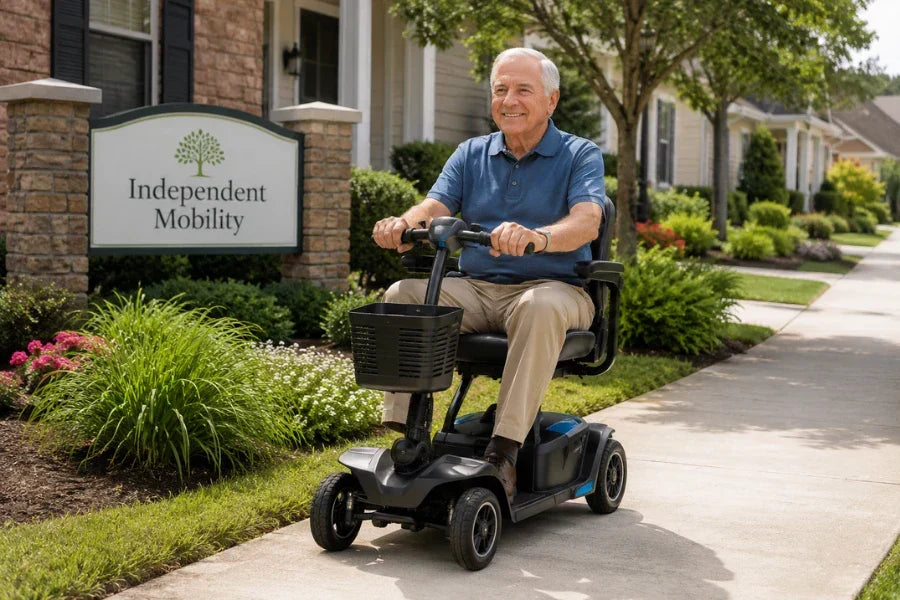
Do you live alone and feel that everyday movement is becoming harder with age? Maybe walking to the mailbox feels tiring, standing in the shower makes you nervous, or a short grocery trip now takes more energy than it used to. Many seniors know they need extra support, but are not sure whether a cane, walker, rollator, scooter, or home safety device is the right choice.
This guide helps you match your current mobility level with the right aid. You will learn which devices work best for mild balance issues, moderate fatigue, longer outdoor distances, stairs, bathroom safety, and emergency response. The goal is simple: choose a device you can set up, operate, and manage safely without depending on someone else every day.
Quick Pick: Best Mobility Aid by Need

| Mobility Need | Best Device | Typical Price |
|---|---|---|
| Mild instability | Adjustable single-point or quad cane | $20 to $80 |
| Moderate balance loss | Rollator with seat and hand brakes | $90 to $300 |
| Limited stamina | 3-wheel foldable mobility scooter | $500 to $1,200 |
| Outdoor uneven ground | 4-wheel mobility scooter | $700 to $1,800 |
| Bathroom and bedroom safety | Grab bars, raised toilet seat, shower bench | $25 to $250 |
| Emergency response | Medical alert pendant with fall detection | $25 to $50/month |
The 9 Best Mobility Aids for Seniors Living Alone
1. Adjustable Single-Point and Quad Canes
A cane is best for mild instability and short indoor or outdoor distances. It can help with balance, but it is not enough for severe weakness or frequent falls. A quad cane is often better for seniors living alone because it stands upright on its own, making it easier to unlock doors, reach for railings, or use both hands briefly.
2. Standard Walkers
A standard walker offers more stability than a cane, but the user must lift and place the frame with each step. That can become tiring over time. It works best after surgery, during short-term recovery, or in tight indoor spaces where wheels may be unsafe. Medicare Part B may cover walkers when prescribed as durable medical equipment.
3. Rollators with Seat and Hand Brakes
A rollator is often the most useful single mobility aid for an active senior who lives alone. It supports walking, provides a built-in seat for rest breaks, and includes a basket so the user does not need to carry a bag. The brakes should be easy to grip, lock, and release without help.
4. 3-Wheel Foldable Mobility Scooters (The Portability Champion)

A 3-wheel mobility scooter features a sharper turning radius than a 4-wheel alternative, making it the perfect vehicle for navigating narrow apartment hallways, standard elevators, and tight grocery store aisles.
For solo homeowners, the ultimate barrier to owning a scooter is lifting it into a vehicle. The Hoverfly T3 Folding Mobility Scooter directly solves this solo-lifting problem through its innovative 3-piece modular disassembly. Instead of forcing you to wrestle with a heavy 60+ lb vehicle all at once, the T3 allows you to effortlessly detach the 1.8 lb front basket and the 8.3 lb swivel seat. This leaves a manageable 51 lb folded frame to lift into a car trunk. By breaking down the total weight, it prevents a single overwhelming lift and allows seniors to maintain their travel independence.
5. 4-Wheel Mobility Scooters (The Outdoor Stability Standard)

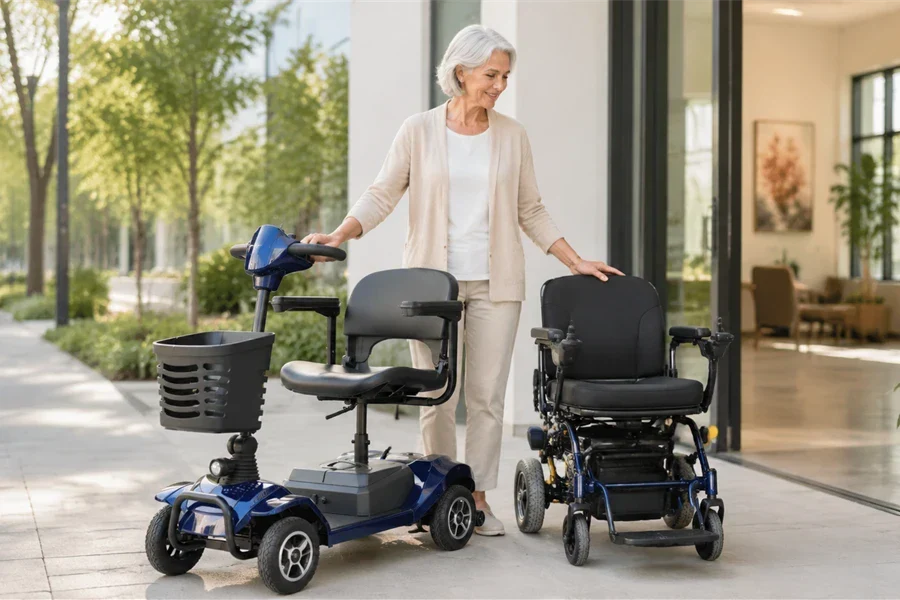
If your daily routine involves traveling over cracked neighborhood sidewalks, transition ramps, packed gravel, or manicured grass parks, a 4-wheel configuration is paramount.
The Hoverfly T5 4-Wheel Mobility Scooter is our premium powerhouse for outdoor stability. Built for riders who need more robust dynamics and extended range, it features a high-output motor that conquers slopes and uneven terrain far more effortlessly than standard models. Alongside its heavy-duty drivetrain, it includes anti-tip wheels, advanced electronic braking, and an upgraded suspension system. This ensures that even on the longest outdoor excursions, the rider experiences maximum physical comfort and uncompromising safety.
6. Stair Lifts
A stair lift helps seniors remain in multi-level homes by carrying them up and down stairs on a motorized rail. It is simple to operate after installation, but a professional setup is required and usually costs $2,500 to $6,000.
7. Lift Chairs
A lift chair raises the user toward a standing position, reducing strain during one of the riskiest daily transfers. It is most helpful for seniors with weak legs, painful knees, or difficulty rising from a low seat.
8. Grab Bars and Bathroom Safety Aids
Bathrooms are one of the highest-risk areas for falls because of wet floors, hard surfaces, and frequent transfers. Anchored grab bars near the toilet, shower, and tub edge are among the highest-value safety upgrades. A raised toilet seat and shower bench add more protection when balance is reduced.
9. Medical Alert Pendant with Automatic Fall Detection
A fall-detection pendant is essential for many seniors living alone. Even with the right cane, rollator, or scooter, falls can still happen. A wearable device with two-way voice and automatic fall detection can call for help when the user cannot press a button. GPS-enabled models extend protection outside the home.
How to Choose the Right Mobility Aid
As a senior mobility and home safety advisor, I often see the same problem: seniors living alone do not simply need “more support.” They need the right level of support for their home layout, strength, balance, daily routine, and ability to manage the device independently. A product that is too heavy, too wide, or too complicated may look safe but end up unused.
If the main issue is mild balance loss, start with a quad cane. If the senior can walk but gets tired while standing or shopping, a rollator with a seat is usually the better option. If fatigue limits outdoor errands or social activity, a foldable 3-wheel scooter can restore more independence. If the senior often travels on uneven sidewalks or gentle slopes, a 4-wheel scooter is usually safer.
Before buying, check whether the user can lift, fold, brake, steer, charge, and store the device alone. For seniors with recent falls, dizziness, stroke history, Parkinson’s disease, neuropathy, or serious weakness, a PT or OT assessment should come before the purchase. The CDC STEADI framework is a useful reference for fall-risk screening and prevention.
Why Living Alone Changes the Decision

Seniors who live alone need more than basic support. The device must be manageable without a caregiver nearby. A transport wheelchair, for example, may be useful with a helper but is not ideal for independent daily use. A power wheelchair or scooter can be better when the user needs self-directed movement.
The best solo-use devices are easy to set up, simple to operate, stable during sudden stops, and practical to move or store. For scooters, do not look only at total weight. Check folding method, turning radius, battery type, charging process, and whether the senior can handle the heaviest part safely.
Medicare Coverage Notes
Original Medicare Part B may cover canes, walkers, rollators, manual wheelchairs, power wheelchairs, and mobility scooters as durable medical equipment when medically necessary. A doctor’s prescription is required, and the supplier must be Medicare-enrolled.
Stair lifts, grab bars, and medical alert pendants are usually not covered by Original Medicare, though some Medicare Advantage plans may offer related benefits. Coverage rules can vary, so users should confirm details before buying. For official details, review Medicare’s guidance on durable medical equipment coverage.
Final Recommendation
The safest setup for a senior living alone is usually layered: one walking-level device matched to current ability, anchored bathroom grab bars, and a fall-detection pendant. Together, these address the three biggest risks: walking falls, bathroom falls, and being unable to call for help after a fall.
If fatigue, distance, or social activity is the main barrier, a scooter may offer the biggest gain in independence. For a broader comparison of scooter types, features, and 2026 buying factors, read Best Mobility Scooters for Seniors: 2026 Buying Guide.
FAQs
What is the best mobility aid for an elderly person living alone?
The best choice depends on mobility level. A quad cane fits mild balance issues, a rollator fits moderate balance loss, and a foldable 3-wheel scooter is best for fatigue or longer distances.
How do I choose between a cane, walker, rollator, and scooter?
Choose based on support and distance. A cane helps with mild instability, a walker offers maximum stability at a slower pace, a rollator adds wheels and a seat, and a scooter is best when the user tires quickly or needs to travel farther.
Are mobility scooters safe for seniors who live alone?
Yes, when the model is stable, easy to control, and matched to the user’s strength, vision, judgment, and dexterity. Anti-tip wheels, electronic braking, slope control, clear lights, and a stable battery system are important safety features.
What mobility aids does Medicare cover?
Medicare Part B may cover canes, walkers, rollators, wheelchairs, and mobility scooters when medically necessary and prescribed by a doctor. Stair lifts, grab bars, and alert pendants are usually not covered by Original Medicare.
Which devices help after a fall?
A fall-detection pendant is the most important recovery device for seniors living alone because it can call for help even when the user cannot press a button.
Conclusion
The best mobility aids for seniors living alone are practical, stable, and easy to manage without help. Start with a PT or OT assessment, choose the right walking aid, improve bathroom safety, and add a fall-detection pendant. Recheck the setup every 6 to 12 months as strength, balance, and daily routines change.



Leave a comment
All comments are moderated before being published.
This site is protected by hCaptcha and the hCaptcha Privacy Policy and Terms of Service apply.