
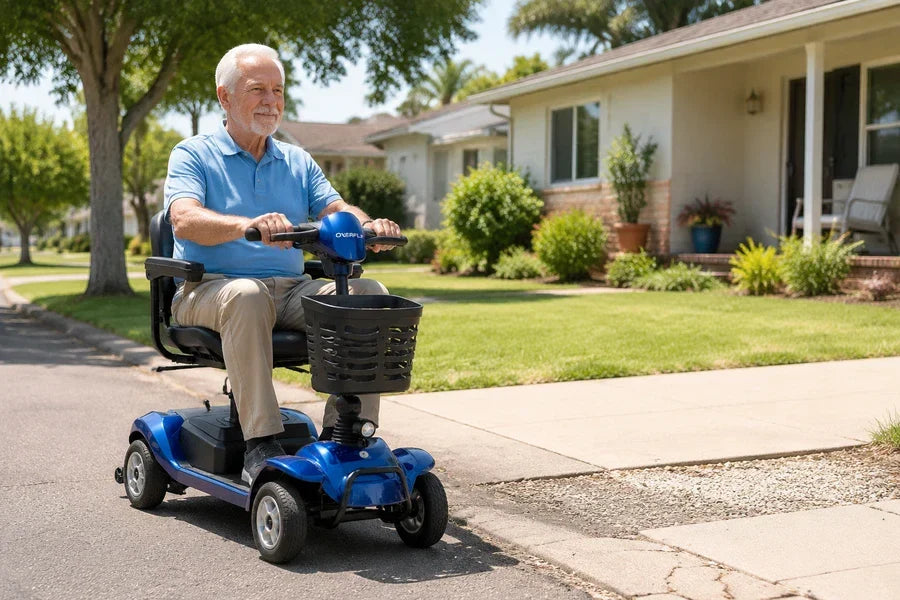
Does arthritis, post-stroke fatigue, MS, COPD, or a recent hip or knee replacement make it hard to go out without help from family? For many riders, the real challenge is not distance alone, but whether the scooter can handle uneven outdoor surfaces safely.
Many handicap scooters feel stable indoors but become risky outdoors when the motor is too weak, the tires are too small, or the base is not steady enough. Based on years of mobility scooter design experience, this guide explains how to choose for real terrain before recommending the most suitable outdoor options.
6 Common Outdoor Surfaces to Check Before You Choose
Many riders do not struggle because the trip is too long. They struggle because one rough patch makes the whole ride feel unsafe. Before choosing a scooter, think about the hardest surface you meet most often.

1. Smooth Floors and Pavement
This is the easiest kind of ground for a mobility scooter — shopping malls, hospitals, clinics, and newly built sidewalks. The surface is flat, there are few obstacles, and riding feels relaxed.
If most of your trips are in places like these, a lightweight model is enough, and solid tires will handle daily use just fine. Two things matter when you choose: how easily the scooter turns in tight spaces, and how well it folds for storage — at home, in an elevator, or in the trunk of your car.
2. Cracked Sidewalks and Curb Ramps
Some road problems your body feels first. A sudden jolt through the seat, a scrape from underneath, a slowdown when the front wheel catches a raised slab. On older sidewalks, these things happen every few yards.
If you already deal with back, hip, knee, or other joint pain, this kind of jolting becomes uncomfortable fast. For surfaces like this, don't just chase the lightest, easiest-to-carry scooter — choose for stability instead. A 4-wheel base, larger tires, and more ground clearance let you cross cracks, bumps, and ramps without catching or scraping.
Ramps deserve a closer look, too. The ramps written into the standards and the ramps you actually meet in the world are often two different things. The U.S. Access Board sets the ADA reference at roughly 1 inch of rise for every 12 inches of length, but plenty of real ramps are shorter, steeper, or just not up to code. So don't pick a scooter based only on the ideal numbers in a brochure — think about whether it can handle the ramps on the routes you actually use.
3. Short Gravel and Loose Stones
Gravel is tricky because the stones move. The wheels roll forward. By the time you notice, the scooter has already drifted off line.
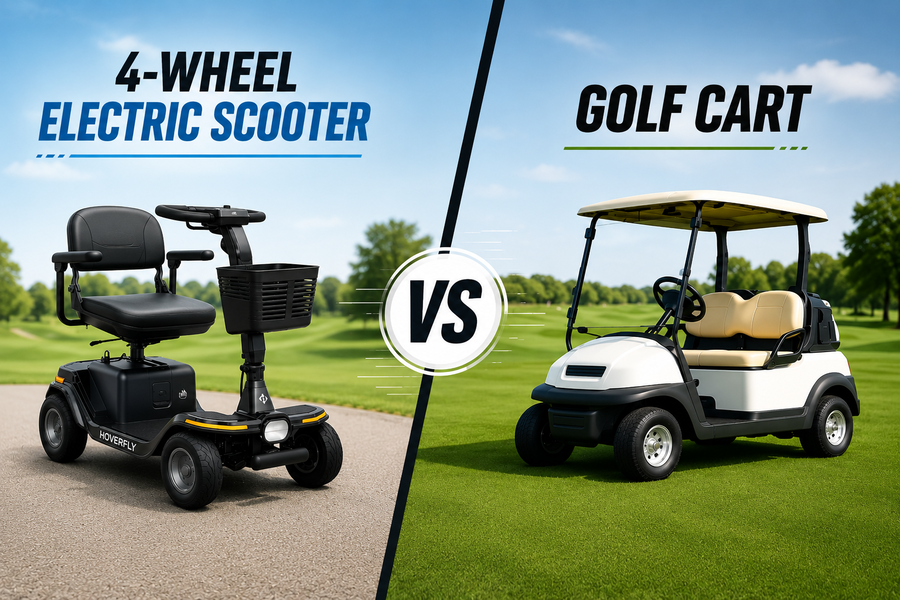
3-wheel scooters are less stable on this kind of surface — there's only one wheel in front to take that shove. 4-wheel models have better front support and ride noticeably steadier on gravel. For a fuller comparison, see Hoverfly's guide to 3-wheel vs. 4-wheel mobility scooters.
If gravel is part of your regular routes, keep three things in mind when you shop:
- Pick 4 wheels.
- Go with wider tires for better grip.
- Make sure the motor is strong enough that the wheels don't bog down, slip, or stall on loose stone.
If gravel comes up often, a basic lightweight travel scooter isn't the right fit.
4. Grass and Lawns
Grass looks soft, but it isn't easy to ride on. The wheels sink in slightly, turning resistance goes up, the motor has to work harder, and the battery drains a lot faster than on concrete.
If you're just going to a park bench, a gazebo, or a picnic spot, most scooters can handle it. But a large grass field or wet grass after rain, and not somewhere a basic scooter should go.
If grass is a regular part of your week, choose a 4-wheel model with stronger power and wider tires. And after rain, plan a shorter trip — don't estimate your range from how the scooter performs on pavement.
5. Dirt Paths
Dirt paths are basically the outer limit for a standard mobility scooter. From a distance the path may look smooth, but up close you'll find tree roots, soft patches, small holes, and tire ruts. And once a light scooter gets stuck, it may be difficult to get it moving again on your own.
For the occasional short section, you can slow down and steer around the worst spots. But if a dirt path is on your regular route, you should look at a heavier outdoor model. Pneumatic tires, a strong motor, and real shock absorbers will be more helpful. One more thing: rough surfaces use noticeably more power. The range printed on the spec sheet is usually tested on ideal pavement, so on dirt always plan with a generous battery buffer.
6. Rural Property and Rough Outdoor Routes
If your daily environment includes a long gravel driveway, a bumpy private road, a farm track, or an uneven yard, a basic scooter is going to struggle.
It may climb slowly, scrape its underside, lose battery faster than expected, which will leave you stranded somewhere you can't easily walk back from. For this kind of use, the question isn't really "can the scooter move" — it's whether it can complete your full route safely and reliably.
A heavy-duty outdoor scooter is the better fit. Look at four things: enough motor power, enough ground clearance, big enough tires, and a battery range that covers your daily route with real margin to spare.
Safety note: Sand, deep mud, heavy snow, and any wet ground where water could splash up onto the battery are off-limits for any standard mobility scooter. Even when the frame looks rugged, don't treat it like a true off-road vehicle.
The Ultimate Match Matrix: Terrain vs. Specs
Use the row that matches your hardest regular surface. Do not choose based on your easiest surface or your average trip. If your route includes gravel every week, shop for gravel. If your route includes grass every weekend, shop for grass.
| Terrain | Minimum Motor | Minimum Ground Clearance | Tire Type | Suspension | Wheels |
|---|---|---|---|---|---|
| Smooth pavement | 180W | 2 in | Solid 8 in+ | Optional | 3 or 4 |
| Cracked sidewalks | 200W | 3 in | Solid PU 8.5-9 in+ | Rear preferred | 4 preferred |
| Short gravel or crushed stone | 250W | 3.5 in | Solid PU 9 in+ or wide pneumatic | Rear minimum | 4 |
| Sustained gravel paths | 350W | 3.5 in | Wide pneumatic 10 in+ | Full | 4 |
| Grass and lawns | 350W | 3.5 in | Wide tread | Full | 4 |
| Dirt and park trails | 500W | 4 in | Pneumatic 10 in+ | Full | 4 |
| Light off-road or rural property | 700W+ | 5 in | Pneumatic 12 in+ | Full heavy-duty | 4 |
Two Picks We Actually Tested

We're the engineering team at Hoverfly, and we work on mobility scooters every day. We hear the same problem from many riders: a scooter that feels fine at home becomes shaky or hard to control once the ground gets rough — think cracked sidewalks or loose gravel.
To find scooters that hold up outside, our engineers spent two months testing different models on indoor floors, sidewalks, and short outdoor paths. We checked how each one turned, crossed bumps, and stayed steady.
In the end, we picked two models worth recommending: one for indoor and smooth-sidewalk use, and one for everyday mixed routes.
The Foldable Travel Scooter: Hoverfly T3

The Hoverfly T3 is built for the indoor and smooth-sidewalk rider. It features a 3-piece modular disassembly—detach the 1.8 lb basket and 8.3 lb seat, leaving a manageable 51 lb folded frame. Plus, its internal, non-removable LiFePO4 battery keeps vital electronics fully protected from daily travel wear and tear. The 3-wheel base turns tightly, which is useful in apartment hallways, clinic corridors, and wheelchair-accessible bathrooms.
The 200W brushless motor, 8.5-inch PU solid tires, 13-mile range, 25.6V 8Ah LiFePO4 battery, and compact folding frame make it a practical match for smooth pavement, store entrances, parking-lot ramps, and standard curb cuts. Choose the T3 if portability and maneuverability matter more than gravel or grass performance.
The Everyday All-Rounder: Hoverfly T4

Do you often feel your scooter slip on gravel, stall halfway up a steep curb ramp, or worry about getting a flat tire far from home? For riders who deal with mixed outdoor surfaces every day, these are everyday frustrations.
The Hoverfly T4 4-wheel mobility scooter is designed to solve exactly these problems. The 4-wheel anti-tip base keeps the scooter steady on cambered sidewalks and loose stone, where 3-wheel models often drift sideways. The 250W brushless motor pulls through cracked pavement, parking-lot gravel, and short dry grass without bogging down. The 9-inch PU solid tires never go flat — a real safety margin for riders with limited grip strength or anyone who lives alone.
Other useful details: a 360-degree swivel seat for easier transfers, a 12.4-mile range, a 330 lb weight capacity, and a highly dependable 24V 12Ah heavy-duty lead-acid battery. This setup prioritizes cost-efficiency and lowers the scooter's center of gravity, keeping you firmly planted on uneven outdoor paths.
Outdoor Safety Rules That Protect You and the Scooter
Outdoor riding puts more stress on a mobility scooter than indoor use. Slopes, gravel, grass, and wet pavement can reduce stability, drain the battery faster, and increase the risk of tipping. A clinical review published on PubMed Central notes that tip-over events are one reported accident type among mobility scooter users. So you can do the following things to keep your riding safe.
Charging the battery after each ride, avoid letting it drop below 20 percent, and plan for less range on rough ground than the advertised number. You should also check the tires once a month for cracks, flat spots, or worn tread, even if the scooter uses solid tires that do not need air. For more detailed care steps, see Hoverfly's mobility scooter maintenance guide.
Staying within the scooter's incline rating, slow down before turning downhill, and avoid puddles, heavy rain, wet grass, and snow above 2 inches. When you are not using the scooter, store it indoors or under a weatherproof cover.
FAQs
How much ground clearance do I need?
For smooth pavement, 2 inches may be enough. For cracked sidewalks, look for at least 3 inches. For short gravel and grass, 3.5 inches is better. Dirt paths and rural property usually require 4 to 5 inches or more.
Outdoor vs. all-terrain vs. off-road scooter: what's the difference?
An outdoor scooter is built for pavement, sidewalks, parking lots, and short uneven sections. An all-terrain scooter is stronger and may handle grass, gravel, and dirt paths. An off-road scooter is a heavy-duty vehicle for rough rural property, larger tires, stronger motors, and longer range.
Can I use a scooter in the rain or on wet grass?
It depends on the real situation. A drizzle for a short time is usually manageable, but standard handicap scooters are not built for sustained rain, puddles, wet grass, or snow. Avoid any wet surface that can splash the battery housing or reduce traction.
What's the maximum incline a scooter can climb?
Many travel and mid-size scooters are rated between 6 and 12 degrees. Do not exceed the manufacturer's incline rating, especially when turning or riding downhill. For public built environments, ADA ramp guidance commonly uses a 1:12 maximum running slope for accessible routes, but your scooter's manufacturer rating is still the limit for your specific device.
How far can a scooter go on one charge?
Compact and mid-size scooters commonly range from about 8 to 15 miles, while heavy-duty long-range scooters can go much farther. The Hoverfly T3 is rated for 13 miles, and the Hoverfly T4 is rated for 12.4 miles. On rough surfaces, plan for less than the rated range.
Where can mobility scooters be used under the ADA?
ADA.gov explains that businesses and state or local governments generally must allow people with disabilities who use manual wheelchairs, power wheelchairs, electric scooters, walkers, canes, crutches, and similar mobility aids into public areas where members of the public are allowed to go. For details, see the ADA.gov guidance on wheelchairs, mobility aids, and other power-driven mobility devices. Local sidewalk, road, and bike-lane rules can still vary by city and state.
Conclusion
Match your scooter to your toughest regular surface, not your easiest one. If your routes are mostly indoor areas, smooth sidewalks, and short outdoor crossings, the foldable Hoverfly T3 is the most portable choice. If your week includes pavement, cracked sidewalks, parking-lot gravel, and short dry grass, the Hoverfly T4 is the better everyday all-rounder.
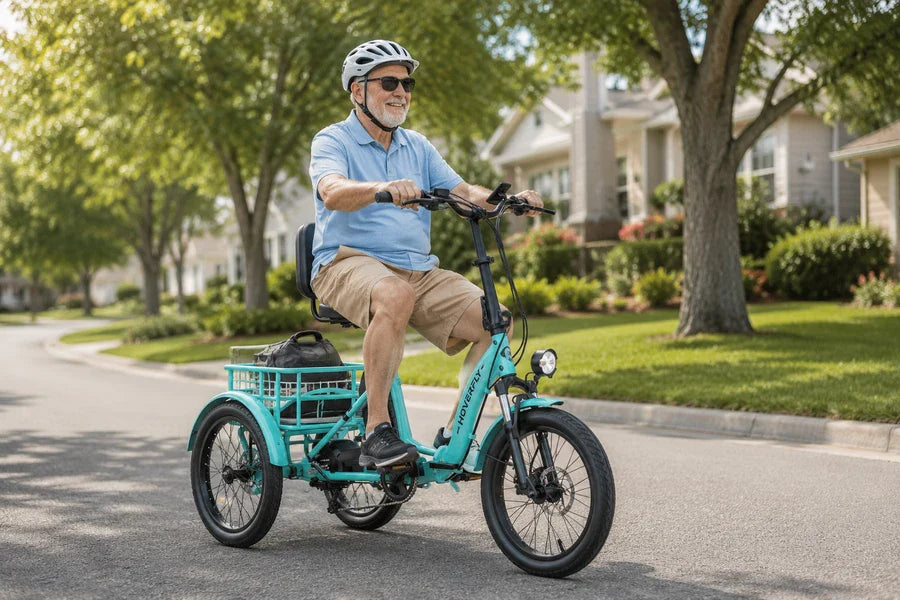
If you live on rural property, ride long gravel driveways, or need to reach barns and outbuildings, neither model is the right vehicle. In that case, compare heavy-duty all-terrain scooters or electric trikes before deciding.
Medical disclaimer: This guide is for general information and is not a substitute for medical or occupational therapy advice. For individual mobility-equipment recommendations, consult your physician, occupational therapist, or licensed mobility specialist. Individual fit, transfer ability, postural support needs, and cognitive load when operating powered mobility devices vary widely and should be assessed in person.



Leave a comment
All comments are moderated before being published.
This site is protected by hCaptcha and the hCaptcha Privacy Policy and Terms of Service apply.