
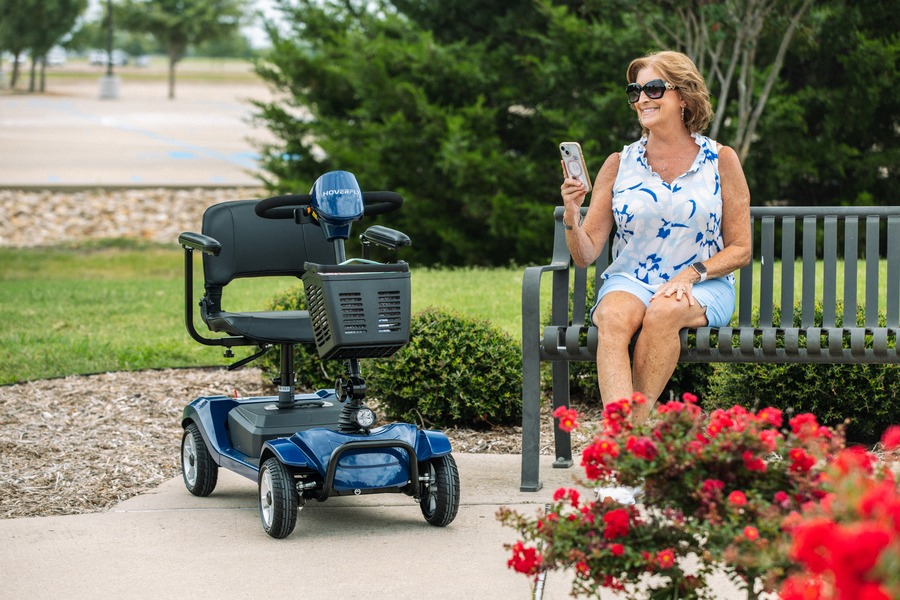

We understand that a full day of travel can ask a lot of seniors, especially when limited mobility, chronic pain, balance concerns, or sensitivity to heat make every extra step feel more demanding. Parking lots, airport terminals, hotel corridors, and tourist attractions may require more walking than expected, leaving less energy for family activities and safe transfers.
A 4-wheel mobility scooter for senior travel can handle the longer distances while allowing the rider to save energy for short walks, standing breaks, and time with family. The Hoverfly T4 and T5 offer different combinations of portability, range, suspension, and loading weight. The right choice depends on the rider, vehicle, route, travel distance, and available loading help.
How a 4-Wheel Mobility Scooter Helps Seniors Conserve Energy While Traveling
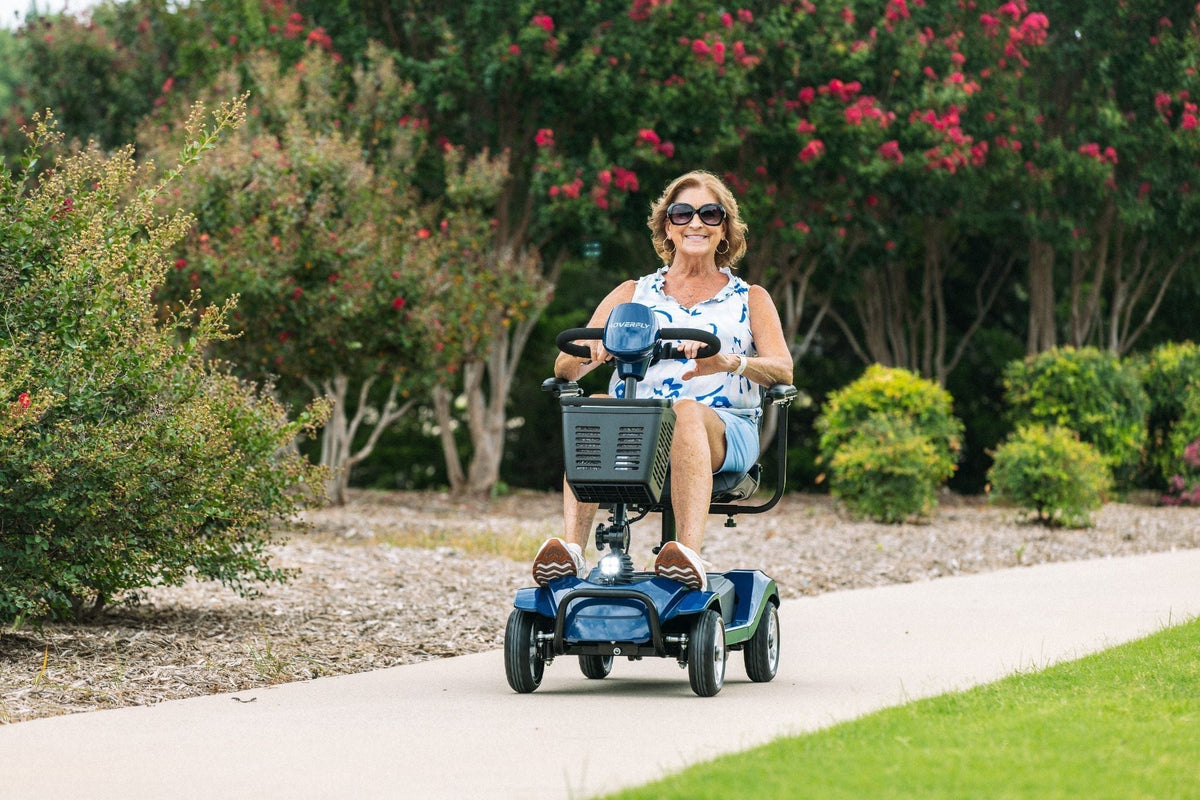
A four-wheel scooter provides stable, reliable support for navigating busy travel environments with greater confidence. At a garden, riding from the parking lot to the main path may leave enough strength for a short walk with family and a steady transfer back into the car. At an airport, scooter use through the terminal can preserve energy for boarding.
It can provide stable support on sidewalks, curb cuts, parking areas, gentle ramps, and firm park paths. To travel safely, slow down before turns, approach ramps straight, and avoid steep, wet, or loose surfaces. Using the scooter for longer distances can also save energy for short walks, standing breaks, or seated exercises. The CDC’s physical activity guidelines for older adults recommend aerobic, strength, and balance activities based on individual health and ability. Ask your physician or therapist which activities are appropriate for you.
Set Up the Scooter for All-Day Travel Comfort
Start with the seat. Keep your hips level, feet secure, and shoulders relaxed. You should reach the tiller without leaning forward. Make sure your knees do not touch the controls. A locking swivel seat allows you to sit from the side and then turn forward. Flip-up armrests can also make boarding easier. Our 3 wheel vs 4 wheel mobility scooter boarding guide explains how wheel layout, seat height, and transfer space affect boarding.
Next, check the ride quality. Solid tires reduce the risk of a flat, but you may feel more vibration on rough surfaces. Suspension can soften repeated movement from sidewalk joints, brick paths, thresholds, and parking-lot repairs. Test the scooter on similar surfaces before a full-day trip and check whether your back, hips, and shoulders remain supported.
Finally, practice the controls. An electromagnetic brake stops the scooter when you release the throttle. Begin at a low speed and practice starting, stopping, turning, and reversing on level ground. Before leaving, check the tiller, armrests, mirrors, and basket. Keep important items within easy reach so you do not need to lean while seated.
Balance Riding, Walking, Activity, and Rest
Use a simple plan to manage your energy throughout the day:
- Before departure: Do a few minutes of gentle seated movement. Check your pain, balance, and energy level.
- On the way: Use the scooter in parking areas, long corridors, and on gentle slopes.
- At the destination: Take short walks or standing breaks when your care plan allows.
- During the outing: Change position, drink water, and take regular breaks.
- Before returning: Save enough energy for transfers, loading the scooter, and getting home safely.
Share the plan with your travel companions. Let them know when you plan to ride, walk, and rest. Regular short breaks can help you stay comfortable for the whole trip.
Make Car Trips and Air Travel More Practical
A scooter is practical for a road trip only when it fits both the vehicle and the person loading it. Start with the heaviest removable part. Then measure the trunk opening, loading height, and cargo space. Practice the full loading process at home, including the return lift after a long day. Our guide to loading a mobility scooter by yourself can help you decide whether a helper, ramp, carrier, or vehicle lift is needed. Secure every component before driving.
Air travel requires airline confirmation. Contact the airline before booking and provide the scooter model and battery specifications. The Hoverfly T5 uses a 384Wh lithium battery. Under the FAA’s air travel rules for mobility devices, the 300Wh limit applies when the battery must be removed and carried in the cabin. A battery that remains securely installed and protected may be handled differently. Airline policies can vary, so ask whether the battery may remain installed and request written confirmation of acceptance.
Choose the T4 or T5 Around Your Comfort and Energy Needs
The right scooter should help you stay comfortable while preserving enough energy for transfers, short walks, meals, and time with family. When comparing the Hoverfly T4 four-wheel mobility scooter and Hoverfly T5 four-wheel mobility scooter, focus on how long you expect to sit, the surfaces you regularly travel over, and how much physical effort you want to reserve for the rest of the day.
|
Comfort and energy factor |
Hoverfly T4 |
Hoverfly T5 |
|---|---|---|
|
Best suited to |
Shorter, planned outings such as appointments, shopping trips, and visits on paved routes. |
Longer outdoor days or routes where added ride comfort and energy reserve are important. |
|
Ride comfort |
Swivel seating and solid tires support everyday use on smooth, paved surfaces. |
Rear suspension and double shock absorption help reduce repeated movement over seams and small bumps. |
|
Daily energy planning |
A practical choice when scooter use is mainly intended to reduce walking between nearby stops. |
Better suited to riders who want to conserve more energy across longer distances or extended outings. |
|
Pace |
Up to 3.7 mph, supporting a steady pace for errands and shorter trips. |
Up to 5 mph, providing more flexibility when traveling with companions over longer routes. |
|
Range reserve |
Up to 12.4 miles for planned outings with a comfortable return margin. |
Up to 16.78 miles for longer days, detours, and additional rest stops. |
The T4 may be the better fit if most outings are short, predictable, and take place on smooth surfaces. For example, a rider might use it between a parking area and a medical office, through a shopping center, or around a paved neighborhood. This can reduce unnecessary walking while preserving energy for standing, transferring, or completing a short walk when appropriate.
The T5 may be more comfortable for riders who spend longer periods seated or regularly encounter sidewalk joints, repaired pavement, and other minor surface changes. Its suspension can help soften repeated movement, while its additional range provides more flexibility for rest stops or unexpected detours. Customer experiences illustrate this type of use: Jimmy M. uses the T5 for longer dog walks and finds the seat comfortable, while Linda M. uses it for grocery shopping and neighborhood trips.
Before choosing either model, think through the entire outing rather than distance alone. Consider how your back, hips, knees, and shoulders feel after prolonged sitting; how often you need to change position; and how much energy you must preserve for transfers and the return home. Test the seat position, tiller reach, turning response, and ride comfort whenever possible. Specifications provide useful planning limits, but the best choice is the scooter that helps you finish a typical day feeling supported rather than exhausted.

Senior Travel Comfort and Activity Checklist
Our guide to selecting a foldable mobility scooter for travel explains folding, battery placement, ground clearance, and tires. Before leaving, check the whole plan:
- Body: pain, balance, alertness, hydration, and transfer ability.
- Route: slopes, curb cuts, rough surfaces, crowds, and accessible entrances.
- Rest: places for sitting, shade, water, meals, and restroom breaks.
- Vehicle: trunk opening, cargo depth, loading path, tie-downs, and luggage space.
- Range: reserve for hills, detours, temperature, rider load, and battery condition.
- Help: the person, ramp, carrier, or lift managing the heaviest component.
- Return: physical and battery capacity for transfers, loading, and arriving home safely.
FAQ
How should seniors store a foldable travel scooter between trips?
Store the scooter in a dry, ventilated, temperature-controlled location where it will not block a doorway or create a trip hazard. Switch it off, remove the key if applicable, and follow the manufacturer’s battery-maintenance instructions during long periods of non-use. Avoid leaving the scooter in a damp garage, an extremely hot vehicle, or an exposed outdoor area.
Can a foldable travel scooter be used in light rain?
Only use the scooter in wet conditions if the manufacturer’s manual permits it. Even light rain can reduce traction and visibility, so slow down and avoid puddles, standing water, wet grass, and steep ramps. If the scooter becomes wet unexpectedly, switch it off, dry it thoroughly, and make sure the charging port and electrical connections are dry before charging.
How often should a foldable mobility scooter battery be charged?
Charging frequency depends on the battery type, trip length, and manufacturer’s instructions. For regular use, recharge the battery after outings rather than waiting until it is completely depleted. Use only the approved charger, charge in a dry and ventilated area, and follow the recommended maintenance schedule when storing the scooter for several weeks or months.
What accessories make a 4 wheel mobility scooter easier to travel with?
Useful travel accessories may include a fitted cover, portable ramp, vehicle lift or carrier, weather-resistant storage bag, cup holder, cane holder, reflective safety accessories, and a secure lock. A spare charger can also be helpful for frequent travelers. Before purchasing an accessory, confirm that it is compatible with the scooter and does not interfere with folding, controls, stability, or the manufacturer’s weight limit.
Conclusion
A 4 wheel mobility scooter helps seniors direct limited energy toward safer transfers, short walks, family conversations, and the parts of travel that carry personal meaning. Match the rider, route, vehicle, battery, rest plan, and loading support before departure. When each part fits, a foldable travel scooter can make comfortable, active travel easier to repeat.
If you would like help comparing models, vehicle fit, or everyday travel requirements, please contact our support team for personalized guidance and a more confident choice.



Leave a comment
All comments are moderated before being published.
This site is protected by hCaptcha and the hCaptcha Privacy Policy and Terms of Service apply.