
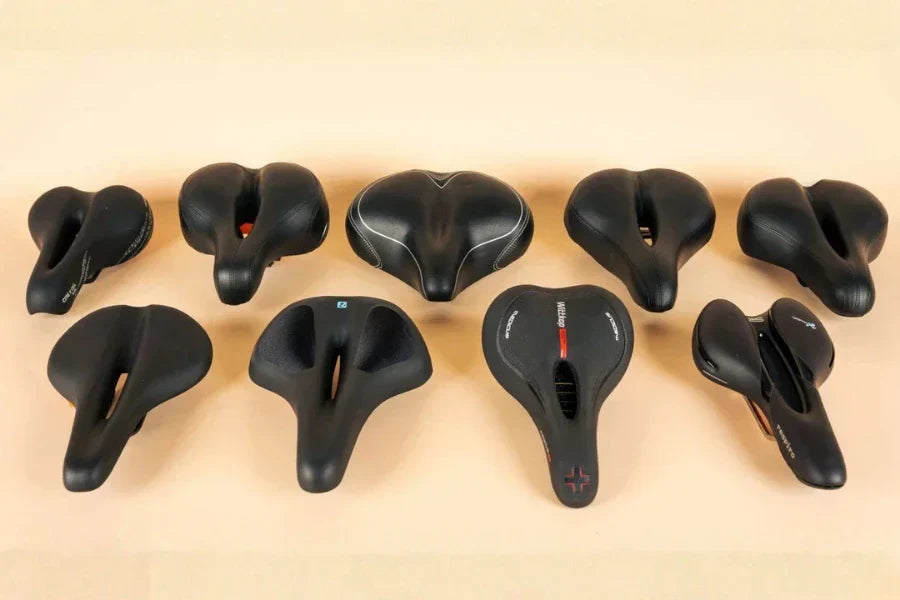
The best comfort cycle saddle for tricycles and upright bikes is wide enough to support your sit bones fully, uses dual-density foam or gel for pressure relief, and stays firm enough not to compress flat under load. For tricycle riders specifically, a saddle with a backrest or extra-wide platform — at least 11 inches — reduces back fatigue over longer rides. Width, density, and rail fit matter more than brand name or price.
The 10 Best Comfort Cycle Saddles for Tricycles and Comfort Bikes
A Quick Comparison
| Product | Best for | Width | Weight | Rails | Key selling point |
|---|---|---|---|---|---|
| Brooks B17 Standard | Long rides / daily commuting | 175mm | 540g | Steel / Titanium | Tensioned leather molds to sit bones after 200–300 miles |
| Cloud-9 Cruiser Select | Recreational tricycle riders | ~11 in | 590g | Steel | Coil-spring suspension + dual-density foam |
| Hoverfly ET1 | Integrated comfort seat for e-trikes | Wide platform | -- | Integrated backrest | Adjustable lumbar support reduces back fatigue |
| Selle Royal Respiro Moderate | Ventilation / warm climates | 273mm | 450g | Steel | Royalgel inserts + center ventilation channel |
| Bikeroo Oversized | Budget trike upgrade under $40 | ~11 in | 580g | Steel | Universal 22.2mm fit, easy install |
| Schwinn Commute Gateway | City commuting / short trips of 3–8 miles | 250mm | -- | Steel | Mid-density foam + perineal cutout |
| ISM PN 1.1 | Eliminating numbness / soft tissue relief | 155mm, nose-free | 286g | CrMo | Split-nose design removes forward pressure |
| Terry Butterfly Ti | Women's comfort saddle | 155mm | 286g | Titanium | Female-specific sit bone spacing + deep cutout |
| Ergon ST Core Comp Men | Ergonomic upright riding | 145/155mm | 328g | Steel | The floating-core shell flexes with the pelvis |
| Velo Orange Mustache | Long-distance touring, 20+ miles | 255mm | 560g | Steel | Wide platform + tufted center prevents off-center drift |
1. Brooks B17 Standard — Best Comfort Saddle for Long Rides
Width: 175mm | Weight: 540g | Rails: Steel or titanium
The B17 is a tensioned leather saddle. New, it is firm. After 200–300 miles, it molds to your exact sit bone shape and stays there. For riders who spend consistent time in the saddle — daily trike commuters, touring cyclists — this break-in investment pays off.
It fits tricycle geometry well because of its flat profile and wide rear. It is not the right choice if you need comfort immediately, but it is one of the only saddles that genuinely improves with use rather than degrading.
2. Cloud-9 Cruiser Select Saddle — Best for Recreational Tricycle Riders
Width: ~11 inches | Weight: 590g | Rails: Steel
This is one of the most widely recommended saddles for tricycles and cruiser bikes. The coil-spring suspension system absorbs road vibration directly at the saddle level, which is useful on trikes with no rear suspension. Dual-density foam keeps the center firm while the outer edges cushion the sit bones.
The wide platform suits heavier riders and those who ride for leisure, not performance. It is not a high-mileage saddle — the foam compresses over 12–18 months of regular use — but for casual riding, it is one of the most accessible comfort upgrades available.
3. Hoverfly ET1 — Best Electric Trike with Integrated Comfort Seat
Width: Wide cushioned platform | Weight: 90 lbs | Seat system: Integrated backrest system

Most comfort saddle upgrades fix one problem — pressure at the sit bones — while leaving everything else unchanged. The Hoverfly ET1 takes a different approach. The seat system is engineered as part of the trike itself: a wide, cushioned platform with an adjustable backrest that supports both the sit bones and the lumbar spine simultaneously.
On a standard tricycle with a fixed riding position, lower back fatigue builds steadily over time. The ET1's backrest addresses this directly: it adjusts angle independently of the seat base, so you can dial in lumbar support without repositioning the whole saddle. For riders with back pain, arthritis, or limited core strength, that combination extends ride time without the discomfort that typically cuts it short.
4. Selle Royal Respiro Moderate — Best Ventilated Comfort Saddle
Width: 273mm | Weight: 450g | Rails: Steel
The Respiro line uses Royalgel in the sit bone zones and a ventilation channel down the center. For riders in warm climates or those who ride in summer, that channel makes a measurable difference in heat buildup. The Moderate version suits upright riding positions. The wider, flatter profile supports both men and women on comfort and hybrid bikes.
5. Bikeroo Oversized Comfort Saddle — Best Budget Tricycle Saddle
Width: ~11 inches | Weight: 580g | Rails: Steel
For riders upgrading from a stock trike seat without spending over $40, Bikeroo's oversized saddle is a practical option. The foam is softer than ideal for long-distance use, but for rides under an hour on flat terrain, it handles the job. It is wide enough for most sit bone widths, with a center groove for soft tissue relief. It ships with a universal adapter compatible with most standard 22.2mm seat posts, with no tools beyond an Allen key required.
6. Schwinn Commute Gateway Saddle — Best for City and Commuter Trikes
Width: 250mm | Width category: Wide | Rails: Steel
Designed for the upright commuter position, the Schwinn Commute Gateway has a moderate-density foam pad and a center cutout for perineal pressure relief. It suits riders who cover 3–8 miles per trip: grocery runs, neighborhood routes, and daily light use.
The padding density sits between cloud-soft and performance-firm. It will not cause the bottoming-out problem that cheaper soft foam saddles develop over time.
7. ISM PN 1.1 — Best Cycle Saddle for Eliminating Numbness
Width: 155mm at nose-free zone | Weight: 286g | Rails: CrMo
The ISM split-nose design removes the front section of the saddle entirely. For riders who experience numbness or soft tissue discomfort on standard saddles, this addresses the root cause: forward pressure on the perineum.
On a tricycle with a fixed seat position, this design is especially relevant. You are not shifting forward or back dynamically; you are stationary, and any saddle pressure on sensitive areas compounds over time. The ISM PN 1.1 works well when saddle height is set correctly, slightly higher than on a standard saddle to compensate for the shorter effective length.
8. Terry Butterfly Ti — Best Women's Comfort Saddle
Width: 155mm | Weight: 286g | Rails: Titanium
Terry has specialized in women's saddle design for over 30 years. The Butterfly Ti features a short nose, a wider rear to match female sit bone spacing, and a pressure cutout that runs deeper than most competitors. Gel inserts sit directly under the sit bone contact zones. The titanium rails add flex, which is a genuine comfort factor, not just a weight reduction feature. Rail material affects micro-vibration absorption, and titanium outperforms steel in that regard.
9. Ergon ST Core Comp Men — Best Ergonomic Saddle for Upright Riders
Width: 145mm men's / 155mm women's | Weight: 328g | Rails: Steel
The floating-core construction means the saddle shell flexes with the pelvis rather than staying rigid. On longer rides, this reduces the lateral friction that causes hot spots at the sit bone edges. The ST Core Comp sits at mid-range price and serves hybrid, commuter, and comfort bike riders who want biomechanical performance without a racing saddle profile.
10. Velo Orange Mustache Saddle — Best for Touring and Long Tricycle Rides
Width: 255mm | Weight: 560g | Rails: Steel
For riders covering 20+ miles on a trike or touring bike, this wide leather-look synthetic saddle provides consistent support across the full sit bone zone. The tufted center adds a small cushion effect, and the wide platform prevents the rider from migrating off-center during long stretches.
It is not the lightest option. The steel rails and wide shell add weight, but on a trike where weight distribution is shared across three wheels, that is less of a concern than on a bicycle.
How to Choose the Right Saddle: 4 Decisions That Actually Matter

1. Measure Your Sit Bone Width First
Saddle width should match your sit bone spacing, not your body size. Sit bone width has no correlation with body weight or hip width. To measure: sit on a piece of corrugated cardboard, stand up, and measure the center-to-center distance between the two impressions left behind. Add 20–25mm for a comfort saddle. That is your target width. Most comfort saddles for tricycles fall in the 250–280mm range. Road saddles run 130–155mm, which is far too narrow for upright trike riding.
2. Riding Duration Determines Foam Density
- Under 30 minutes: Softer foam is acceptable.
- 30–90 minutes: Medium-density foam or gel is a better match.
- 90 minutes+: Choose medium-firm foam with a pressure channel. Soft foam compresses and creates more discomfort, not less.
3. Match Saddle Profile to Ride Position
Flat saddles work for upright or slightly upright positions. Curved saddles suit slightly forward-leaning positions. On a standard trike, you want flat or minimally curved. A saddle designed for a road bike drop position will tilt your pelvis wrong and cause lower back strain.
For riders choosing between a trike and a two-wheel e-bike, how riding position affects seat comfort and joint load is covered in detail; the upright vs. forward-lean comparison is directly relevant to saddle profile selection.
4. Check Your Rail Compatibility
Most trike seat posts use a standard 22.2mm or 25.4mm rail clamp. Measure your existing post clamp before buying. Saddles with 7mm round steel rails fit nearly all standard clamps. Oval or carbon rails require specific clamp designs.
Which Saddle Should You Choose?
Four questions tell you most of what you need to know: How long do you ride? What position do you sit in? Do you need the saddle to work immediately, or are you willing to break it in? And are you upgrading a saddle, or do you need the whole platform to work better?
Ride duration matters more than most people realize, because foam behaves differently at different time thresholds. Here are three clear paths based on rider type and ride length.
If You Ride Recreationally for Under 90 Minutes and Want Immediate Comfort
Cushioning needs shift around the 40-minute mark, so the right saddle depends on how long your typical ride lasts.
For rides under 30 minutes — neighborhood loops, grocery runs — softer foam is acceptable. The foam does not have time to fully compress, and the cushioning helps on small bumps. A wide, soft saddle like the Bikeroo Oversized handles this range without issue.
For rides between 30 and 90 minutes — park rides, weekend cruises — you need medium-density foam or gel. Around the 40-minute mark, soft foam saddles start sinking, and that is when sit bone pain begins on cheap upgrades. The Cloud-9 Cruiser Select is the most direct option here. It is wide enough for most sit bone widths, the dual-density foam keeps the center firm while the edges cushion, the coil-spring suspension absorbs road vibration without any break-in period, and it fits standard seat posts without adapters. You will feel the difference on the first ride.
If You Want Comfort Built into the Platform Itself, Not Added on Top
For this situation, the Hoverfly Nephele takes a different approach. The saddle height adjusts between 29.9 and 36.2 inches to fit riders from 5'1" to 6'2", and the flip-up design gives you direct access to the removable 36V battery without removing the seat. The step-through low frame means you mount and dismount without swinging a leg over, which is relevant for riders with hip or knee restrictions. Front suspension fork and 16-inch fat tires handle road vibration before it reaches the sit bones.
If You Ride 90 Minutes or Longer and Want a Saddle that Holds Its Shape over Time
Once you cross the 90-minute mark — touring, daily long commutes — soft foam works against you. Counterintuitively, the firmer the saddle on long rides, the less it hurts. Riders often trade plush 2-inch foam saddles for firm leather Brooks models and report less pain early because firm saddles do not bottom out. You want medium-firm foam with a pressure channel, or tensioned leather.
The Brooks B17 is the strongest long-term investment in this category: it molds to your exact sit bone geometry after 200–300 miles and stays there. The Ergon ST Core Comp is a faster-gratification alternative: the floating shell flexes with pelvic movement, reducing hot spots on rides over 90 minutes without requiring a break-in period.
FAQ
What is the most comfortable saddle for a tricycle?
The most comfortable tricycle saddle is typically a wide saddle, usually 250–280mm, with medium-firm foam and a flat rear profile designed for upright riding.
How wide should a comfort cycle saddle be?
For upright and tricycle riding, a saddle should usually be at least 250mm wide. Road saddles, usually 130–155mm, are too narrow and place pressure on the soft tissue between the sit bones. Measure your sit bone width by pressing into soft cardboard while seated, then add 20–25mm to find your ideal saddle width.
What is the difference between a comfort saddle and a regular bike saddle?
Comfort saddles are wider at the rear to match upright sit bone positioning, use softer or dual-density foam for cushioning, and often include a center channel or cutout for pressure relief. Performance saddles are narrow, firm, and shaped for riders leaning forward aggressively. Using a performance saddle on a tricycle or upright bike can create sit bone and soft tissue pain within minutes.
Can I upgrade the saddle on my existing tricycle?
Yes, in most cases. Check your seat post diameter, since most standard posts are 22.2–27.2mm, and confirm the rail spacing on any saddle you buy. Standard 7mm round steel rails fit almost all stock seat post clamps. Installation requires only an Allen key and usually takes under 5 minutes.
Does more padding mean a more comfortable saddle?
No. Very soft foam compresses within minutes under body weight and pushes up in the middle, moving pressure from the sit bones to the soft tissue in between. Medium-firm foam that holds its shape provides better long-term pressure distribution than ultra-soft padding.
Conclusion
The right comfort cycle saddle for a tricycle or upright bike comes down to three measurable things: sit bone width match, foam density relative to ride duration, and saddle profile suited to your riding posture. Soft is not always better. Wide is not always better. The saddle that holds its shape after two hours of riding, supports your sit bones fully, and does not compress your soft tissue is the one that works.
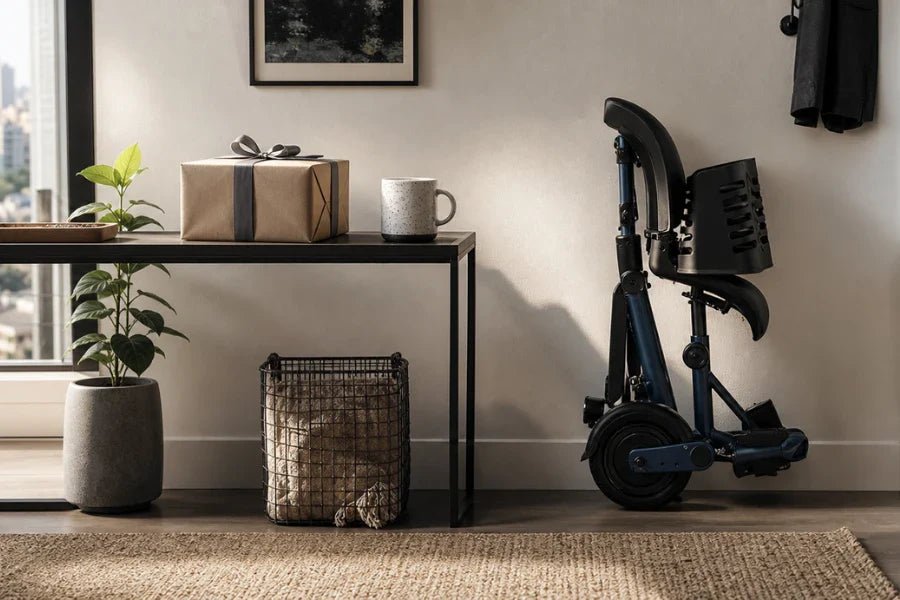
For riders who want to skip the saddle upgrade process entirely, the Hoverfly ET1 Folding Electric Trike includes a purpose-built seating system that addresses comfort at the platform level, not as an afterthought.



Leave a comment
All comments are moderated before being published.
This site is protected by hCaptcha and the hCaptcha Privacy Policy and Terms of Service apply.