
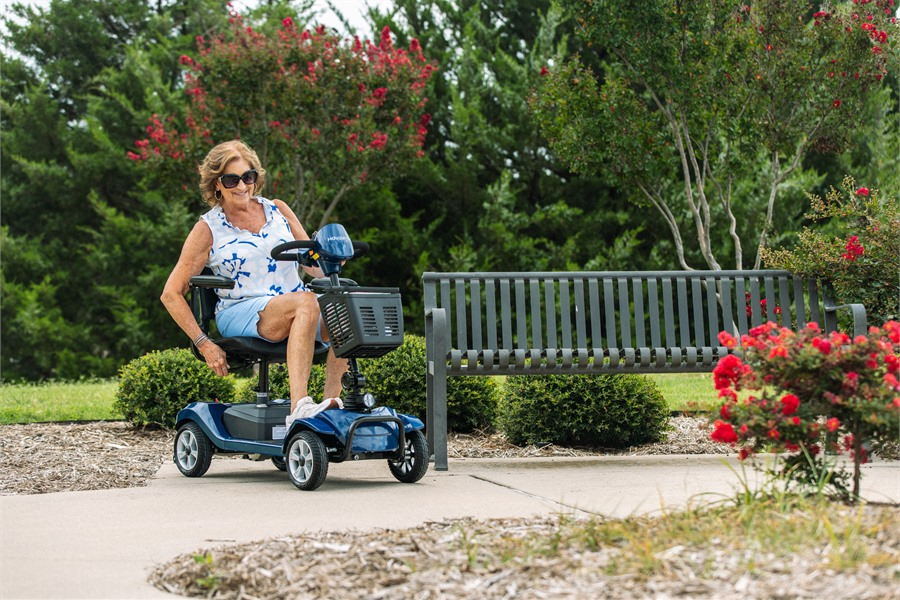
A mobility scooter gives you freedom through warmer months, but winter storage needs more care than simply parking it in the garage. Cold temperatures can temporarily reduce battery output during use, while moisture, road salt, and long periods without use can affect the battery, tires, brakes, controls, and scooter frame.
At Hoverfly, we design mobility scooters for practical daily independence. If you plan to leave your scooter in a garage for several weeks, bring a removable battery indoors for charging, or keep a folded scooter near the door until spring, the two details that matter most are battery temperature and moisture control. A cold, damp storage area can contribute to corrosion, battery drain, and unreliable controls when riding starts again.
Why Winter Storage for a Mobility Scooter Matters
During normal riding, small problems are easier to notice. You may feel weaker range, slower brake response, loose accessories, or unusual movement. During winter storage, those issues can sit unnoticed for weeks or months.
The main storage risks are battery drain, freezing temperatures, damp electrical areas, corrosion from salt residue, and tire flat spots. A short preparation routine before storage can prevent bigger problems when spring returns.
Clean and Dry the Scooter Before Storage
Before storing your mobility scooter, remove dirt, dust, mud, leaves, and salt from the frame, wheels, foot deck, baskets, seat, and armrests. Use a soft damp cloth for general cleaning and a dry cloth near the dashboard, charging port, battery area, and wiring.
Do not spray the scooter with a hose or pressure washer. Too much water can reach electrical components and upholstery. After cleaning, let the scooter dry fully before covering it or moving it into long-term storage.
Mobility Scooter Battery Storage in Winter
Battery care is the most important part of winter storage, but the correct routine depends on the model. Our Hoverfly T3 3-wheel foldable mobility scooter uses a 25.6V 8Ah LiFePO4 integrated, non-removable battery. For winter, we recommend storing and charging the T3 indoors as a complete scooter whenever possible. Our Hoverfly T4 4-wheel mobility scooter uses a removable 24V 12Ah lead-acid battery, so you can bring the battery indoors for charging while keeping the scooter in a protected storage area.
For both models, avoid deep discharge and protect the battery from freezing temperatures. Follow the owner’s manual for the charging interval and storage condition for your specific model. Do not assume that every storage check requires a full charge.
If the scooter or battery has been stored in a cold area, let the battery or complete scooter return to room temperature before charging. Then charge it according to the instructions for your model. For more year-round care advice, read our complete maintenance guide for Hoverfly mobility scooters
| Model and Battery | Best Winter Storage Practice | Check Schedule | Common Mistake to Avoid |
|---|---|---|---|
| Our Hoverfly T3: 25.6V 8Ah LiFePO4 integrated, non-removable battery | Store the scooter in a cool, dry indoor area as a complete unit whenever possible. Follow the current T3 manual for the correct charging level and interval during longer storage. | Store the complete T3 indoors in a cool, dry, frost-free area. Its battery is integrated and non-removable, so avoid full discharge and follow the latest T3 manual or Hoverfly support guidance for periodic charging. | Do not let the battery fully discharge, freeze, or charge while the scooter is still cold from storage. |
| Our Hoverfly T4: 24V 12Ah removable lead-acid battery | Remove the battery when needed and store it fully charged in a dry, stable-temperature indoor space. Lead-acid batteries are especially sensitive to sitting discharged. | During the off-season, check the removable battery, charger, plug, and terminals regularly, and charge the battery for 6–8 hours every two weeks. | Do not leave the scooter parked for months with a low battery or leave the removable lead-acid battery unchecked throughout winter. |
| Charger | Keep the charger indoors, dry, and off damp floors. Charge in a well-ventilated area and coil the cable loosely after use. Do not leave the charger continuously connected throughout storage unless your model’s manual specifically instructs you to do so. | Inspect the cable, plug, and charging port before each charging session. | Do not use a damaged charger, an extension cord, or a charger in a damp or poorly ventilated area. |
Choosing the Right Storage Location
We recommend storing your mobility scooter indoors, in a dry area protected from freezing temperatures. A heated garage, enclosed porch, utility room, or spare room is usually better than an outdoor shed.
If you store the scooter in a garage, keep it away from the door where slush, road salt, and cold drafts are strongest. Avoid placing the scooter directly beside lawn chemicals, strong cleaners, or heavy tools that could fall onto it. Leave enough room for battery checks and safe charging.
If you cover the scooter, make sure it is completely dry first. Use a breathable cover rather than sealing moisture against the frame, controls, or upholstery.
Protect Tires, Brakes, and Controls
Tires can develop flat spots when a scooter sits in one position for a long time. Before storage, inspect each tire for cuts, uneven wear, debris, or visible damage. Our Hoverfly T3 and T4 use solid, flat-free tires, so you do not need to inflate them. Instead, check the tread surface, remove small stones or debris, and change the pressure point during long-term storage.
For longer storage, roll the scooter slightly every few weeks so the same part of the tire is not always carrying the load. You should also test the brake response, throttle, reverse function, lights, horn, freewheel lever, seat rotation, and folding points before storage. If something feels loose or delayed, contact our support team before winter rather than waiting until spring.
Winter Storage Mistakes to Avoid
A common winter storage setup is a scooter parked near a garage door, with the charger on the floor and the battery left unchecked until the weather warms up. Moisture, cold drafts, salt residue, and slow battery drain can create avoidable problems in this situation.
Before putting your scooter away for several weeks or months, avoid these habits:
Do not store the scooter outdoors without full protection.
Do not cover it while wet or salty.
Do not let the battery run completely empty.
Do not charge a frozen or very cold battery.
Do not leave the charger continuously connected unless your model’s manual specifically requires it.
Do not use an extension cord for charging unless the applicable manual specifically permits it.
Do not leave the charger on a damp floor or charge in a poorly ventilated area.
Do not spray the control panel, battery area, or charging port with water.
Do not test the scooter on ice, packed snow, or slippery ramps.
If You Still Ride in Winter
Some riders continue using their mobility scooter through winter for errands, appointments, or short outdoor trips. If that is your routine, be selective about conditions. Mobility scooters should not be used on ice, snow-covered surfaces, soft ground, or unsafe slopes.
After winter rides, wipe the scooter dry, especially around the wheels, frame, and foot deck. If the scooter has been exposed to cold weather, bring it indoors and let the battery warm before charging.
When to Contact Our Support Team Before Riding Again
Before your first spring ride, inspect the scooter carefully. Contact our Hoverfly support team before riding if the battery will not charge, the scooter loses charge unusually fast, the charger appears damaged, the scooter does not power on normally, the brake response feels delayed, or the control panel has been exposed to moisture. You can also check your model’s manual before charging or riding again.
Our support team can help you determine whether your scooter needs a simple check, a replacement part, or professional service.
Spring Startup Checklist
When winter ends, complete a slow startup instead of immediately returning to normal use.
Let the scooter or battery return to room temperature before charging.
Charge the battery according to your model’s manual.
Inspect the charger, cable, plug, and charging port.
Check the tires, brakes, seat, armrests, baskets, and folding points.
Confirm the throttle, reverse, horn, lights, display, dashboard, and battery indicator work normally.
If you used freewheel or manual mode to move the scooter, return the lever to drive mode before powering on or riding.
Take a short test ride in a dry, flat, open area.
Stop riding if you hear unusual sounds or feel unstable movement.
Our Hoverfly Mobility Scooters for Easier Storage
If you need a mobility scooter for short daily trips, narrow indoor spaces, and easy storage, take a look at our T3. The three-position adjustable tiller helps you find a comfortable steering height, while the quick fold-and-unfold design makes it easier to prepare, transport, and put away. Front and rear braking, a headlight, and a rear reflector add practical support when you want simple control and better visibility.
The T4 is built for riders who need more support during regular neighborhood travel. Its 250W brushless motor, 330-pound weight capacity, and electronic brake make everyday riding more convenient. The four-piece breakdown design reduces the difficulty of loading a heavier scooter, so you do not have to move the entire vehicle in one piece.
Final Thoughts
Winter storage is easier when you match the routine to the scooter. Clean and dry the scooter before storage, protect it from freezing temperatures and moisture, follow the correct model manual for battery charging, and inspect the brakes and controls before riding again.
When you are ready to compare practical options for year-round independence, explore our Hoverfly mobility scooter collection.
FAQ
Can I leave my mobility scooter in an unheated garage all winter?
It depends on how cold and damp the garage gets. If the space can freeze or collect moisture, we recommend bringing the scooter or battery indoors whenever your model allows it. If garage storage is your only option, keep the scooter dry, away from the door, and let the battery warm to room temperature before charging.
Why does my mobility scooter lose range in cold weather?
Cold temperatures can temporarily reduce battery output while riding. This is different from battery drain during long-term storage. If the range stays weak after the battery warms up, contact our support team so we can help determine whether the battery needs testing or replacement.
Should I remove the battery for winter storage?
Only remove the battery if your scooter is designed for that. With our T4, the removable 24V 12Ah lead-acid battery can be brought indoors for charging and storage. With our T3, plan storage around charging the complete scooter indoors because its 25.6V 8Ah LiFePO4 battery is integrated and non-removable.
Which is easier to store in winter: the Hoverfly T3 or T4?
The T3 is easier to store when space is limited because its foldable design and complete-scooter indoor charging routine suit compact homes. The T4 is more convenient when you want to remove the 24V 12Ah lead-acid battery and charge it indoors separately.
Can I use my mobility scooter right after taking it out of cold storage?
Not immediately if the scooter or battery is very cold. Let it warm up first, especially before charging, then check the brakes, controls, tires, and battery indicator before riding. If you used freewheel or manual mode to move it, return the lever to drive mode before riding. A short test ride in a dry, flat area is the safest way to confirm that everything feels normal.




Leave a comment
All comments are moderated before being published.
This site is protected by hCaptcha and the hCaptcha Privacy Policy and Terms of Service apply.