

A good foldable mobility scooter should fold quickly, lift without strain, and stay stable every time you ride it.
Choose the wrong one, and daily errands become a hassle—awkward folding, short battery life, or a scooter that feels unstable when you need it most. We’ve seen this happen more often than people expect.
In this guide, we walk you through 7 essential features to look for in a foldable mobility scooter, based on real-world use—not brochure claims—so you can choose a model that actually fits your routine, your space, and your body.
What to Look for in a Foldable Mobility Scooter?
- Foldable Design & Portability (Top Priority)
- Battery Life, Real-World Range &Charging
- Comfort for Daily Use
- Weight Capacity, Stability & Build Quality
- Maneuverability & Performance (Indoor & Outdoor)
- Safety & Ease of Use
- Durability, Warranty & Long-Term Value
1. Foldable Design& Portability: How Easy Is It to Fold and Carry?

Why it matters: You’ll fold, lift, and store the scooter every time you use it. If this feels hard, everything else becomes irrelevant.
Folding Mechanism: Automatic vs Manual
- Automatic folding for users with limited hand strength
- Manual folding systems should require few steps and minimal force
- Target folding time: under 30 seconds
Folded Size & Transport Fit
- Check folded dimensions, not just unfolded specs
- Make sure it fits your car trunk, closet, or storage area
- Confirm airline size and battery rules if you plan to travel
Scooter Weight & Lifting Ease
Most foldable scooters weigh 35–65 lbs.
If you lift it yourself, test a similar weight at home first. Models with removable batteries or modular parts are easier to handle.
2. Battery Life, Range: How Far Can You Really Go?
Battery performance determines how far you can ride and how often you need to recharge.
Real-World Driving Range
A scooter rated for 15 miles often delivers 10–12 miles in real use.
Choose a model with at least 50% more range than your daily needs.
Battery Type & Travel Compatibility
Lithium-ion batteries are lighter, last longer, and are airline-friendly (under 300Wh).
A removable battery makes charging and long trips much easier.
Charging Convenience
Charging usually takes 4–8 hours.
What matters most is whether it fits your routine, not just speed.
3. Comfort for Daily Use: Will It Feel Good After an Hour?

Comfort depends on seat design, suspension, and tire type—especially for daily riders.
Seat Design & Adjustability
Look for proper seat width, padding, and back support.
Swivel seats and flip-up armrests make transfers easier.
Ride Comfort
Suspension smooths out sidewalk cracks and uneven pavement.
Pneumatic tires offer better cushioning, while solid tires require less maintenance.
4. Weight Capacity, Stability & Build Quality: Can It Support You Safely?
Choose a scooter that supports your weight with a margin.
- Standard capacity: 250–300 lbs
- Heavy-duty options: 300–400+ lbs
Four-wheel designs offer better stability than three-wheel models, especially on ramps and slopes.
Check hinges and folding joints for solid construction without wobble.
5. Maneuverability & Performance (Indoor & Outdoor)
Tight turning radius and smooth controls make daily use easier.
- Turning radius: 40–50 inches works best indoors
- Speed range: 3–5 mph for pedestrian areas
- Controls should feel responsive without requiring strong grip pressure
6. Safety & Ease of Use: Does It Protect You Without Extra Effort?

Good safety features work quietly in the background.
- Automatic electromagnetic brakes
- Anti-tip wheels or stabilizers
- LED lights and reflectors for visibility
- Large, easy-to-read controls and displays
7. Durability, Warranty & Long-Term Value
Warranty Coverage to Look For
- Electronics: at least 12 months
- Batteries: at least 6 months
- Frame: lifetime or extended coverage
Parts Availability & Support
- Easy access to replacement batteries and tires
- Responsive customer support
- Clear service documentation
Who Should Choose a Foldable Mobility Scooter?

A foldable mobility scooter works best for users who value easy transport, compact storage, and short-to-medium daily trips. If your routine involves cars, travel, or limited space, this category makes a lot of sense.
Ideal For:
- Frequent travelers who need a scooter that fits in a car trunk or can be checked for flights
- Apartment or condo residents with limited storage space
- Drivers who transport their scooters regularly rather than riding long distances
- Users are comfortable managing 35–65 lbs, either lifting the scooter or handling modular parts
- Daily trips under 15 miles, such as errands, appointments, or neighborhood use
Not Ideal For:
- Heavy-duty needs over 400 lbs, which require full-size or bariatric scooters
- Long-distance riding beyond 20 miles per charge, where larger batteries perform better
- Users who cannot fold or unfold the scooter independently, even with practice
- Rough terrain, grass, gravel, or high-speed use, where non-folding outdoor models are safer
Related Mobility Scooter Categories
Foldable Mobility Scooters

Designed for easy storage and transport, foldable mobility scooters are ideal for travel, car trunks, and small living spaces. They focus on portability without sacrificing essential comfort and safety features.
Best for users who need a compact scooter that they can fold and carry.
Lightweight Mobility Scooters

Lightweight mobility scooters prioritize reduced overall weight for easier lifting and handling. Many models feature removable batteries or modular designs, making them easier to transport without full folding mechanisms.
Best for users who lift their scooter frequently or prefer simpler handling.
4-Wheel Mobility Scooters for Seniors

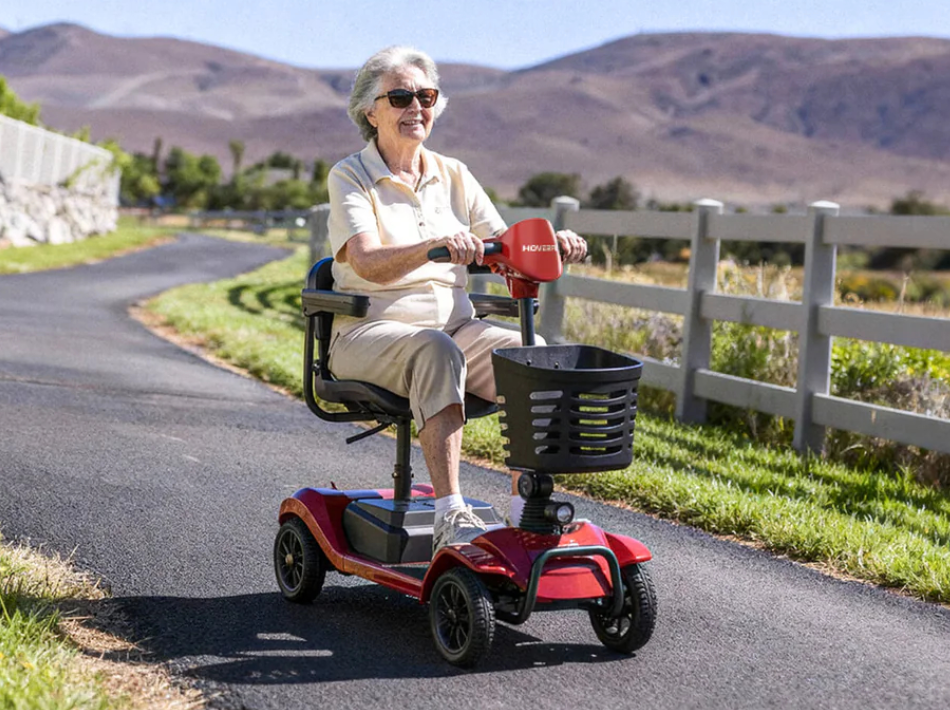
4-wheel mobility scooters offer increased stability, better balance on ramps, and more confidence for daily outdoor use. They are well-suited for seniors who value a secure ride over maximum portability.
Best for users who prioritize stability and comfort over compact size.
Final Takeaway: What to Look for in a Foldable Mobility Scooter
The best foldable mobility scooter balances portability with comfort, safety, and daily usability. Focus on the features you will use every day, not just the specifications that look good on paper.
Think about how far you ride, where you store the scooter, and whether you lift it yourself. These details matter more than top speed or advertised range.
If possible, test a few models in person. Sit in the seat, fold and unfold the scooter, and try lifting it into a trunk. Real experience often reveals comfort and usability details that specifications cannot.
Choosing carefully now helps you enjoy reliable mobility and independence for years to come.
FAQs: What to Look for in a Foldable Mobility Scooter
1. What is the most important thing to look for in a foldable mobility scooter?
The folding mechanism is the most important feature. You should be able to fold and unfold the scooter independently in under 30 seconds without excessive effort.
2. What weight should I look for in a foldable mobility scooter?
Most foldable mobility scooters weigh between 35 and 65 pounds. Choose a weight you can lift comfortably, or look for models with removable batteries or modular parts.
3. What battery range should I look for in a foldable mobility scooter?
Choose a scooter with at least 50% more range than your daily needs, since real-world range is usually 20–30% lower than advertised.
4. Are foldable mobility scooters reliable for daily use?
Yes, they are reliable for short-to-medium daily trips on paved surfaces. They are not designed for rough terrain or long-distance riding.
5. Is a 3-wheel or 4-wheel foldable mobility scooter safer?
A 4-wheel foldable mobility scooter is generally safer, offering better balance and stability, especially on ramps and slopes.



Leave a comment
All comments are moderated before being published.
This site is protected by hCaptcha and the hCaptcha Privacy Policy and Terms of Service apply.