

Choosing a mobility aid is easier when you start with one question: Do you need balance help, weight support, rest breaks, or powered distance?
Most seniors end up in one of five options—canes, walkers, rollators, wheelchairs, or mobility scooters—and each one solves a different problem.
This guide breaks down each mobility aid type, explaining when each works best, what limitations to expect, and how to make informed decisions that support long-term comfort and safety.
What Are the Main Types of Mobility Aids for Seniors?
Most mobility aids for seniors fall into five groups: canes, walkers, rollators, wheelchairs, and mobility scooters.
Canes: When is a cane enough support?

A cane is best when you mainly need light balance support, not full-body support. Health in Aging notes that a cane can support up to about 25% of your body weight.
Walkers: When do you need maximum stability?

A standard walker makes sense when you need strong weight support and slow, controlled steps. Health in Aging notes that a walker can support up to about half (or more) of your body weight.
Rollators: When is a wheeled walker the better choice?

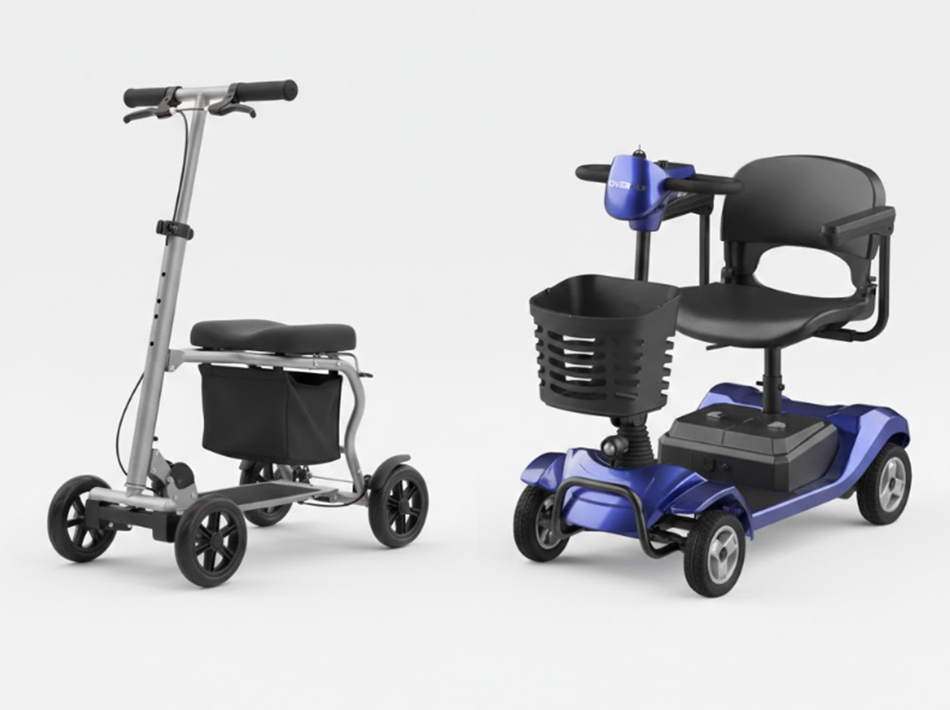
A rollator is a better fit when you can keep balance while moving, but you need rest breaks, smoother walking, and storage.
Wheelchairs: When does walking stop being the safest option?

A wheelchair becomes the right choice when walking—even with support—creates a high fall risk or severe pain for daily distances.
Mobility scooters: When do you need seated distance (without a full wheelchair)?

A scooter is best when you can still walk short distances indoors, but you need seated, powered mobility for shopping, parks, and longer outings.
Most seniors use a scooter for real errands—stores, parks, appointments—not off-road rides. So practical design matters more than “max specs.”
For example, senior-friendly scooters (including brands like Hoverfly) often focus on easy transfers, stable seating, and simpler transport, instead of oversized frames that are hard to store or lift.
A Quick Comparison: Which Mobility Aid Fits Different Daily Situations Best?
If you’re unsure where to start, use this quick match table. It links common daily situations to the mobility aid that usually works best.
| Daily situation | Best mobility aid | Why it works |
| Mild balance issues, mostly steady walking | Cane | Adds light stability without changing how you walk |
| Grocery shopping with frequent stops | Rollator | Built-in seat for resting + basket for items |
| Post-surgery recovery at home | Walker | Maximum stability and controlled movement |
| Outdoor walks over long distances | Mobility scooter or rollator | Scooter for seated comfort; rollator if you want light exercise |
| Tight indoor spaces or crowded rooms | Cane or 3-wheel rollator | Compact size and tighter turning |
| All-day mobility support | Power wheelchair or mobility scooter | Eliminates walking fatigue entirely |
| Slopes or hills | 4-wheel mobility scooter or power wheelchair | Motorized support and better downhill control |
| Limited upper-body strength | Power wheelchair or mobility scooter | Minimal physical effort required |
What Should Seniors Consider Before Choosing a Mobility Scooter?

Before choosing a mobility scooter, focus on how your body, home, and daily routine actually work together. These are the key factors to check.
1) Physical ability and control
- Can you transfer onto and off the seat independently?
- Can you sit upright comfortably while moving?
- Are the controls simple enough to use safely without strain?
If these feel difficult, a scooter may not be the best option yet.
2) How far do you really need to travel
- Need support beyond 500 feet for shopping or social outings? A scooter makes sense.
- Mostly short distances with frequent stops? A rollator may still work.
Choose based on real daily distances, not occasional trips.
3) Scooter design and portability
This is where real-world design matters more than specs on paper. Different daily environments call for different scooter setups.
If you mainly use a scooter indoors, in apartments, or need easy transport, a lightweight, foldable 3-wheel model often works best.
For example, the Hoverfly T3 3-wheel Foldable Mobility Scooter for Seniors is designed for tight turning, simple storage, and car transport—making it practical for errands and travel.

If you prioritize outdoor stability, longer rides, or uneven sidewalks, a 4-wheel scooter usually offers better balance and confidence.
Models like the Hoverfly T4 Electric 4-wheel Mobility Scooter focus on a wider stance and stable handling, which many seniors prefer for neighborhood use and daily outings.

In general, senior-focused scooters from Hoverfly emphasize:
- Easier transfers on and off the seat
- Manageable overall weight
- Designs that fit real homes and daily routines
Choosing a scooter that matches how and where you’ll use it matters far more than chasing maximum speed or range.
4) Home and travel environment
- Apartment with elevators and smooth hallways → compact or 3-wheel scooters work well
- Home with stairs → scooters won’t help with stair access
- Transport by car → foldable scooters (about 40–65 lb) fit most trunks
Always match the scooter to where you’ll use it most.
5) Storage, charging, and weather
- Where will the scooter live when not in use?
- Is there easy access to charging overnight?
- Will you use it in rain, heat, or cold?
Most scooters handle light rain but aren’t waterproof, and cold weather can significantly reduce battery range.
Walkers vs Rollators: Which One Fits Better?
If you’re deciding between a walker and a rollator, the key question is simple: Do you need maximum stability, or do you need distance with rest breaks?
Choose a standard walker if:
- You feel unsteady even at slow speeds
- You’ve had recent falls or are recovering from surgery
- Your doctor prescribed partial weight-bearing
- You need your walking speed to stay slow and controlled
Walkers force a deliberate step-by-step pattern. That slower pace can feel frustrating, but it’s exactly what keeps many seniors safe during recovery or periods of weakness.
Choose a rollator if:
- You can keep balance while moving, but fatigue limits the distance
- You need to sit and rest frequently
- You walk outdoors on sidewalks, paths, or parks
- You want storage for daily items
Rollators allow a more natural walking rhythm and make longer outings possible without exhaustion.
Real-life tip: Many seniors use both—a walker at night or during flare-ups, and a rollator for daytime outings. Using the right tool at the right time improves safety without giving up independence.
Wheelchairs: When Is a Wheelchair the Right Choice for a Senior?
A wheelchair becomes the right choice when walking is no longer safe or practical, even with a cane, walker, or rollator.
Clear signs a wheelchair makes sense
- Walking causes high fall risk, even at short distances
- Pain or weakness limits you to a few minutes of standing
- Balance issues make turns or transfers unsafe
- Fatigue prevents meaningful daily activities
Wheelchair use doesn’t have to be all-or-nothing. Many seniors use a wheelchair part-time—for long outings, appointments, or travel—while still walking short distances at home.
Manual vs power wheelchairs: how to decide
- Manual wheelchairs work best if you have good arm strength or regular caregiver support. They’re lighter, easier to transport, and cost less.
- Power wheelchairs are better if upper-body strength is limited or mobility support is needed all day. Joystick controls require minimal effort and offer excellent stability.
Important reality check: Wheelchairs reduce fall risk during movement, but they require accessible spaces—ramps, wide doorways, and elevators. Home layout matters as much as physical ability.
Mobility Scooters: When Does a Mobility Scooter Make More Sense Than Walking?
A mobility scooter is a good choice when you can still walk short distances indoors, but distance, pain, or fatigue limit your daily life outside the home.
Scooters work especially well if:
- You can walk 50–200 feet, but not a full store or block
- Walking triggers pain, breathlessness, or exhaustion
- Fear of falling keeps you from going out
- Your lifestyle includes shopping, parks, or community events
When a mobility scooter is not a good option
A scooter may not be the safest choice if:
- You can’t transfer to the seat independently
- You struggle to sit upright without support
- You have frequent dizziness or poor reaction time
- Your home has stairs with no elevator access
In these cases, a power wheelchair usually provides better stability and control.
Why design matters more than specs
Most seniors use scooters for real errands, not extreme terrain.
That’s why senior-focused designs—like those from Hoverfly—tend to prioritize:
- Easier transfers on and off the seat
- Manageable weight for transport
- Stable handling at everyday speeds
Oversized scooters with flashy specs often end up unused because they’re hard to store or load.
How Should You Choose the Right Mobility Aid for Long-Term Comfort and Safety?

Use this step-by-step checklist before buying any mobility aid.
Step 1: Assess your real limits (not your pride)
Ask yourself:
- How far can I walk comfortably?
- Do I need balance help, weight support, rest breaks, or seated mobility?
- What situations cause fear or near-falls?
Step 2: Match the aid to daily life
- Indoors only → turning radius and doorway width matter
- Outdoors or errands → endurance and surface stability matter
- Travel by car → weight and foldability matter
Step 3: Get the fit right
Poor fit causes shoulder pain, wrist strain, and back problems.
- Handles should meet your hands without hunching
- Seats should allow safe transfers on and off
- Controls should feel intuitive, not complicated
Step 4: Plan for change
Mobility needs evolve. Many seniors move from a cane → rollator → scooter over time. Choosing equipment that supports next-step needs often prevents wasted purchases.
Step 5: Think about storage and maintenance
Where will it live? Can you charge it easily? Can you load it into a car? If daily setup feels annoying, usage drops fast.
Bottom line: The best mobility aid is the one you’ll actually use every day—comfortably, safely, and without frustration.
Final Thoughts
The right mobility aid is the one that keeps you safe and lets you live the way you want. Start with the least support that works, and move up only when distance, fatigue, or balance makes it necessary. Many seniors use different aids for different situations—and that’s completely normal.
If outdoor trips or longer errands are getting harder, a mobility scooter can restore independence without daily exhaustion. You can explore Hoverfly mobility scooters to see senior-focused designs that prioritize comfort, stability, and easy transport.
Choosing the right support now helps you stay active, confident, and independent longer.
FAQs
1. What is the best mobility aid for poor balance?
A standard walker is usually the best mobility aid for poor balance because it provides four-point ground contact and forces slow, controlled movement. Canes don’t offer enough stability for significant balance issues, while rollators work only if balance is moderate and controlled.
2. What is the most stable assistive device for seniors?
For walking seniors, standard walkers offer the most stability. For seniors who cannot walk safely, power wheelchairs provide the highest overall stability because users remain seated with a low center of gravity.
3. When is a mobility scooter not a good option for seniors?
Mobility scooters are not appropriate if a senior cannot transfer independently, sit upright without support, or safely judge speed and surroundings. Frequent dizziness, poor reaction time, or homes with stairs and no elevators also make scooters impractical.
4. How far can seniors realistically travel with a mobility scooter?
Most seniors can travel 6–12 miles per charge under normal conditions. Real-world range depends on terrain, rider weight, speed, and temperature. Cold weather and hills significantly reduce range.
5. What are common mistakes seniors make when choosing a mobility scooter?
Common mistakes include buying scooters too heavy to transport, ignoring turning radius and doorway width, choosing based on price alone, and skipping real-world test rides. Poor planning often leads to unused equipment.




Leave a comment
All comments are moderated before being published.
This site is protected by hCaptcha and the hCaptcha Privacy Policy and Terms of Service apply.