
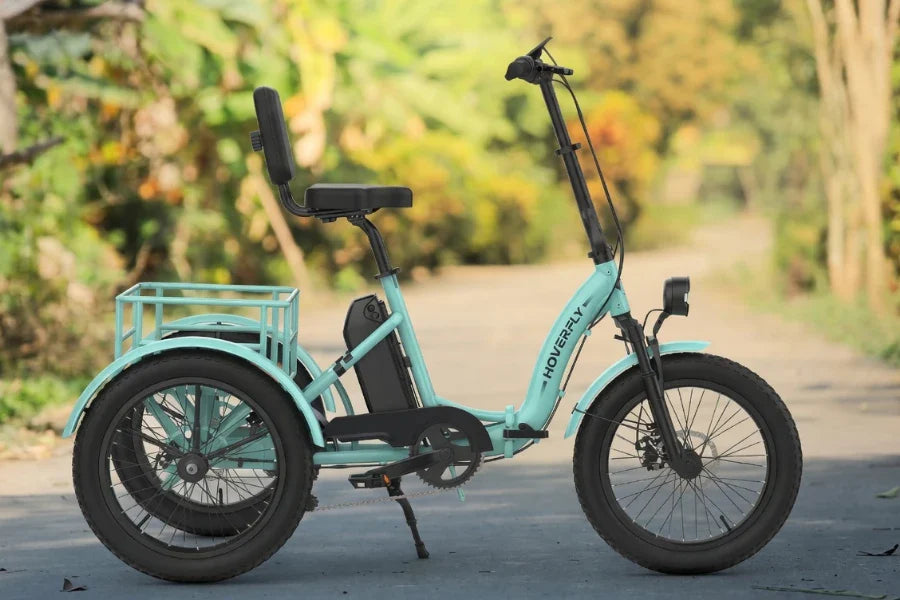
A tricycle for adults with disabilities is designed to provide stability, support, and independence. The best option depends on your mobility level, balance, and comfort needs. These trikes eliminate the need for balance, making them accessible to adults with conditions ranging from stroke recovery and neuropathy to cerebral palsy and multiple sclerosis. This guide covers the main types of adaptive tricycles, how to match one to your specific condition, and what features matter most when choosing an electric trike for disabled adults.

💡 Reviewed for accuracy by Hoverfly — an FDA-registered manufacturer of assistive electric mobility devices. Hoverfly designs products with stability, durability, and rider safety as core priorities, and serves over 36,000 satisfied riders worldwide. This article has been reviewed to ensure it reflects current adaptive cycling best practices.
Why Tricycles Work So Well for Adults with Disabilities
Real Benefits for Riders with Disabilities
The core advantage of a three-wheel bike for disabled adults is constant stability. Three points of ground contact mean the trike stays upright on its own — no balancing required, no foot-down at stops, no tipping anxiety. That single feature opens riding to thousands of adults who cannot safely use a two-wheeled bicycle.
A 2025 scoping review in Frontiers in Sports and Active Living examined 35 studies and confirmed that adaptive cycling improves cardiovascular fitness, muscle strength, and mental well-being in people with disabilities (Mosser, Norcliffe & Kruse, 2025). Riders consistently reported improved mood, greater social engagement, and a stronger sense of independence.
Put simply, a tricycle for disabled adults isn't just exercise equipment — it's a daily mobility tool that improves quality of life.
Electric Assist Changes Everything
A standard trike is useful. An electric trike for disabled adults is transformative.
Pedal assist handles the hard work when legs fatigue, which means hills and headwinds stop being barriers. Most e-trikes also include a throttle mode, allowing riders to rest their legs entirely while the motor keeps them moving.
Modern electric tricycles typically deliver 20 to 50+ miles per charge — enough for errands, park rides, or neighborhood loops without range anxiety. For riders with joint pain, muscle weakness, or limited stamina, electric assist turns a cautious 10-minute ride into a comfortable hour-long outing.
Types of Tricycles for Disabled Adults
Not all trikes serve the same needs. Here are the six main categories and who each one fits best.
Upright Adaptive Tricycles (Traditional)
These resemble a standard bicycle with two rear wheels. The seat sits higher, pedals are below the rider, and the position feels familiar.
Best for: Adults with mild balance issues who retain decent core strength and can sit upright comfortably. Available in both manual and electric versions.
Note: Higher center of gravity requires slower cornering. Widely available and the most affordable option for a three-wheel bike for disabled riders.
Recumbent Trikes
Recumbent trikes have a much lower center of gravity, significantly reducing tipping risk during normal riding. Sharp turns at speed can still cause tip-over, so riders should slow down before corners.
Best for: Riders with back pain, neuropathy, limited leg strength, or anyone needing more body support.
A 2021 study in Disability and Rehabilitation: Assistive Technology found that among 37 participants with complex disabilities, safety, comfort, and mastery were the top factors in tricycle selection — and participants over 50 consistently preferred recumbent models (Gjessing & Jahnsen, 2021).
Electric-Assist Trikes (E-Trikes)
E-trikes add a battery-powered motor to any trike style — upright, recumbent, or adaptive. Riders choose between pedal assist (motor kicks in as you pedal) and throttle mode (motor does all the work).
Best for: Adults with limited stamina, joint pain, muscle weakness, or anyone who wants to ride longer distances without exhaustion. Most e-trikes offer 20–50+ miles per charge, turning short neighborhood loops into full errand runs.
Note: Look for UL-certified batteries and disc brakes. Electric assist is the single most impactful upgrade for adaptive adults who want practical, daily-use riding.
Hand-and-Foot Trikes (Adaptive)
Purpose-built for riders needing maximum support. Features may include hand cranks, body straps, pommel seats for trunk stability, and steering limiters.
Best for: Adults with cerebral palsy, spinal cord injury, autism, or very limited limb control. Often custom-fitted through rehabilitation centers.
Wheelchair Tandem Bikes
These are two-wheeled-front, one-wheeled-rear (or reverse) setups where one section holds a wheelchair — either docked directly onto the frame or integrated into a fixed platform. A caregiver or companion pedals from the rear seat.
Best for: Adults who cannot transfer out of their wheelchair but still want to experience outdoor cycling. The wheelchair locks into place, so no transfers are needed. Some models are electric-assisted to reduce the physical load on the caregiver.
Note: These are larger and heavier than standard trikes. Storage space and transport logistics (van or truck bed) should be considered before purchasing.
Side-by-Side (Tandem) Tricycles
Two riders sit next to each other on a shared frame, each with their own set of pedals. Steering is typically controlled by one rider, while both contribute to pedaling — or one rider can coast while the other does the work.
Best for: Adults with cognitive disabilities, visual impairments, or anxiety about riding solo. The companion provides guidance, reassurance, and shared control. Also popular among couples where one partner has a disability and the other does not.
Note: Wider than a standard trike, so narrow bike paths and tight storage spaces can be challenging. Check local path width regulations before buying.
Quick Comparison
| Type | Seat Height | Stability | Best For |
|---|---|---|---|
| Upright Trike | High | Good | Mild balance issues |
| Recumbent Trike | Low | Excellent | Back pain, neuropathy, seniors |
| E-Trike | Varies | Good–Excellent | Limited stamina, joint pain |
| Adaptive Trike | Adjustable | Excellent | Severe mobility / cognitive needs |
| Wheelchair Tandem | Wheelchair level | Excellent | Non-transferable wheelchair users |
| Side-by-Side Tandem | Medium | Excellent | Cognitive / visual disabilities, anxious solo riders |
How to Choose the Right Trike for Your Needs
Match the Trike to Your Condition
Different disabilities call for different setups. Use these as a starting framework:
- Balance disorders → Recumbent or low-rider trike (lowest tipping risk)
- One-sided weakness from stroke → Adaptive pedals + electric assist (motor compensates for uneven pedaling)
- Neuropathy → Foot straps + recumbent position (secures feet, reduces pressure points)
- Cognitive disabilities like autism → Side-by-side tandem with a companion, or adaptive trike with supportive seat and steering limiter
- Visual impairments → Side-by-side tandem (companion handles steering and navigation)
- Unable to transfer from wheelchair → Wheelchair tandem bike (wheelchair docks directly onto the frame, no transfer needed)
- Limited stamina or joint pain → E-trike with throttle mode (motor does the work when legs need a break)
Every rider is different. Your specific condition, strength level, and riding goals should guide the final decision.
Key Features to Look For
These features make the most practical difference when choosing an electric trike for disabled adults:
- Step-through or low frame — Easier mounting and dismounting, especially for riders transferring from a wheelchair or walker.
- Adjustable seat with backrest — Fine-tune position for comfort and trunk support.
- Electric assist with throttle option — Pedal assist for exercise; throttle for rest.
- Disc brakes — Reliable stopping power in all conditions, critical when reaction time is limited.
- Weight capacity — Always check the rating. Include body weight plus cargo (groceries, bags, etc.).
Sizing and Test Rides
Correct sizing directly affects comfort, control, and safety. A poorly sized trike creates problems, not solutions.
Before you buy:
- Measure your inseam and arm reach. Compare against the manufacturer's size chart.
- Visit a specialty dealer or rehabilitation center to test-ride in person whenever possible. Five minutes on a trike tells you more than an hour of reading specs.
- Be cautious with online-only purchases for adaptive models — fit-critical equipment benefits from hands-on testing.
Many adaptive tricycles offer adjustable seats, cranks, and handlebars, so there's room to fine-tune after purchase. But starting with the right frame size eliminates most fitting issues upfront.
A Trusted Mobility Solution for Comfort and Stability
If you're looking for a practical and trustworthy starting point, the Hoverfly ET1 Folding Electric Trike is an excellent option for most adults with disabilities.
Built Around the Real Needs of Riders with Disabilities
The ET1 isn't simply a trike with a third wheel added on — it's engineered around the genuine accessibility needs of riders with limited mobility:
- Ultra-low step-through frame — eliminates high leg swings for riders with hip, knee, or balance limitations.
- Rear differential three-wheel system — delivers true stability through turns; no balancing skills required, ideal for riders in post-surgery recovery or with limited core strength.
- Wide cushioned seat with backrest — designed to relieve pressure points and support longer rides without fatigue.
- 20" × 3.0" fat tires plus an 80mm front shock absorber — smooth out bumps and uneven surfaces, reducing joint impact for riders sensitive to vibration.
- 400 lb weight capacity — accommodates a wide range of body types, including riders who use additional support equipment.
- Compact folding design — fits in a car trunk or apartment storage, making caregiver-assisted transport simple.
For adults managing balance issues, joint conditions, post-surgical recovery, or age-related mobility limitations, the ET1 offers a thoughtfully designed combination of medical-grade reliability, real-world stability, and everyday convenience.
That said, if you have severe mobility impairments or require full-body support, we recommend consulting a rehabilitation specialist or occupational therapist to determine whether a custom adaptive trike better suits your specific clinical needs.
Frequently Asked Questions
Are electric tricycles safe for someone with balance problems?
Yes. The three-wheel design provides constant, passive stability — no balancing skill needed. Recumbent models offer the lowest tipping risk thanks to their low center of gravity. Look for disc brakes and a wide rear axle for added security.
What's the difference between a recumbent and upright trike?
Upright trikes use a traditional bike seat with pedals below. Recumbent trikes use a chair-like seat with pedals in front. Recumbent models provide more back support, feel more stable, and are generally easier on joints — making them popular among adaptive adults and seniors with pain or limited mobility.
How do I know what size tricycle for disabled adults to buy?
Measure your inseam and compare it to the manufacturer's size chart. Most adaptive trikes offer adjustable seats and crank lengths. The most reliable method is always a test ride, especially if your disability affects range of motion.
Do I need a license to ride an electric tricycle?
In most U.S. states, electric tricycles classified as Class 1 or Class 2 e-bikes (up to 20 mph) require no license, registration, or insurance. Local rules vary, so verify your state and city regulations before riding.
Looking for more mobility options? Check out our guides on choosing the right mobility aid and the Hoverfly ET4 mobility scooter for older riders who need a compact, portable solution.




Leave a comment
All comments are moderated before being published.
This site is protected by hCaptcha and the hCaptcha Privacy Policy and Terms of Service apply.