
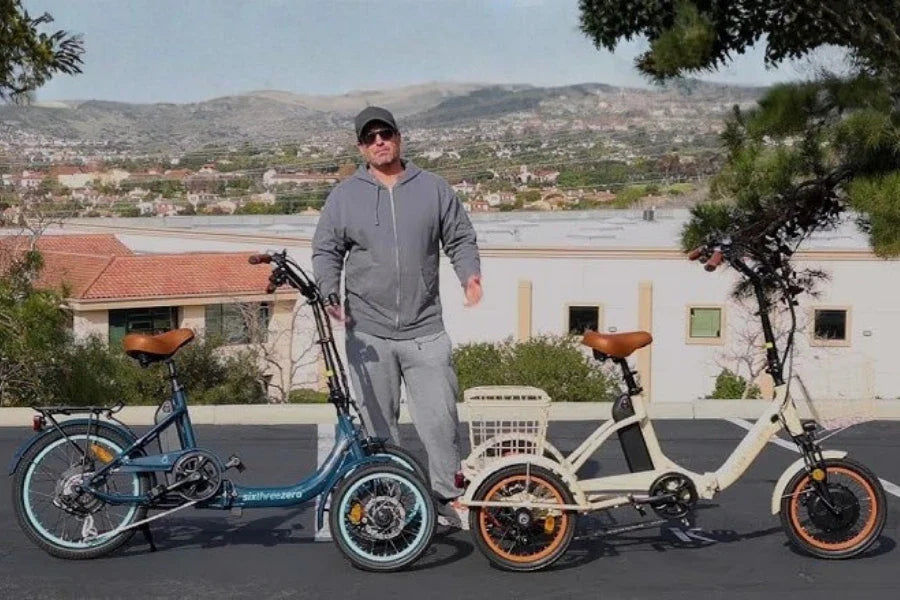

The choice between reverse and traditional trikes is about how you want to experience cycling. Neither is objectively better. Instead, each design targets specific rider needs, terrain preferences, and lifestyle demands.
If you ride in the city and turn a lot, a reverse tricycle works for you. If you need to carry things and start and stop often, a traditional tricycle is better. This guide shows you the real differences so you can pick the right one.
Reverse Tricycles: Faster and Easier Turning

Wheel Position and Stability
A reverse trike has two wheels in front and one wheel in back. The two front wheels are close together to put your weight forward. When you ride and turn, the dual front wheels grip the road, which helps you stay upright. But when you stop, you need to balance. The tricycle leans forward a little, so you must use your legs to hold it up.
Turning and Control
A reverse one turns quickly. You turn the handlebars, and the wheels turn right away. It feels like riding a bike, so people who have ridden bikes before learn it fast. The two front wheels lean into the turn smoothly and fast, so you can make sharp turns in tight spaces while keeping your whole upper body leaning naturally. You can also cut corners in parking lots and navigate narrow streets easily. This matters a lot in cities.
Speed and Efficiency
A reverse trike goes 12 to 15 miles per hour on flat ground. Sometimes it reaches 18 miles per hour on downhill sections. Experienced riders report even higher speeds on long descents. The handling is responsive, so speed feels natural. You can sustain 15 miles per hour for a long time without getting too tired.
Carrying Things
A reverse tricycle has a small basket in front. It can't hold much else—maybe a lunch and a water bottle. If you try to put groceries in, the basket overflows. Your visibility will get blocked, and handling will get worse.
Traditional Trike: Stable and Better Carrier

Wheel Position and Stability
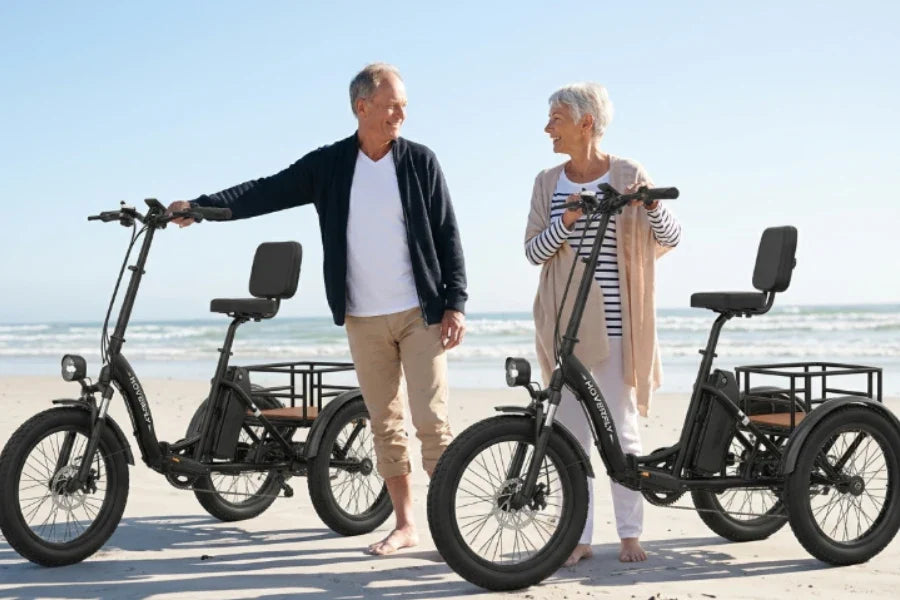
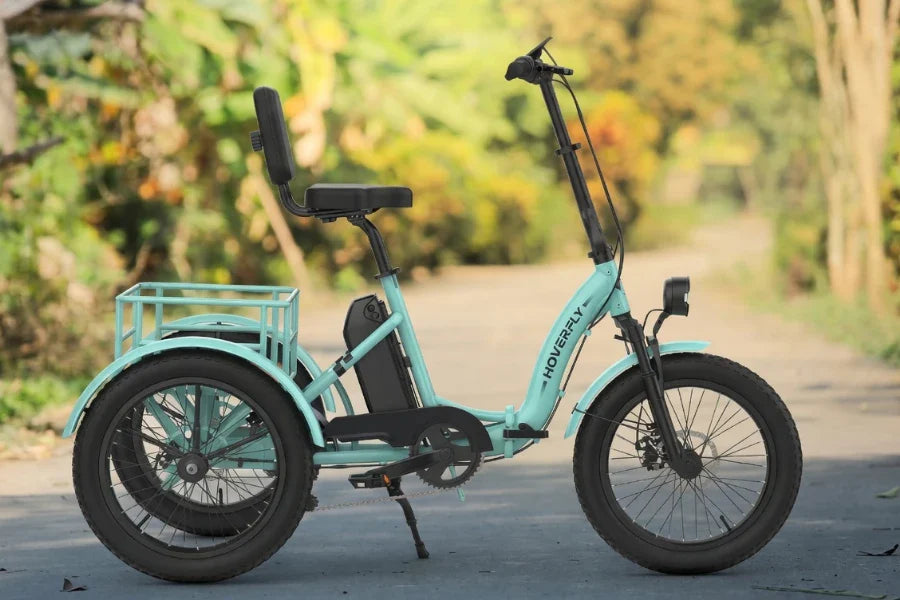
A traditional trike has one wheel in front and two wheels in the back. The two rear wheels are far apart to make a wide base, which means the tricycle stays upright all the time. When you stop at a red light, you don't need to do anything because the tricycle stays balanced. Many older people and beginners like this. They don't need to learn balance—just sit down and ride.
Turning and Control
A traditional trike needs more room to turn. A 90-degree turn might take twice as long. When you turn the handlebars, your body position matters more. Your hips shift toward the inside of the turn, as well as your shoulders. New riders need a few rides to get used to it. But after that, it's simple, and it feels stable on the road.
Speed and Efficiency
A traditional trike usually goes 10 to 12 miles per hour. The top speed for casual riders is around 12 to 14 miles per hour. One reason is that more wheels mean more friction—three contact points with the road create drag. The other is that the design makes you ride in an upright position, which creates wind resistance. Your body blocks more air, so you slow down.
Carrying Things
A traditional trike has a big basket in the back or a platform between the rear wheels. You can carry a full week of groceries easily, or fit a small pet.
Real Situations: Which Trike Fits You
For Urban Commuters
As bike lanes are narrow in cities, a reverse tricycle fits through easily. The two front narrow wheels work well. When red lights come up, you can balance and rest. It also turns at intersections fast. Strong brakes help on rainy days in cities. You will feel confident on wet streets.
Stopping a traditional trike doesn't take effort. Cities have parking spots, and a wider tricycle fits in more spots. You can carry more things in the front basket. And the upright position lets you see better, so you can watch the traffic ahead.
For Seniors and Mobility-Conscious Riders
The traditional trike wins by a large margin. Seniors don't need to learn balance—just sit down and ride. When you get on and off, both feet can touch the ground without falling risk. Research shows people over 65 have 40 percent fewer problems on traditional tricycles in their first 20 hours of riding. The confidence level is much higher. Some older riders reported riding traditional tricycles after not cycling for 40 years.
For someone with arthritis, the upright position helps. Your hands rest naturally, your back stays straight, and your neck doesn't strain. Someone with knee problems can adjust the seat height easily, and someone with hip problems can sit with their legs more open.
For Long-Distance Touring
A reverse tricycle is great for long distances. You can ride a 30-mile trip more easily and maintain speed better. Because the responsive handling keeps you engaged, and it turns easily, you feel alive on the road without exhaustion.
A traditional tricycle works for distance too. But you'll notice fatigue sooner. Your upright position is comfortable for a while. After a few hours, your neck might feel tight, and your lower back might ache. For weekend trips under 15 miles, traditional tricycles work great. For serious riding of 50 miles or more, reverse tricycles are better.
For New Riders
Reverse trikes are harder to learn. It usually takes 3 to 5 rides to feel normal, 10 rides to feel good, and 20 rides to feel confident. But once you learn, you love it. Traditional trikes are easy to learn. You will feel natural on your first ride—you can ride it on day one. If you're a beginner, start with a traditional tricycle. You'll be happy faster.
Beyond the Trike: Electric Assist Changes Everything

Many new trikes have electric motors of 750 watts or 1000 watts. This changes a lot. The motor makes both types better in different ways.
A reverse tricycle with an electric motor makes going uphill easy. The motor does 70 percent of the work, making long distances possible. It can go 50 to 80 miles with a good battery. A traditional electric tricycle can go 100 miles. You can ride all day without getting tired. The motor changes the whole experience.
However, battery size matters a lot. A 48-volt 20-amp battery goes 40 to 85 miles. Flat ground gets more distance, and hills exhaust the battery fast. A good 750-watt motor from a trusted brand lasts 5 years. A cheap motor might last 2 years. Battery quality also varies. A 48-volt battery costs more but lasts longer. A cheap battery dies faster.
Complete Price Comparison
Here is the comparison table for your better choice:
| Trike Type | Purchase Price | Annual Maintenance | Annual Repairs |
|---|---|---|---|
| Traditional Trike | $600 – $1,200 | $80 – $150 | $60 – $100 |
| Traditional e-Trike | $1,800 – $3,200 | $80 – $150 | $60 – $100 |
| Reverse Trike | $1,000 – $1,800 | $200 – $400 | $160 – $250 |
| Reverse e-Trike | $2,200 – $4,500 | $200 – $400 | $160 – $250 |
Decision Framework: Selecting Your Match
Choose a reverse trike if:
- You ride in traffic every day
- You ride alone or carry light things
- Rain comes often, and you need strong brakes
- You enjoy how turning feels
- You can balance when you stop
Choose a traditional trike if:
- Stability is number one
- You ride to buy groceries every week
- Getting on and off needs to be quick and easy
- You ride nearby, not far away
- You need to carry lots of things and don't want a trailer
FAQ
1. Will a reverse tricycle flip over if I turn too fast?
No. A good reverse tricycle has a suspension system. The 3-wheel configuration makes it more stable than a 2-wheeler.
2. Reverse trikes and traditional trikes — which one needs more repairs?
A traditional tricycle is basic. Same as a bike, it costs 40 to 80 dollars a year. The reverse tricycle is more complex and may cost 150 to 200 dollars a year.
3. What's the realistic speed difference between reverse trikes and the traditional one?
A reverse tricycle goes 1 to 3 miles per hour faster than a traditional one at normal riding speed. A 15-mile trip may take 20 more minutes on a traditional tricycle.
4. Can big people ride a trike?
Yes — but check the trike's weight limit. Some reverse trikes max out at 280 pounds. Traditional trikes usually go to 300 to 350 pounds.
5. Is it hard to switch from a traditional tricycle to a reverse one?
It takes 2 to 4 hours. People who ride bikes get used to it faster. After 5 hours, most people are comfortable.
Final Thought
Picking a tricycle is not about reading specs. It's about how you really use it — your body, your lifestyle, and your needs. Try to ride both types if you can. Pay attention to the small things: after 30 minutes, do your fingers hurt? When you turn, do you feel nervous? When you carry things, is it easy?
Think about real-life situations. What your body tells you matters more than any online review. The right tricycle is the one that will actually work for your life.



Leave a comment
All comments are moderated before being published.
This site is protected by hCaptcha and the hCaptcha Privacy Policy and Terms of Service apply.