
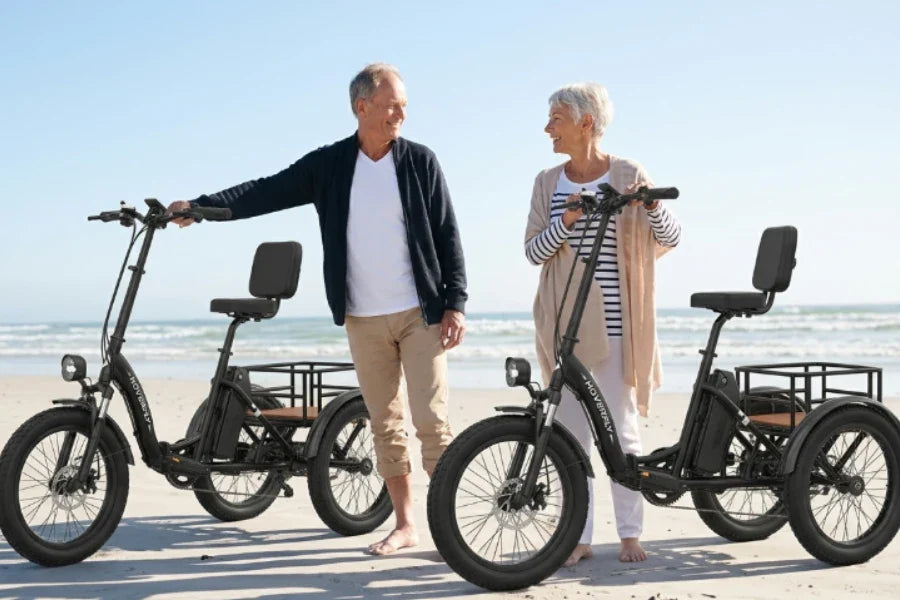
Beach riding looks effortless, but many riders worry about battery life, saltwater damage, or whether their trike can even handle loose sand. Riding an electric tricycle on the beach is possible with the right setup and basic precautions. This guide explains how to choose a suitable e-trike and maintain it properly for safe, reliable beach riding.

Step 1: Choose the Right Electric Tricycle for Beach Riding
Fat tire electric trikes are your best bet for beach riding. They offer better traction, stability, and control on soft or shifting sand compared to standard tires.
Fat Tire vs. Standard Tires
Standard tires work fine on hard-packed sand near the waterline, but they struggle in loose, dry sand. Fat tires (3.0–4 inches wide) distribute your weight more evenly, preventing sinking and making pedaling easier. Here's a quick comparison:
| Feature | Fat Tire E-Trike | Standard Tire E-Trike |
|---|---|---|
| Tire Width | 3.0–4 inches | 1.5–2 inches |
| Sand Performance | Excellent on soft and hard-packed sand | Good only on firm, wet sand |
| Stability | High (wide contact area) | Moderate (narrow contact) |
| Battery Drain | Moderate (rolling resistance lower) | Higher (tires dig in more) |
| Best For | Exploring beaches, dunes, trails | Paved paths, boardwalks, firm surfaces |
| Weight | Heavier (more durable frame) | Lighter (easier to transport) |
Note: Tire performance depends on sand conditions, rider weight, and tire pressure. Always test your trike on a small beach section first to gauge how it handles before committing to a long ride.
Key features to look for:
- Motor power: At least 500W for sand (750W+ is ideal for soft terrain)
- Battery range: 30+ miles (expect 20–40% faster drain on sand)
- Water resistance: IPX4 rating or higher to handle splashes
- Frame type: Recumbent trikes offer lower center of gravity for stability; cargo trikes handle gear; folding models are convenient for travel but may lack durability on rough sand
Step 2: Riding Tips on the Beach
Always stick to hard-packed sand near the waterline and use lower pedal assist levels. This keeps your trike stable, conserves battery, and prevents getting stuck.
Adjust Your Tire Pressure Before You Ride
Lower your tire pressure to 15–20 PSI for sand riding. This increases the tire's surface area, improving grip and preventing sinking. After your beach ride, reinflate to the manufacturer's recommended PSI (usually 30–40 PSI) for road use. Carry a portable pump in your gear.
Stick to Hard-Packed Sand
Dry, soft sand is your enemy. It drains your battery fast and increases the risk of getting stuck. Instead, ride on the firmer sand near the water's edge (exposed at low tide). This area is compact and easier to navigate. Check tide schedules before you go—low tide gives you the widest, firmest riding surface.
Start Slow and Find Your Balance
The first few minutes on sand feel different than pavement. Start at the lowest pedal assist level (1 or 2) and ride slowly to get a feel for how your trike responds. Avoid sudden turns or braking—sand shifts under your wheels, so smooth, gradual movements are key.
Use Pedal Assist Wisely
Sand creates more rolling resistance than pavement, so your battery drains faster. Use the lowest assist level that still feels comfortable. If you feel the motor struggling or the trike slowing down, don't force it—lower the assist or pedal more manually. This extends your range and protects the motor.
Protect Your Trike from Saltwater and Sand
Keep your trike away from waves and rinse it immediately after riding. Saltwater accelerates rust and corrosion, while sand clogs gears and brakes.
Stay clear of the surf: Even a small wave splash can damage electrical components. Ride at least 10–15 feet away from the waterline to avoid accidental splashes.
Rinse with fresh water: As soon as you're done, use a low-pressure hose or spray bottle to rinse off sand and salt. Focus on the chain, gears, brakes, and motor housing. Never use a high-pressure washer—it can force water into sealed components.
Dry and lubricate: After rinsing, wipe down the frame and let it air dry completely. Then apply bike-specific lubricant to the chain and moving parts. This prevents rust and keeps your trike running smoothly.
Use anti-corrosion spray: If you ride on the beach regularly, apply a thin layer of anti-corrosion spray (like WD-40 Specialist or Boeshield T-9) to metal parts every few weeks. This adds an extra layer of protection against saltwater.
Avoid Crowds and Stay Alert
Beaches get busy, especially near the water. Keep a safe distance from swimmers, sunbathers, and children. Ride at a speed where you can stop quickly if needed (typically 5–10 mph on sand).
Step 3: After Ride Maintenance
Clean your trike immediately and check all moving parts. Beach conditions are harsh, so post-ride care extends your trike's lifespan.
Clean and Inspect Your Trike
Remove all visible sand from the frame, wheels, and undercarriage. Check the chain for grit, inspect brake pads for wear, and look for any loose bolts or damaged cables. Pay special attention to the motor area—sand buildup here can cause overheating.
Recharge Your Battery Properly
Let the battery cool down for 20–30 minutes before plugging it in. Charge it to 80–90% if you're riding again soon, or 50% if storing it long-term. Avoid leaving it fully charged or fully drained for extended periods, since this shortens battery life.
Store in a Covered Area
Keep your trike in a garage, shed, or covered patio. If outdoor storage is your only option, use a waterproof cover. Moisture and salt air cause rust even when you're not riding.
Can Elderly Drive E-Trikes on Sand?
Yes, and a study from the University of Waterloo found that e-trikes can actually prolong older adult mobility by making outdoor activities more accessible.
On the beach, stability matters more than age. The three-wheel design eliminates balance worries, making e-trikes safer for seniors. Older riders should:
- Ride during low tide when sand is firmest
- Use fat tire trikes for maximum stability
- Start with short rides (15–20 minutes) to build confidence
- Bring a companion for assistance if needed
The low-impact nature of e-trikes makes them perfect for older adults seeking gentle exercise and fresh air. Just avoid steep dunes, soft sand, and crowded areas. If mobility or vision is a concern, consider a recumbent trike with a lower seat for easier mounting and dismounting.
Hoverfly ET1: Built for Stable Beach Rides

Instead of struggling with traditional bikes that wobble and sink in the sand, the Hoverfly ET1 Folding Electric Tricycle offers effortless, three-wheel stability for riders of all ages. Whether you're planning a gentle morning ride along the waterline or looking for the perfect outdoor activity for a Mother's Day weekend getaway, the ET1 is built for the coast:
- Glide Over Sand, Don't Sink: While standard tires get stuck, our 20" x 3" fat tires float over soft sand. Paired with a powerful 1000W peak motor, the trike does all the heavy lifting against coastal headwinds.
- All-Day Comfort & Accessibility: Forget bumpy, exhausting rides. The front shock absorber smooths out uneven terrain, while the accessible step-through frame makes mounting and dismounting a breeze—especially for older adults with limited mobility.
- Explore Further, Together: With a 30–60 mile range on a single charge, you won't have to worry about battery anxiety. Looking for an unforgettable gift or a new way to connect with family? Our 2-Pack Bundle lets you and your loved ones enjoy the ocean breeze side by side safely.
Final Thoughts
Riding your electric tricycle on the beach is all about preparation, smart choices, and respecting the environment. Choose a fat tire trike, ride on firm sand at low tide, protect your equipment from saltwater, and clean it thoroughly after every ride. With these tips, you'll enjoy the freedom of coastal exploration without the worry of breakdowns or getting stuck.
Frequently Asked Questions
Can I ride an electric tricycle on any beach?
Not all beaches allow motorized vehicles. Check local regulations before riding—some beaches restrict e-bikes and e-trikes to certain hours or areas. National parks often have stricter rules.
How often should I clean my trike after beach use?
After every ride. Saltwater and sand cause damage fast, so rinsing immediately is essential. A full deep-clean (degreasing the chain, inspecting components) should happen every 3–5 beach rides.
What makes an electric tricycle suitable for beach riding?
Fat tires, strong motor power (500W+), good battery range, and water resistance. These features help your trike handle sand without sinking or draining the battery too quickly.
How does sand affect battery performance and tire grip?
Sand creates more rolling resistance than pavement, so your battery drains 20–40% faster. Lower tire pressure (15–20 PSI) improves grip by increasing the tire's contact area with sand.
What immediate steps should I take if saltwater touches my trike?
Rinse it with fresh water right away, focusing on the chain, gears, and motor area. Dry it completely, then apply lubricant to prevent rust.
What's the difference between riding at low tide vs. high tide?
Low tide exposes firmer, wider sand near the waterline—ideal for riding. High tide leaves only soft, dry sand, which is harder to ride on and drains your battery faster.
What's the best time of day to ride?
Early morning or late afternoon. The sand is cooler, crowds are lighter, and you'll avoid the midday sun. Low tide times are ideal for firmer sand.
Do I need a special license or permit?
Usually no, but this varies by location. Some beaches require permits for any wheeled vehicles. Check with local beach management or park services.



Leave a comment
All comments are moderated before being published.
This site is protected by hCaptcha and the hCaptcha Privacy Policy and Terms of Service apply.