

A senior’s daily routine provides the clearest guide to choosing a mobility aid. Balance, strength, walking endurance, transfer ability, and home layout all affect which option will work best. A cane may suit mild balance problems or weakness on one side. A walker offers greater stability, while a wheelchair supports people who cannot walk practical distances safely. A mobility scooter can reduce fatigue during errands and longer outings.
The device should also fit the places where it will be used. Doorway width, turning space, storage, outdoor surfaces, and vehicle access can affect daily convenience. Comfort, weight capacity, controls, and transport weight are equally important. Seniors with repeated falls, sudden mobility changes, or transfer difficulties may benefit from an assessment by a physical or occupational therapist.
Understanding the Different Types of Mobility Aids for Seniors
Mobility needs vary from person to person. Some seniors may use different aids for different situations. For example, a cane may be enough at home, while a rollator may help with short walks. A scooter may be more suitable for longer outings. The choice should depend on the route and the level of support needed.
Canes offer light support, often on one side of the body. Standard walkers provide greater stability and usually need to be lifted or moved forward slowly. Rollators move on wheels and usually include hand brakes and a seat. They may be easier to move for users who can control the brakes safely and need to rest during walks. Hand strength, balance, and brake control should guide the choice between a walker and a rollator.
Wheelchairs are designed for people who cannot walk practical distances safely. Transport chairs are pushed by a caregiver, while manual wheelchairs may be self-propelled by users with enough upper-body strength. Power chairs can provide independent mobility for users who can safely operate the powered controls. Vision, judgment, hand control, seating support, and the surrounding environment should also be considered.
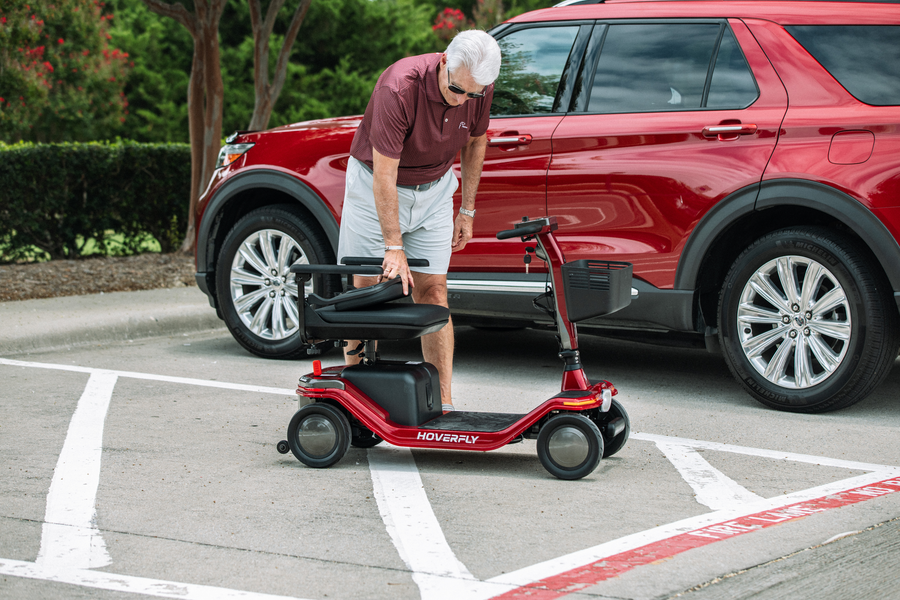
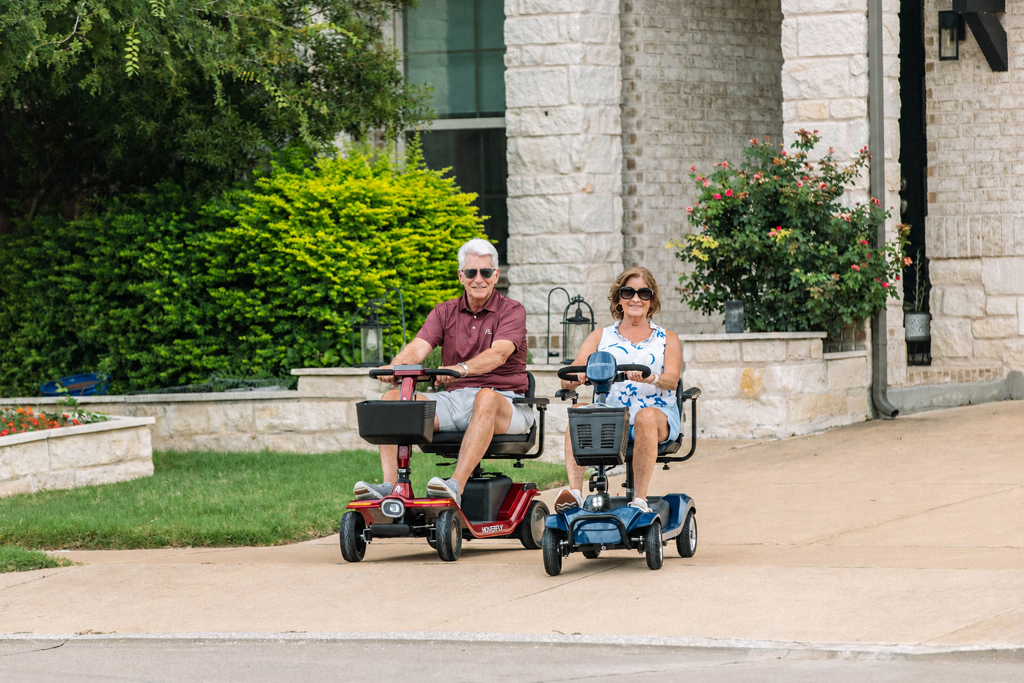
Mobility scooters are battery-powered devices with a seat. They are suitable for people who can get on and off safely but find it difficult to walk long distances. Three-wheel scooters often have a smaller turning radius, which can help in narrow spaces. Four-wheel scooters usually provide a wider and more stable base. Transport convenience depends on the specific model’s weight, folded dimensions, heaviest removable section, vehicle opening, and the user’s or caregiver’s lifting ability.
Once you understand the senior’s daily routine, you can compare specific scooter features. For example, a four-wheel model may be a better choice for outdoor stability and longer trips. Hoverfly’s T5 four-wheel mobility scooter is designed for this type of use.
Our guide to different types of mobility scooters compares travel, folding, heavy-duty, three-wheel, and four-wheel models. It explains which options may suit different daily routines. For a broader clinical overview, see MedlinePlus guidance on mobility aids. MedlinePlus also notes that some mobility aids require professional fitting.
Assess the Senior’s Daily Routine Before Comparing Mobility Aids
Daily activities can reveal the level of support a senior needs. Watch how the person moves around the home, gets into a car, and walks through stores or outdoor areas. Reaching for furniture may suggest balance problems. Frequent rest breaks can point to limited endurance. Difficulty standing or turning may indicate a need for greater stability. These details help identify a suitable mobility aid.
Review these practical areas:
- Support: Is support needed on one side, both sides, or for most of the person’s body weight?
- Endurance: How far can the senior walk before pain, weakness, or fatigue affects safety?
- Transfers: Can the user stand, turn, sit, and get on or off the device safely?
- Hands and arms: Can the user grip handles, operate brakes, propel a wheelchair, or steer?
- Vision and judgment: Can the user identify hazards, judge distances, and control speed?
- Home access: Will the device fit through doorways and move around rugs, furniture, steps, and narrow spaces?
- Outdoor routes: Will it be used on sidewalks, curb ramps, slopes, grass, or uneven pavement?
- Transport: Who will fold, lift, secure, and reassemble the device?
Professional assessment may be necessary after repeated falls, dizziness, a recent stroke or surgery, or a rapid loss of strength. A physical therapist can evaluate walking ability and device fit. An occupational therapist can assess transfers, bathroom use, home access, and other daily activities. According to a clinical review in American Family Physician, canes, walkers, and wheelchairs require different levels of balance, strength, and hand control. The right device should match the senior’s abilities, surroundings, and daily routine.
Key Factors to Consider When Choosing a Mobility Aid
After identifying the senior’s needs, compare mobility aids based on everyday use. The main factors are stability, fit, control, comfort, home layout, storage, and transportation. Price is also important, but a low-cost device has little value if it is difficult or unsafe to use.
For canes, walkers, and rollators, the handle height should support a natural posture. Wheeled devices also need reliable brakes and a manageable turning radius. For wheelchairs and scooters, seat width, foot position, arm support, and transfer safety all affect comfort and control.
Portability requires more than a “foldable” design. Some folding devices are still too heavy for one person to lift. Useful measurements include:
- Total device weight
- Weight of the heaviest removable section
- Folded dimensions
- Vehicle cargo-floor height
- Width of the narrowest trunk or hatch opening
For seniors who plan to load and unload their scooter frequently, the Hoverfly T3 foldable mobility scooter provides a compact three-wheel design that folds for transportation. It weighs 61 lb in total, with a 50 lb heaviest section, and supports riders up to 330 lb.
Long days away from home create additional needs. Important factors include realistic travel range, charging access, seat comfort, and places to rest. Our guide to choosing a scooter for long activity days covers these points in more detail.
A clear buying process can make the decision easier:
- Daily route: Record the longest regular trip and note how far the senior can walk before pain or fatigue begins.
- Home access: Measure the narrowest doorway, available turning space, storage area, and any steps or slopes along the route.
- Transfer ability: Confirm whether the senior can stand, turn, and sit on the device independently or needs assistance.
- Vehicle transport: Measure the trunk or hatch opening and identify who will lift, load, secure, and reassemble the device.
- Category screening: Use the required support, transfer ability, route, and transport plan to rule out unsuitable canes, walkers, wheelchairs, or scooters.
- Model comparison: Compare the T3, T4, and T5 only after these requirements are clear. Focus on turning space, stability, range, comfort, folded size, and the weight of the heaviest section.

Comparing Canes, Walkers, Wheelchairs, and Mobility Scooters
Each mobility aid provides a different level of support. A cane helps with mild balance problems or weakness on one side. A walker offers more stability but requires enough arm strength and space to move. A wheelchair is suitable when walking is unsafe or too difficult. A mobility scooter helps people travel longer distances when they can transfer and operate the controls safely.
Aid |
Often a good fit when |
Key considerations |
|---|---|---|
Cane |
Mild imbalance, pain, or weakness on one side |
Handle height and level of support |
Walker or rollator |
Support is needed on both sides, or rest breaks are necessary |
Brakes, lifting weight, doorway width, and posture |
Wheelchair |
Walking causes severe pain or fatigue, or there is a high risk of falling |
Transfers, pressure relief, propulsion, and caregiver assistance |
Mobility scooter |
Short walks are possible, but longer trips cause pain or fatigue |
Transfers, turning space, storage, charging, terrain, and transport weight |
Essential Safety and Comfort Features to Look For
A mobility aid should match the user’s abilities and usual routes. For scooters, important safety features include smooth low-speed control, electromagnetic brakes, anti-tip wheels, lights or reflectors, a secure foot platform, and supportive armrests. A swivel seat can make transfers easier. Suspension can also improve comfort on slightly uneven ground.
The wheel configuration affects stability and maneuverability. Four-wheel scooters usually feel more stable on outdoor paths and gentle slopes. Three-wheel scooters have a smaller turning radius, which can be helpful in narrow indoor spaces. Our guide to why four-wheel mobility scooters can feel safer for seniors explains wheelbase, center of gravity, turning, and surface conditions in more detail.
For everyday errands, the Hoverfly T4 four-wheel mobility scooter combines a stable four-wheel platform with a swivel seat and anti-tip features. It supports up to 330 lb, provides a published range of up to 12.4 miles, and separates into four parts for storage and transportation.
Safe operation is equally important. Lower speeds provide better control when turning. On slopes within the device’s rated limits, approach straight ahead at a low speed and avoid traveling across the slope. Check the specific model’s instructions for permitted gradients, surface conditions, and turning requirements before use. Both feet should remain on the platform while the scooter is moving. Loose gravel, wet pavement, steep slopes, and damaged surfaces can reduce stability.
Comfort affects posture and attention. The seat should provide enough width and back support. Armrests and controls should be easy to reach without stretching. Both feet should rest firmly on the platform. Weight capacity must include the rider and anything carried. Inspect tires, brakes, fasteners, batteries, and worn cane or walker tips regularly.
FAQ
Can seniors use a mobility aid on stairs?
Canes may be used on stairs when the senior has adequate balance, strength, and professional instruction. Standard walkers, rollators, wheelchairs, and mobility scooters are generally intended for level surfaces and should not be used directly on stairs. Secure handrails, ramps, stairlifts, or caregiver assistance may provide safer access. A physical or occupational therapist can help assess the home and recommend a suitable solution.
Is it better to rent or buy a mobility aid for a senior?
Rental may suit a short recovery period, a vacation, or a temporary change in mobility. Buying often makes more sense for regular, long-term use. Before deciding, compare the total rental cost, maintenance terms, available adjustments, and whether the device fits the senior well.
How can a family encourage a senior to use a mobility aid?
A trial at home or during a familiar outing may help the senior see how the device supports daily activities. Personal preferences also matter, including appearance, comfort, and ease of use. The senior should take part in the final decision whenever possible.
When should a mobility aid be replaced?
A mobility aid may need replacement when it no longer fits, becomes difficult to control, or shows damage that affects safety. Changes in posture, strength, weight, balance, or daily routine may also mean that a different device is needed. A professional reassessment can help when the current aid no longer provides enough support.
Conclusion
The right mobility aid can help a senior stay involved in daily life with greater confidence. It should feel natural to use and support the activities that matter most, from moving around the house to visiting family or enjoying longer outings. Mobility needs may also change over time, so the device should be reviewed when the user’s health, routine, or living environment changes.
Every senior has different needs. If you would like help comparing Hoverfly mobility scooters for seniors, our team can answer your questions and help you explore suitable options.



Leave a comment
All comments are moderated before being published.
This site is protected by hCaptcha and the hCaptcha Privacy Policy and Terms of Service apply.