
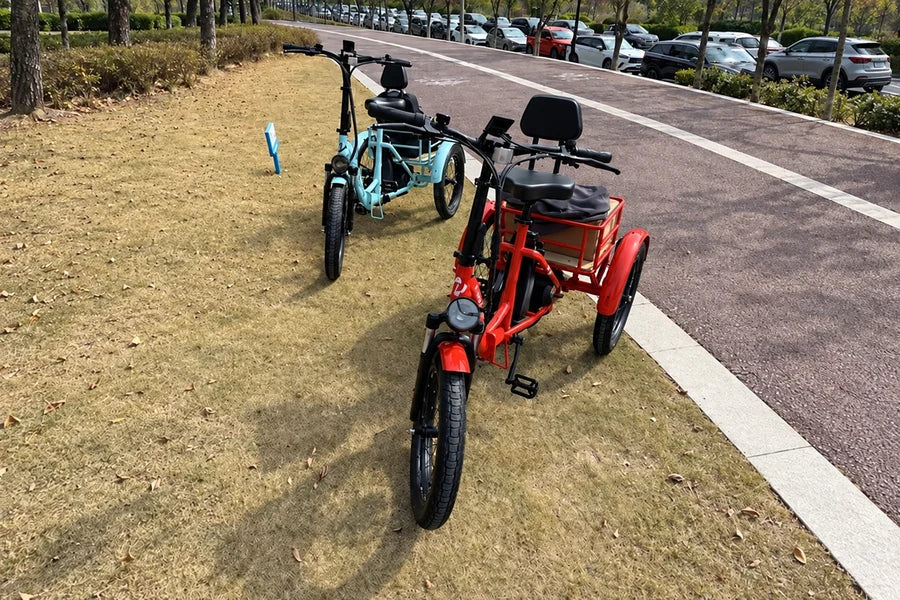
At Hoverfly, we build folding electric trikes, and we hear the same problem from our riders time and again: there’s no room for a full-size trike at home, and no easy way to get one into the car.
A folding electric trike is worth it when your main need is to save space at home or in your car. It is not worth it if you expect to lift and carry like it the way you would a small folding bike. The gap between those two expectations is where most buyer regret begins. As a team that has spent years designing these trikes, we also hear the complaints that follow a rushed purchase: it will not fit through the hallway door, it is too heavy to lift alone, the closet was two inches too shallow. So before you buy any three-wheeler, there are a few things worth knowing first, and we measured our own ET1 to show you what they are.
The Promise on the Box vs. the One in Your Garage
Most folding electric trike ads sell the same two benefits: stability and convenience. The stability part is easy to understand. With three wheels, the trike stays upright when you stop, start, or make a slow turn. The convenience part needs a little more explanation. Yes, the frame folds, the seat can be lowered, and the handlebars tuck in. But folding changes the shape of the trike much more than it changes the weight. Most folding electric trikes sold in the U.S. still weigh about 60 to 100 pounds, because the motor, battery, wheels, and load-bearing frame all add real mass. That means you can store one behind a closet door or fit it into a vehicle more easily. But maybe you don't want to carry it up several flights of stairs.
Who Does a Folding Electric Trike Actually Fit?
If you want the confidence of three wheels but your home has no room for a full-size trike, this is exactly the rider a folding electric trike was made for. Seniors and returning riders tell us the same three things hold them back: swinging a leg over a tall frame, the wobble at low speed, and the simple question of where the thing is going to live between rides. A folding trike answers all three at once.
Our Hoverfly ET1 was designed around precisely those worries, and it is genuinely good at solving them. The ultra-low step-through frame turns mounting into a step rather than a climb, so nothing about getting started feels intimidating. The three-wheel platform with a rear differential is where the ET1 really shines: instead of the twitchy, hold-your-breath feeling of a two-wheeler at walking pace, it delivers steady, planted power through both rear wheels when you pull away, ease off, or ease around a slow corner. And when the ride ends, the folding frame collapses the footprint dramatically, so the ET1 tucks into a closet, a garage corner, or an RV bay where a standard trike would simply never fit.
For errands and neighborhood riding, the details are just as thoughtful. The parking brake holds the trike rock-solid while you load groceries into the rear basket or settle into the saddle, removing the roll-away worry entirely. Wide fat tires paired with front suspension take the sting out of cracked sidewalks, community paths, and light gravel, so a route that once felt jarring becomes something you actually look forward to. If you are considering weighing up a folding electric trike for seniors, our Hoverfly ET1 electric trike guide for seniors goes deeper on comfort, storage, and daily-use details.
What We Measured: A Hands-On Look at a Real Folding Trike

For this guide, we worked with a Hoverfly ET1 folding electric trike straight from the box. The numbers below are observed.
Test conditions: indoor folding test on level concrete, battery installed, no cargo loaded, SUV rear seats folded flat, two adult testers available for the loading portion.
Folded size: 43.3 × 33.1 × 30.7 inches, matching the official Hoverfly spec sheet. That is wider than a folded e-bike and slightly taller than a stacked carry-on suitcase.
Fold time: about 45 seconds on the very first try. After three practice rounds, the same fold dropped to 18 to 22 seconds, mostly limited by the seat post lever and the handlebar latch.
Loading test, midsize SUV with the rear seats down (RAV4-class cargo bay): two adults loaded the folded trike in under a minute, no ramp needed. One adult could manage it alone, but the lifting angle strained the lower back and knees. Using a short folding ramp can easily solve that.
Storage test: the folded trike fits inside a standard apartment hallway closet with the door still closing. It did not pass through a 28-inch interior doorway when fully assembled, so plan a path before the trike arrives.
The Weight Number Buyers Should Check First
Range, motor power, and battery size usually get the spotlight. Weight is easier to miss, but it matters just as much. Most folding electric trikes still weigh about 60 to 100 pounds, depending on the motor, battery, tires, and frame material. A 750W peak motor adds weight; peak power refers to the motor’s short-term maximum output, while nominal power refers to its regular rated output. So does a 48V lithium battery, a fat-tire setup, and a frame strong enough to carry both rider and cargo.
Why Engineers Cannot Just Make It Lighter
That weight is doing a job. Every pound in a folding electric trike is holding up a rider, a load of groceries, and a hinge that has to stay tight for years, so trimming it means giving something else up. Take frame material. Carbon steel dominates the category for good reason: it is strong, affordable, and a local shop easily repairs it. Aluminum shaves off some of that mass, though how much depends entirely on frame design, weld quality, and the load rating you refuse to compromise on. Carbon fiber? It would cut the most weight of all, and it would also push the price into a different bracket and turn a simple post-tumble repair into a specialist job.
Safety parts add weight too. A well-built e-trike needs proper battery housing, wiring protection, brake cut-off systems, and other electrical safety features. UL 2849 is the voluntary U.S. safety standard for e-bike electrical systems, and the U.S. Consumer Product Safety Commission has urged e-mobility manufacturers to follow recognized safety standards. In other words, a heavier trike is not always a design flaw. Often, it is the cost of building a frame and electrical system that can carry real weight, handle daily riding, and pass meaningful safety checks.
Folding Trike vs. Folding Bike vs. Standard Electric Trike
Shoppers often compare these three categories using the same word "folding," but they answer different questions. The table below maps common buyer needs to the format that wins each row, based on observed test results and industry-typical specs.
Buyer Need |
Folding Electric Trike |
Folding Electric Bike |
Standard (Non-Folding) Electric Trike |
Apartment or closet storage |
Strong |
Strong |
Weak |
One-person lift and carry |
Weak (60–100 lbs typical) |
Better (40–55 lbs typical) |
Weak |
Balance at stops and low speed |
Strong |
Weak |
Strong |
Beginner confidence returning to cycling |
Strong |
Mixed |
Strong |
Grocery and cargo runs |
Strong (large rear basket) |
Limited |
Strong |
SUV or hatchback loading |
Possible with planning |
Easier |
Often needs a rack or trailer |
Long-trip seating comfort |
Strong (upright, wide saddle) |
Mixed |
Strong |
Price factors to compare |
Battery size, warranty, cargo capacity, and promotions |
Battery size, components, warranty, and promotions |
Cargo capacity, frame size, battery, warranty, and promotions |
The main difference is simple. A folding bike is easier to lift and carry. A folding trike is better for balance, comfort, and cargo. A standard electric trike offers similar stability, but it usually takes up more storage and transport space.
The Five-Minute Checklist Before You Buy
Before you buy a folding electric trike, check the basics that matter in daily use.
- Measure your storage space: Make sure the folded size fits your closet, garage, RV space, or apartment corner.
- Measure your vehicle: If you plan to load it into a car, check the trunk depth, rear opening height, and available cargo space.
- Plan the lift: Most folding trikes are too heavy for comfortable one-person lifting. If you will load it alone, consider a loading ramp or a weight-rated rack.
- Match the motor to your terrain: Flat streets need less power, while hills, gravel, cargo, and longer rides need stronger support.
- Check the warranty and safety details: Look for a clear return policy, at least a one-year warranty, and battery safety information such as a UL 2271-certified battery.
What Loading and Moving the Trike Really Takes
Storing a folding trike is usually the easy part. Once folded, it can fit in a closet, entryway, or other small space. Moving it into a vehicle takes more consideration. A trike around 70 to 90 pounds is awkward to lift into a trunk by yourself, so many riders use a loading ramp or a weight-rated hitch rack when they travel often.
The best approach is to plan storage and transport before the trike arrives. For current ET1 specifications and folding details, visit the Hoverfly ET1 product page.
The Final Verdict
A folding electric trike is worth it if you need three-wheel stability and easier storage. It is a good choice for riders who want a trike that can fit in a smaller home, garage, or RV.
It is not the right choice if your main goal is easy carrying. Folding makes the trike smaller, not lighter. Before you buy, measure your space, check your vehicle, and make sure you have a practical way to move it when needed. If you are not sure whether the ET1 fits your storage space, vehicle, or daily riding needs, you can contact Hoverfly for help before ordering.
At Hoverfly, we don’t just want to sell you a trike; we want to make sure it actually fits your life. So we took an ET1 straight off the warehouse floor, folded it, lifted it, and measured exactly what you can expect.
FAQ
Can a folding electric trike tip over when turning?
Yes, it can. A trike is stable when stopping, but it does not lean into turns like a two-wheel bike. Slow down before corners, avoid sharp steering, and take extra care on slopes or uneven ground.
Does a folding electric trike need more maintenance?
A little more, yes. It needs normal e-bike care, plus regular checks on the folding hinge, latch, chain, battery connection, etc. If the frame feels loose or noisy, inspect it before riding again.
Can I ride a folding electric trike in the rain?
Light rain is usually fine. Do not ride through deep water or leave the trike outside in heavy rain. After wet rides, wipe the frame, battery area, and connectors dry to protect the electrical parts.
Is a folding electric trike hard to get used to?
Not usually. Most riders adjust after a few short rides. The main difference is turning, because a trike stays upright instead of leaning. Practice first in a quiet, flat area before riding near traffic.




Leave a comment
All comments are moderated before being published.
This site is protected by hCaptcha and the hCaptcha Privacy Policy and Terms of Service apply.