
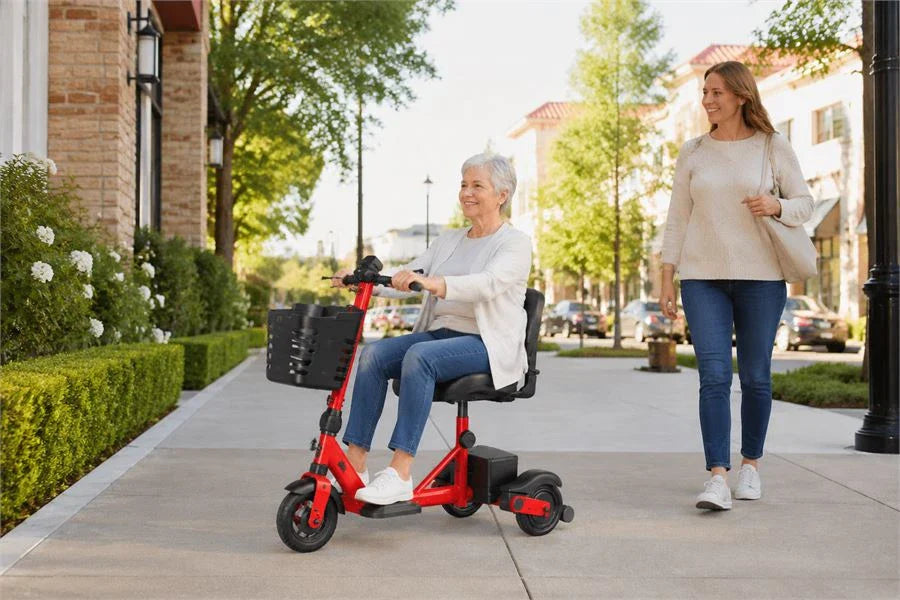
Have you ever felt unsure when making a turn on a 3-wheel mobility scooter, or worried that a family member might not feel steady while riding? For many new riders and caregivers, the biggest concern is not the scooter itself, but knowing how to handle everyday situations safely.
These are exactly the worries we hear most from riders and caregivers—turning stability, route choices, and that first wobble of doubt before setting off. We've pulled those everyday concerns together into a practical safety guide for 3-wheel mobility scooters, covering what to check before each ride, how to handle common terrain, and which features make a scooter safer to live with day to day.
Why 3-Wheel Mobility Scooter Safety Is Different

A 3-wheel mobility scooter has a tighter turning radius, so it moves easily through narrow hallways, store aisles, elevators, and other compact spaces. Its lighter, more compact build also makes it simpler to store at home or load into a car. The trade-off comes down to stability: with a single front wheel and a narrower base, a 3-wheel scooter can feel more sensitive on sideways slopes or uneven surfaces. That's why anti-tip wheels, electronic brakes, and good riding habits matter most—keeping it on indoor floors and smooth pavement is where it performs at its best.
10 Practical 3-Wheel Mobility Scooter Safety Tips

Much of the everyday safety advice online is written generically for all mobility devices, which misses what is specific to a 3-wheel layout. The tips below focus on the situations where the single front wheel actually changes how you should ride. They apply across most 3-wheel models on the market today.
- Slow down before every turn. Easing off mid-turn shifts your weight outward and can reduce stability.
- Avoid crossing sideways slopes. Driveway aprons, sloped sidewalks, and ramp edges tilt the scooter. The U.S. Access Board limits the cross slope of accessible routes and curb ramps because the cross slope affects how wheeled devices travel across a surface.
- Meet curb ramps and thresholds head-on. A perpendicular approach lets the wheels meet the rise together. Hitting a small step at an angle lifts one side unevenly.
- Keep cargo light, low, and centered. Overloading the basket shifts the balance point. Place heavier items at the bottom and centered over the front wheel.
- Keep both hands on the tiller. Reaching for something mid-ride is a common cause of unexpected leans. Stop first, then pick it up.
- Watch the surface ahead. Wet leaves, loose gravel, sand, and metal grates reduce traction quickly on a single front wheel. Slow down, avoid sharp steering, and choose a cleaner path when possible.
- Test the brakes before each ride. A gentle push test on level ground with the power off can flag obvious brake issues before you set off.
- Use lights and a visibility flag outdoors. Drivers and cyclists often miss riders seated below their normal sightline. NHTSA pedestrian safety guidance notes that added lighting and bright clothing help close that gap at dusk and after dark.
- Stay on smooth, paved paths. Sustained riding on grass, gravel, or rough sidewalks strains the front wheel and shortens battery range.
- Follow your owner’s manual. Maximum slope, weight capacity, and battery range are all printed there.
Quick Pre-Ride Check for a 3-Wheel Mobility Scooter
A short visual and mechanical check before each ride catches the most common cause of a mid-trip issue. The whole routine takes less than a minute.
Start with the tires. If your scooter uses pneumatic tires, look for any obvious flat spots or cuts and confirm the pressure feels firm to the touch. Solid tires only need a visual check for cracks or worn tread.
Then, move on to the brakes by giving the scooter a gentle push on level ground while it is powered off. It should resist rolling.
Next, check the battery indicator and leave enough range for the full trip, especially if your route includes an incline or you plan to be out for more than a short ride. When charging between rides, follow the manufacturer’s instructions and use only the supplied or recommended charger. The CPSC micromobility battery safety guidance also advises riders to avoid incompatible or “universal” chargers. Before setting off, test the lights and horn, then gently check the tiller to make sure the steering column feels secure.
Finish by checking the anti-tip wheels behind the rear wheels. On level pavement, they should sit just above the ground without dragging. If they are bent, missing, or touching the ground continuously, stop using the scooter and arrange service before riding again. Beyond this quick daily check, regular maintenance also helps keep the battery, brakes, tires, and steering components in reliable condition.
Terrain Tips: Where 3-Wheel Scooters Work Best

A 3-wheel mobility scooter works best on dry, level, paved surfaces, including home interiors, smooth sidewalks, shopping areas, and indoor venues. These are the places where its tight turning radius and easy steering are most useful.
Sidewalks and paved paths are usually suitable, but watch for driveway aprons, curb ramps, and broken pavement. Sloped edges can tilt the scooter, and cracks or uneven seams may deflect the front wheel. Slow down, approach surface changes as straight as possible, and steer around obvious damage when you can.
Soft or loose surfaces are less suitable. Thick grass, gravel, sand, and rough trails can reduce traction, drain the battery faster, and make the single front wheel harder to control.
Use extra caution on wet pavement. Rain can increase braking distance, and painted surfaces such as crosswalks may become slippery. Since real-world sidewalks are not always firm, stable, or slip-resistant, ride slower than usual and leave more space to stop. Avoid snow and ice unless your scooter’s manual clearly says otherwise.
What to Look for When Choosing a 3-Wheel Mobility Scooter
When choosing a 3-wheel mobility scooter, focus on what affects daily riding most: stable turning, reliable braking, weight capacity, portability, and battery range. For many riders, the best scooter is one that feels easy to control, simple to store, and reassuring to use every day.
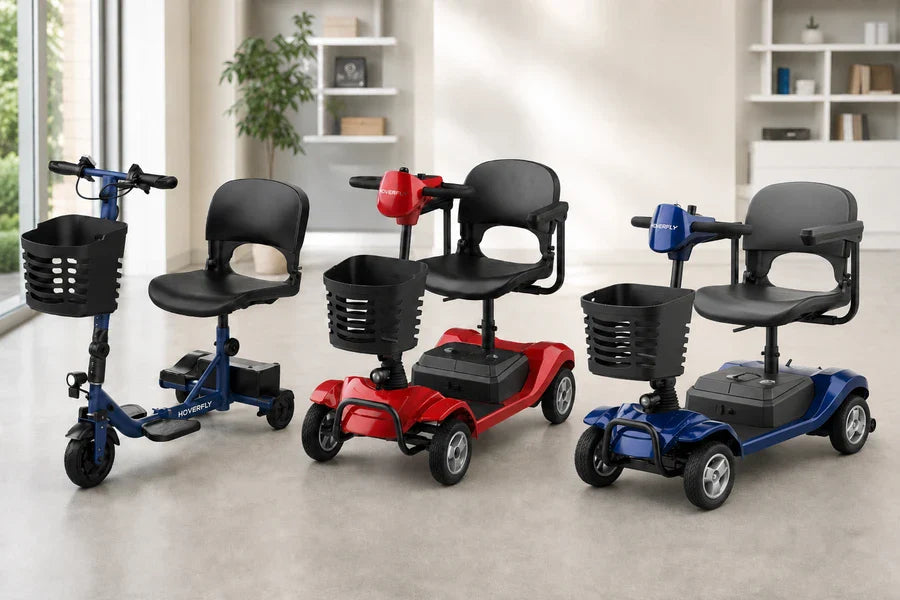
Based on our daily-use testing in tight indoor spaces and on smooth paved paths, we focus on how a scooter turns, stops, folds, and feels during normal riding. The Hoverfly T3 3-wheel mobility scooter is designed for the things riders care about most in daily use. It turns smoothly in tighter spaces, and the electronic brake helps the scooter stop when you release the throttle, so riders can feel more in control during daily use. The foldable frame also makes it easier to store or transport. Its rear anti-tip wheels add extra support while riding, and the 220 lbs weight capacity gives riders more room for comfort, groceries, or other small daily items.
For riders who want a scooter that feels manageable without being bulky, the T3 is an easy model to recommend. Its up to 13-mile range and comfortable 3.75 mph top speed make it well suited for everyday indoor use and smooth outdoor paths. For more buying guidance, you can also read this guide to lightweight foldable mobility scooters.
First-Ride Practice Tips for a 3-Wheel Mobility Scooter
Before taking a 3-wheel mobility scooter on a normal route, practice in a quiet, smooth area such as a hallway, garage, driveway, or empty path. Set the speed dial to the lowest level first.
Practice the basics: moving forward, stopping, reversing, and making wide turns. Then try common daily situations, such as turning through a doorway, lining up with a curb ramp, and stopping before reaching for an item.
Keep the first few rides short and familiar. A simple route, like the front door to the car or the sidewalk to the mailbox, helps the rider build confidence before moving into busier spaces.
FAQs
How do I know if a 3-wheel mobility scooter will fit in my home?
Measure your tightest doorway, hallway, and turning area first. A 3-wheel scooter is usually easier to turn in compact spaces, but you still need to compare its width and turning radius with your home layout.
Should I charge my mobility scooter after every ride?
Yes, if you used it for more than a short trip. Regular charging helps keep the battery ready, but you should still follow the owner’s manual and use the charger supplied or recommended by the manufacturer.
How often should I check or service a 3-wheel mobility scooter?
Do a quick check before each ride and schedule deeper maintenance every few months. Tires, brakes, battery connections, and loose parts are the main areas to watch. For a simple routine, see this mobility scooter maintenance guide.
Can a 3-wheel mobility scooter fit in a car trunk?
Some foldable models can, but it depends on the scooter size and your vehicle. Check the folded dimensions, total weight, and whether the scooter can be lifted safely before assuming it will fit.
Why does my mobility scooter slow down on small hills?
Hills require more power. A lower battery level, rider weight, cargo, tire condition, and surface type can all reduce speed. If the scooter slows suddenly or feels weak on normal routes, stop using it and check the battery and brakes.
Conclusion
Safe 3-wheel mobility scooter riding starts with the right habits: check the scooter before each ride, slow down before turns, keep cargo balanced, and stay on smooth, suitable surfaces. With proper use and regular maintenance, a 3-wheel scooter can be a practical, comfortable, and confidence-building choice for everyday mobility.



Leave a comment
All comments are moderated before being published.
This site is protected by hCaptcha and the hCaptcha Privacy Policy and Terms of Service apply.