
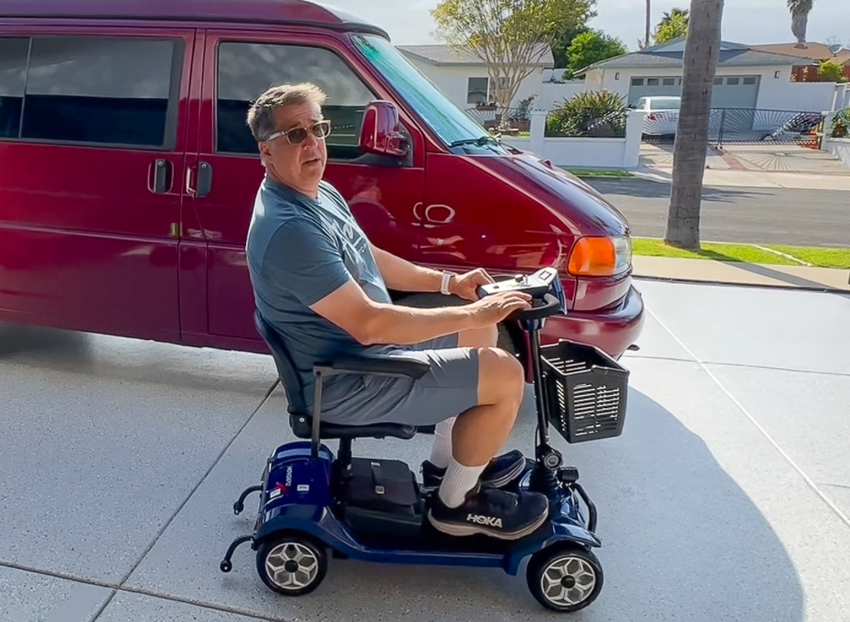
The weight limit on a mobility scooter affects how safe it feels, how far it travels, and how long the motor and battery last.
If you choose the wrong limit, your scooter may wobble, lose range fast, or wear out early.
In this guide, we explain what the weight limit really means, why it matters, and how to choose the right capacity for your daily use—whether you're riding indoors, outdoors, or on mixed terrain.
What Is a Mobility Scooter Weight Limit?
A mobility scooter’s weight limit is the maximum weight the scooter can safely support, including your body weight and anything you carry.
This includes daily items like your bag, groceries, jacket, or medical supplies.
Manufacturers set this limit to protect the scooter’s core components—its motor, battery, frame, and wheels.
When you stay within the recommended range, the scooter stays stable, turns smoothly, and delivers a consistent battery range.
Simple example:
If a scooter is rated for 300 lbs, it means the combined weight of you + your belongings should stay below that number for the scooter to perform as designed.
Why the Weight Limit Matters More Than You Think

Staying within the weight limit keeps your scooter safe, stable, and efficient every day. Exceeding it affects almost every part of the ride:
Safety & Stability Improve
A scooter that carries too much weight may wobble during turns, tilt on ramps, or feel “soft” when you shift your body. When the load is within limits, the frame stays balanced and predictable—especially indoors or in crowded spaces.
Battery Range Drops Significantly When Overloaded
Extra weight forces the scooter to draw more power. Riders often notice:
-
Faster battery drain
-
Shorter riding distance
-
Slower speed on outdoor paths
A real example: A 300-lb-rated scooter may lose 20–30% range if carrying 20–30 lbs over the limit.
Motor Strain Increases and Reduces Lifespan
Overloading forces the motor to push harder, especially during acceleration or hill climbing. This leads to:
-
Motor overheating
-
Buzzing or strain noises
- Reduced long-term performance
Warranty Protection Stays Safe
Most brands clearly state that misuse—including exceeding weight capacity—voids warranty claims. Staying within limits protects both your scooter and your coverage.
Types of Mobility Scooters by Weight Limit
One selects the scooter depending on his or her daily routine, terrain, and comfort requirements. The weight limit of each type is different. The popular types of lightweight mobility scooters and their approximate limits are listed below.
Lightweight 3-Wheel Mobility Scooters (250–330 lbs capacity)

These scooters turn easily in tight spaces and are ideal for indoor use, short errands, and shopping aisles. Their lighter frames make steering feel natural, but they’re less stable on rough outdoor terrain.
4-Wheel Mobility Scooters (300–330 lbs capacity)

When you need to be out and about, you rely on 4-wheel scooters. This kind is more balanced due to the four wheels and broad base. Majority of the models are able to accommodate 300-350 lbs, making them more stable on off-road rides.
This scooter is selected when you need to have the best balance, good support, and consistent outdoor performance.
Compact Folding Mobility Scooters(330 lbs capacity)

You select folding scooters when you are seeking portability. These designs assist you in bringing the scooter in your car, or carry it when it is packed or even storing it in small areas.
The majority of folding scooters have a capacity of 250-275 lbs which can be used in light traveling and commuting.
It is the model you select when you desire versatility in transport, quicker folding, and reduced length of the commute each day.
How to Choose the Right Mobility Scooter Weight Limit for Your Needs
Choose a mobility scooter weight limit by adding your body weight, the items you carry each day, and the conditions you ride in.
A good rule is to leave a 10–15% buffer so the scooter performs comfortably instead of working at its limit.
Add Your Weight + Your Daily Accessories
Your “riding weight” includes your:
-
Bag or purse
-
Groceries
-
Jacket or medical supplies
-
Personal items (phone, water bottle, etc.)
Example:
If you weigh 230 lbs and usually carry 15–20 lbs, choose a scooter rated for 260–280 lbs minimum.
Consider Your Riding Environment
Indoor riding needs less capacity. Outdoor terrain needs more support because the scooter uses extra power to handle:
- Grass
- Slopes
- Ramps
- Rough pavement
If you ride outdoors daily, consider a 4-wheel scooter with a 300–350 lb limit for stronger stability.
Think Ahead About Future Needs
Most riders add more items over time—shopping, heavier coats, oxygen tanks, or medical bags. Choosing a slightly higher capacity now prevents you from outgrowing your scooter later.
Match Weight Limit to Ride Duration
Short 10–15-minute trips work fine with lighter models.
Longer daily commutes require a scooter with a higher weight limit so the battery and motor don’t degrade early.
Signs Your Scooter Is Overloaded
A scooter shows clear warning signs when it’s carrying more weight than it was designed for. Here are the symptoms most riders notice:
1. Battery Drains Faster Than Usual
If your scooter normally lasts the entire afternoon but now needs charging halfway through, an extra load is forcing the battery to work harder.
2. Slow or Delayed Acceleration
Overload causes the scooter to hesitate before moving or lose power when climbing small slopes.
3. Motor Noise or Excess Heat
A strained motor may:
-
Buzz
-
Whine
-
Feel hot near the base
This is a major overload red flag.
4. Shorter Range Even After Full Charge
If your fully charged scooter suddenly travels fewer miles than before, it’s working above capacity.
5. Wobbling or Shaking While Riding
Too much weight shifts the balance of the frame, especially during turns or uneven flooring.
Tip:
If your scooter suddenly shows two or more of these signs, check whether you’re exceeding the recommended weight limit.
Benefits of Staying Within the Mobility Scooter Weight Limit
Riding within the weight limit keeps your scooter performing like new for years. Here’s what you gain:
1. Longer Scooter Lifespan
Your motor, battery, and frame handle less stress, which can extend overall lifespan by months or even years, depending on daily use.
2. Smoother, More Comfortable Rides
The scooter turns more predictably, handles bumps better, and feels balanced even in tight indoor spaces.
3. Better Battery Efficiency
You get more distance per charge because the motor isn’t being forced to work at maximum output.
4. Lower Repair and Maintenance Costs
Fewer overheated motors, fewer broken frames, fewer warranty issues—meaning fewer unexpected bills.
5. Stronger Everyday Safety
A properly loaded scooter reduces wobbling, tipping risk, and sudden power loss.

Tips to Improve Scooter Performance Safely
You can keep your mobility scooter running smoothly by building a few simple habits into your daily or weekly routine.
These small steps protect your motor, battery, wheels, and frame—especially if you ride often.
1. Keep Your Tires Properly Inflated
Low tire pressure forces the motor to work harder and reduces battery range. Check your tires once a week, especially if you ride outdoors.
2. Charge the Battery Fully
Partial charging shortens long-term battery health. A full charge helps the scooter maintain maximum range and reduces strain during acceleration.
3. Clean the Wheels and Undercarriage
Dust, hair, and debris around the wheels or axle can slow the scooter down. A quick wipe every few days keeps the ride smooth.
4. Avoid Carrying Heavy or Unnecessary Items
Extra weight reduces your range and increases motor strain. Remove items you don’t need, especially during long trips.
5. Sit Properly and Keep Your Weight Centered
A centered posture keeps the scooter balanced and prevents unnecessary wobbling during turns or ramps.
Tip: If your scooter suddenly feels slower or less stable, check your tire pressure and clean your wheels first—these two quick fixes solve many everyday performance issues.
Conclusion
Choosing the right mobility scooter weight limit makes your daily rides safer, smoother, and more efficient. When you match your scooter’s capacity to your real weight and the items you carry, you protect your motor, battery, and frame—and enjoy better performance every day.
At Hoverfly, we are developing mobility scooters that are stable, comfortable and long lasting. Our mission is to provide you with reliable scooters that can help in making your commute convenient and secure. Find out more about our Hoverfly mobility scooters and select the best one this time around to fit your lifestyle and comfort.
FAQs
1. What is the average weight limit for most mobility scooters?
Most standard mobility scooters support 250–350 lbs, depending on whether they are lightweight, folding, 3-wheel, or 4-wheel models.
Heavy-duty scooters can support up to 500 lbs, but these are larger and designed mainly for outdoor use.
2. Does weight affect how far a scooter can travel?
Yes. Heavier loads reduce battery range and shorten travel distance.
3. Is it possible to ride on the same scooter by two people?
No. A scooter can only assist one rider.
4. Supports increased weight on battery size?
No. The capacity is determined by the frame and the motor.
5. Are there any foldable mobility scooters with a 500-lb weight capacity?
Foldable mobility scooters rarely support 500 lbs, because ultra-high weight capacity requires a reinforced frame and larger motor—features that typically make the scooter too heavy to fold.



Leave a comment
All comments are moderated before being published.
This site is protected by hCaptcha and the hCaptcha Privacy Policy and Terms of Service apply.