
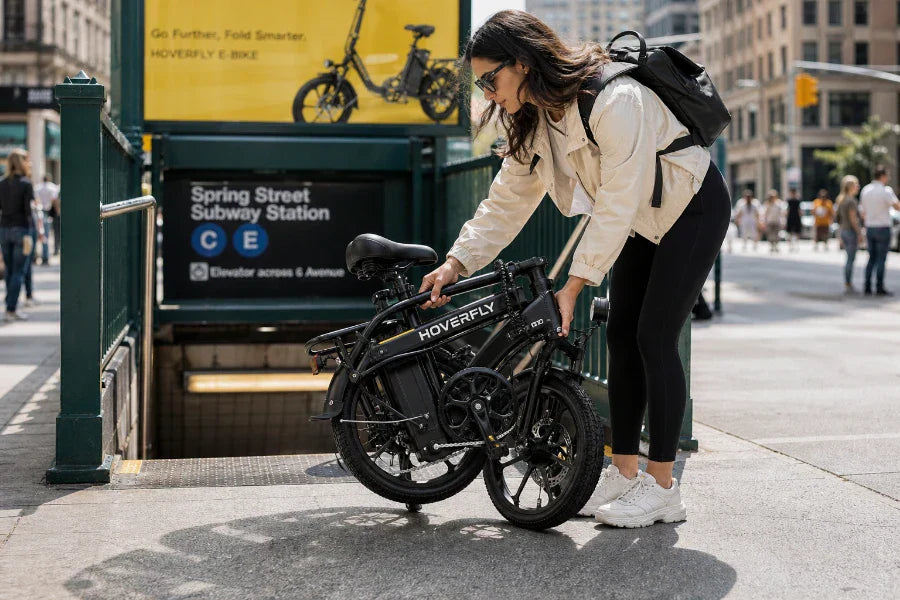
Folding electric bikes make daily commuting easier by improving convenience, portability, and efficiency. They help solve last-mile travel, reduce storage space needs, lower theft risk by allowing indoor parking, and provide flexible access to public transport for smoother multi-modal trips.
Why Folding Electric Bikes Work Well for Commuters
Folding electric bikes are ideal for commuting because their compact design makes daily travel simpler and more practical. You can quickly collapse the bike to carry it onto buses, trains, or subways, store it under a desk at work, or keep it inside a small apartment. This saves space, avoids parking hassles, and reduces theft risk because you do not have to leave the bike outside.
Which Commuter Type Benefits Most?
| Commuter type | Main problem | What to check before buying |
|---|---|---|
| Train commuter | Last-mile distance | Folded size and train policy |
| Subway commuter | Crowded peak hours | Weight, stairs, and agency rules |
| Park-and-ride commuter | Station parking | Trunk fit and route safety |
| Apartment commuter | No storage | Folded footprint and charging safety |
| Office commuter | Theft risk | Desk storage and workplace charging policy |
How Folding E-Bikes Make Multi-Modal Commutes Easier
In real life, commuting rarely relies on just one mode of transportation. You might drive to a transit station, take the train downtown, then walk fifteen minutes to the office. Or you might catch a bus to a hub, transfer, and finish the trip on foot. Every transition between modes creates inconvenience, and inconvenience is what makes a commute exhausting. With a folding e-bike, much of that extra effort disappears. The bike folds into something you can carry like luggage, then unfolds back into a vehicle whenever you need it, making every transition smoother and more convenient.
Train Plus Bike
If you live three miles from a commuter rail station and work one mile from your destination station, a folding e-bike can remove two slow walking segments from your day. Instead of walking, waiting for rideshare, or relying on station parking, you can ride to the station, fold the bike, carry it onto the train, and unfold it for the final mile. Before relying on this setup, check your rail operator's folded-bike policy, especially for peak-hour trains.
Park and Ride
If you drive to a transit hub from the suburbs, the parking lot may already be full by 7:30 a.m. A commuter folder lets you park farther from the station, where spaces are still available, and ride the rest of the way to the platform in minutes. Your car stays in a cheaper lot, and you avoid the hassle of a waitlist.
Subway and Bus
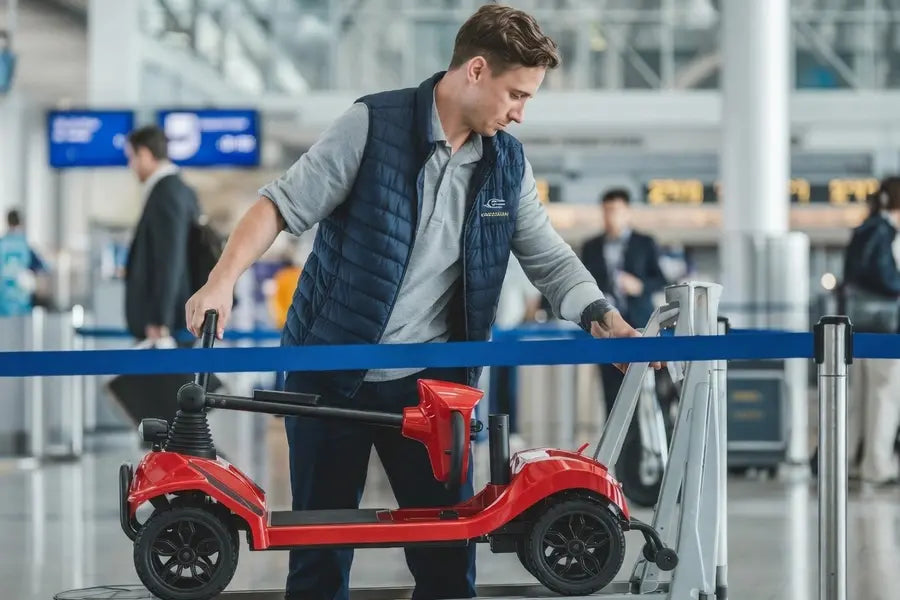
Transit policies often treat folded bikes more flexibly than full-size bikes. The MTA bike guide says folding bikes can go almost anywhere when folded, while CTA Bike & Ride says folded scooters and bikes, including e-bikes, are always allowed on the L and buses. Other agencies have their own policies, so check your local rules before you build a routine around a specific train, bus, or rush-hour route.
Ferry and Rideshare
If your commute includes the Staten Island Ferry, Seattle cross-sound ferries, or a Bay Area ferry route, folded bikes are easier to move through turnstiles and crowded decks. And when something goes wrong, such as heavy rain, a mechanical issue, or a delayed transfer, you can fold the bike into a rideshare trunk and reroute more easily than you could with a full-size commuter bike.

Storage Benefits at Home and at Work
The hinge is not just about the journey. It is about what happens when you arrive. Commuters lose more time and peace of mind to end-of-ride logistics than to the ride itself. Where do you park? Is it safe? Can you charge? Is there a waitlist for the office bike room? A folder makes most of these questions easier to answer.
At the office end, a folded bike fits under a standard desk, behind a filing cabinet, or in the corner of a small meeting room. For example, a compact model such as the Hoverfly H3 lists folded dimensions of 20.1 x 27.1 x 31.5 inches, which is close to the footprint of a large rolling suitcase. Compare this measurement with your desk, closet, car trunk, or train storage space before buying. You skip the building's bike-parking permit, the waitlist, and the elevator trip to a basement bike cage. You may also be able to charge the battery at your desk during the workday, depending on your workplace policy.
At the home end, it is the same situation. A folded bike can live in an entry closet, a coat-rack nook, or under a bed. It does not block hallways or take over the floor, which makes it less likely to become a daily frustration at home. Step-through frames like the Nephele folding e-bike unfold and fold fast enough that your morning routine can stay simple when the bus is coming.

How Folding E-Bikes Help Reduce Theft Risk
The most frustrating part for many commuters is arriving at work and finding no secure place to leave the bike. Folding bikes help solve this problem by making indoor storage much easier. Urban bike theft is a real risk in dense commuter cities such as New York, Chicago, San Francisco, Boston, and Philadelphia. Even a good U-lock is a delay tactic, not a guarantee. The most reliable way to reduce theft risk is simple: avoid leaving the bike outside for long periods.
A folding bike can come inside with you on many daily stops, including trains, offices, and coffee shops that allow compact carry-in items. A commuter who rides a folder for a year saves not just on theft exposure, but also on the constant low-grade anxiety of wondering whether the bike is still there.
The Real Cost Savings for Commuters
Running a car for a short urban commute is more expensive than most drivers expect. AAA's 2025 Your Driving Costs fact sheet puts average ownership and operating costs at about 66 cents per mile for 20,000 miles per year and 77 cents per mile for 15,000 miles per year. A ten-mile round-trip commute can therefore cost roughly $6.60 to $7.70 a day before tolls and downtown parking. A folding e-bike costs very little to charge, needs no paid parking, and can reduce short car trips that add wear, maintenance, and stress.
5 Major Costs a Folding Bike Can Save Commuters in the First Year
- Gas: charging a 36V or 48V e-bike battery usually costs far less than a tank of fuel.
- Parking: no downtown parking, no transit-hub parking, and no office bike-room fee.
- Transit fares: a folding bike can replace shorter transit legs when the weather and route cooperate.
- Rideshare bailouts: the ride you used to book after missing a transfer can become a short trip you control.
- Car wear: every short trip you remove can delay the next brake job, oil change, or tire replacement.
Depending on parking, rideshare, and transit costs, some commuters can recover a significant portion of the purchase price within the first year.
What Makes a Folding E-Bike Genuinely Commute-Ready
Not every folder is built for daily commuting. The best folding electric bike for commuters is not defined by color or logo. It is defined by the specs that decide whether the bike survives year one of daily use. A real commuter folder needs fast fold-and-unfold, a removable battery you can take to your desk, integrated lights for low-light riding, disc brakes for wet-weather stopping, and electrical-system safety certification such as UL 2849 e-bike certification.
To gain a deeper understanding of commuter e-bike requirements, our analysis of commuter e-bike requirements walks through the numbers that matter, including range, torque, braking, and frame load.

Trade-Offs to Consider
A good folder is not perfect for every commute. Smaller wheels pick up more road buzz over potholes, which matters if your route is heavily patched asphalt. Many folders weigh 45 to 55 pounds, which is carryable for short distances and fine in an elevator, but real work up a five-flight walk-up. Range often sits in the 25-to-40-mile window, so if your round-trip commute is longer than 20 miles and you cannot charge at the office, you may feel the battery limit by the afternoon.
A folding frame, even a well-engineered one, can also feel slightly less rigid at speed than a welded triangle. None of these are automatic dealbreakers for commuters who genuinely need portability. These trade-offs are manageable when storage, transit access, and theft prevention matter most, but they deserve attention if comfort, speed, or ride feel is your top priority.
FAQs
Are folding electric bikes worth it for daily commuting?
They are often worth it for city commuters who combine biking with transit or do not have secure outdoor bike storage. Bikes for urban commuting solve last-mile travel, parking, and theft risk by letting you carry the bike indoors and combine it with other transport modes.
How long does the average commute take on a folding e-bike compared to transit alone?
For many urban commuters, adding a folding e-bike to a transit trip can cut door-to-door time because it reduces the walk-to-station and walk-to-office legs. The exact savings depend on station distance, traffic lights, elevation, and local transit frequency.
Can I really carry a folded e-bike onto a train or bus at rush hour?
Often, yes, but the rule depends on the transit agency. Many agencies treat a fully folded bike more like carry-on luggage than a full-size bicycle, while full-size bikes may be restricted at peak hours. Always check your local transit agency before commuting.
What is the best folding e-bike range for commuting?
Most commuters should look for 25 to 45 miles per charge. A useful rule is daily round-trip distance plus a 20 to 30 percent buffer for real-world conditions like hills, cold weather, cargo, stops, and traffic.
Can folding e-bikes replace a car commute?
Yes, for many urban commuters under 10 to 15 miles each way, especially when the commute combines biking with transit. Cars may still be needed for long distances, heavy cargo, poor infrastructure routes, or severe weather.
Do I need a license, registration, or insurance for commuting on one?
In many U.S. states, Class 1 and Class 2 e-bikes are treated similarly to regular bicycles, but e-bike laws vary by state and city. Check your state or local rules, and use resources such as PeopleForBikes' state-by-state e-bike law guide before your first commute.
What is the single most important spec for a commuter buying a folder?
Electrical-system safety certification is one of the most important specs, especially for a bike that may be charged indoors at home or work. Look for clear certification claims for the full e-bike system, not vague language that only mentions a single component.
Conclusion
For the right commuter, a folding electric bike can be more than a convenience. It can reduce last-mile delays, make storage easier, lower theft exposure, and make everyday routes more predictable. Fold it, carry it onto transit, charge it safely where allowed, and ride it home. For many commuters, that routine makes the trip simpler from the first mile to the last.



Leave a comment
All comments are moderated before being published.
This site is protected by hCaptcha and the hCaptcha Privacy Policy and Terms of Service apply.