
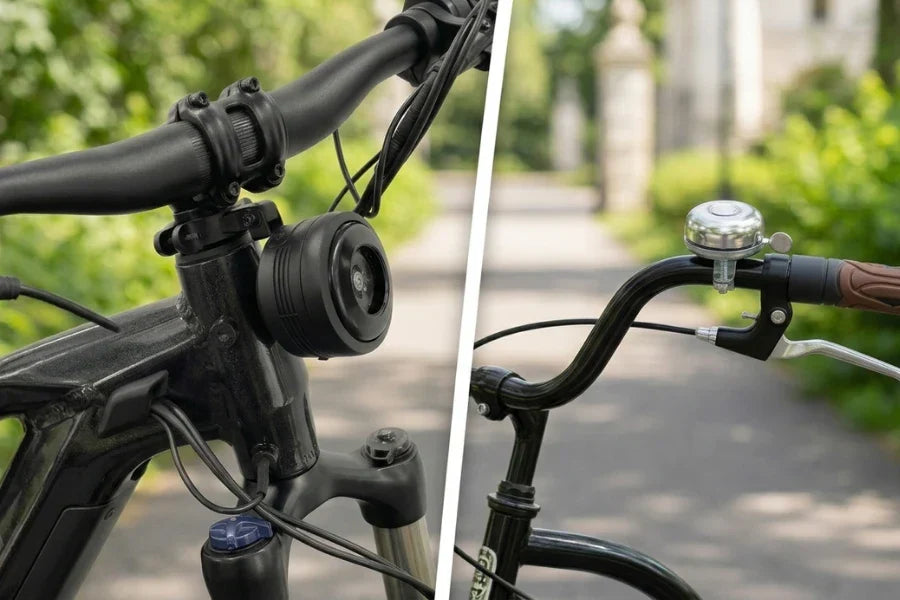
A bike bell or electric horn is a crucial component that can prevent accidents and protect everyone on the road. Traditional bells work beautifully for close-range alerts on quiet trails, while you need the piercing volume of an electric horn to be heard when you're navigating city traffic alongside cars. This guide breaks down exactly when to use each device, compares their effectiveness across real riding scenarios, and helps you choose the right setup for safer rides.
Understanding Bike Bells

Bike bells are typically used in shared paths, parks, or residential areas, where short-range, polite alerts help signal your presence to nearby pedestrians.
Traditional bells have these key characteristics:
- Sound level: Traditional bike bells produce 75-85 decibels, comparable to a telephone ring or alarm clock. This volume carries well for 15-30 feet in quiet environments but gets drowned out by car engines and urban noise.
- Tone quality: The high-pitched "ding-ding" sound is universally recognized as a bicycle signal. Unlike horn blasts, bells don't startle pedestrians or trigger aggressive reactions from other road users.
- Legal compliance: Many cities and countries legally require bicycles to have a working bell. In the UK, for example, bikes sold must include a bell (though riders aren't required to use them). Some US states and Canadian provinces mandate audible warning devices.
- Installation simplicity: Most bells mount to handlebars in seconds with a simple clamp or adhesive, require no batteries, and work reliably in all weather conditions.
When bells fall short: The 75-85 dB range isn't loud enough to penetrate car windows, compete with traffic noise (typically 70-85 dB), or alert distracted pedestrians wearing earbuds. If you regularly ride in heavy traffic or commute during rush hour, a bell alone won't provide adequate safety margins.
Understanding Electric Bike Horns

Electric bike horns deliver 100-140 decibels—loud enough to be heard by drivers in cars, making them essential for high-traffic urban commuting.
Key factors that make horns effective in traffic:
- Volume range: Entry-level electric horns start at 100 dB (equivalent to a chainsaw), while premium models like the Hornit dB140 reach 140 dB (comparable to a jet engine at takeoff). At 110+ dB, your horn can penetrate car windows and alert drivers checking blind spots.
- Sound types: Electric horns come in two varieties—electronic models that produce single-tone beeps or car-like honks, and compressed air horns that deliver deeper, more attention-grabbing blasts. Multi-tone options let you adjust volume based on the situation.
- Power requirements: Most rechargeable electric horns run on USB charging (lasting 2-4 weeks per charge), while compressed air models need manual pumping to refill. Battery-powered units are more convenient for daily commuters.
- Emergency effectiveness: In dangerous situations—like a car drifting into the bike lane or a door opening suddenly—a 120+ dB horn gives you a fighting chance to be noticed before impact. Studies from the Royal Society for the Prevention of Accidents (ROSPA) show that 57% of car-bicycle collisions occur because drivers "failed to look properly."
The trade-off: High-decibel horns can startle pedestrians, children, and animals on shared paths. Using a 140 dB horn on a quiet trail is like bringing a megaphone to a library—it's overkill and potentially rude. You also need to check local noise ordinances, as some jurisdictions restrict devices above certain decibel levels.
Bell vs Horn: Which Should You Choose?
Choose based on where you ride most: bells for paths and low-traffic areas, horns for urban streets and heavy traffic, or both if you encounter mixed conditions.
Here's a practical comparison to guide your decision:
| Bike Bell | Electric Horn | |
|---|---|---|
| Sound Level | 75-85 dB | 100-140 dB |
| Best Use Case | Shared paths, parks, residential streets | Heavy traffic, urban commuting, emergency alerts |
| Effective Range | 15-30 feet in quiet areas | 50-100+ feet, penetrates car windows |
| Politeness Factor | High—non-threatening tone | Low at high volumes—can startle |
| Power Source | None (mechanical) | USB rechargeable or compressed air |
| Legal Status | Required in many regions | Generally legal but check local noise limits |
| Price Range | $8-35 | $15-60 |
| Ideal Rider | Recreational cyclists, trail riders, neighborhood commuters | Urban commuters, high-speed e-bike riders, traffic-heavy routes |
Note: These are general guidelines based on typical riding conditions. Your personal choice may vary depending on factors like local traffic density or weather conditions (wind and rain affect sound travel), time of day you ride, and your comfort level with different warning methods.
Scenario-Based Recommendations
For city commuters who ride bike lanes alongside cars: A loud horn (110-130 dB) should be your primary warning device. Pair it with a bell for the occasional shared path or pedestrian crossing. The horn ensures drivers hear you when it matters most—merging, turning, or lane changes.
For trail and park riders who mostly encounter pedestrians and slower cyclists: A quality bell is sufficient and more courteous. A 140 dB horn on a nature trail will earn you dirty looks and isn't necessary when everyone around you is moving at walking speed.
For mixed-environment riders who commute through both traffic and bike paths: Install both devices. Use the bell as your default for polite alerts and save the horn for genuine traffic hazards. This dual setup costs $25-70 total and gives you the right tool for every situation.
Loudness Guidelines for Safe and Courteous Riding
Understanding decibel levels helps you choose appropriately:
- 70 dB (alarm clock): Minimum for alerting nearby pedestrians
- 90 dB (lawnmower): Effective in moderately noisy environments
- 110 dB (chainsaw): Audible to drivers in cars at close range
- 120 dB (rock concert): Penetrates most traffic noise
- 140 dB (jet engine): Maximum available, borders on painful—use wisely
Volume control matters: Some premium horns offer dual-tone settings (quiet mode for paths, loud mode for traffic). This flexibility prevents you from blasting pedestrians while maintaining safety in dangerous situations.
Legal and Etiquette Considerations
Regional regulations vary widely: In most US states, bicycles must have "an audible signal device" but specific decibel limits aren't defined. The UK requires bells on new bikes but doesn't mandate horn restrictions. Canada, Australia, and EU countries generally allow both bells and horns but may restrict sustained noise above 120 dB in residential zones.
Check your local laws before purchasing a 140 dB horn—while rarely enforced, noise ordinances could theoretically apply to excessively loud bicycle horns.
Using your warning device politely:
- Ring or honk early and once—multiple blasts feel aggressive
- On shared paths, slow down before alerting pedestrians from behind
- Combine warnings with verbal cues ("On your left!") when possible
- Reserve maximum volume for genuine emergencies, not impatience
Why E-Bike Riders Benefit from Quality Warning Devices
E-bikes' higher speeds (20-28 mph) create shorter reaction times for everyone on the road, making effective warning systems more critical than ever.
A 2023 study in the Journal of Transport & Health found that e-bike riders are 2.4 times more likely to experience close calls with vehicles compared to traditional cyclists, primarily due to speed differentials that drivers don't anticipate. When cars expect bicycles to travel 12 mph but you're moving at 24 mph, the gap between "I see them" and "they're right there" collapses dangerously fast.
This is where proper audible warnings become essential safety equipment—not optional accessories. Consider the real-world experience of riders who've made the switch to e-bikes with integrated safety features.

Many modern e-bikes now come with pre-installed bells specifically positioned for easy thumb access while riding.
⭐⭐⭐⭐⭐ | Verified Rider Feedback from Hoverfly
Abby3360 highlights how bundled safety accessories improve her daily rides: "Powerful, smooth, and great for all terrains! Additional attachments, like the bell, LED lamp, and rearview mirrors, make evening riding safer and more pleasurable."
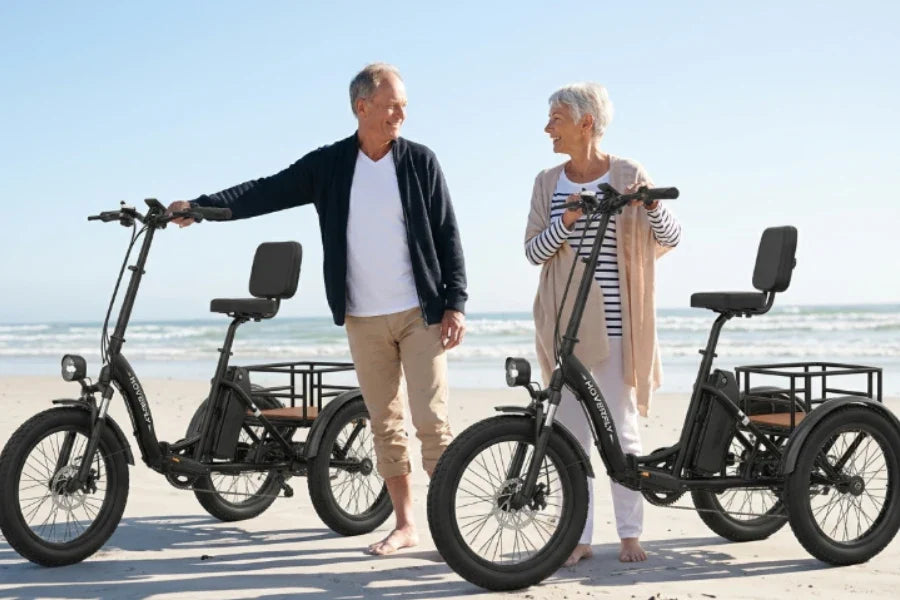
For riders who prefer a more relaxed pace on wider and stable platforms, bells remain the ideal choice since these bikes typically operate in lower-speed environments like neighborhoods and park paths where courtesy matters more than volume.
The key principle: Match your warning device to your e-bike's typical speed and environment. The faster you ride and the more car traffic you encounter, the more you need horn volume to bridge the safety gap.
Final Thoughts: Choosing Your E-Bike Warning Setup
The best warning device is the one that matches your daily riding reality, not an idealized version of cycling.
If you commute through downtown traffic five days a week, a bell alone leaves you vulnerable. If you cruise suburban bike paths on weekends, a 140 dB horn is overkill and antisocial. Be honest about where you actually ride, not where you wish you rode.
Here's the practical hierarchy:
- Start with what's legally required in your area (usually a bell)
- Add a horn if you regularly ride in traffic where cars are the primary hazard
- Install both if your commute mixes environments—it costs less than $50 total and eliminates the "wrong tool for the situation" problem
Remember that warning devices only work if you use them proactively. Ring your bell 20 feet before reaching pedestrians, not 5 feet. Sound your horn before the car starts merging, not after. The goal isn't to startle people into awareness—it's to communicate your presence early enough for everyone to react safely.
Your e-bike's speed makes you less predictable to other road users. A quality warning system is one of the simplest, most affordable ways to close that gap and ride more confidently.
FAQs
How loud should a bike horn be to be heard in traffic?
At minimum, 110 dB to penetrate car windows and compete with traffic noise (70-85 dB). For busy urban commuting, 120-130 dB provides a safety margin. Anything above 140 dB is excessive and potentially harmful to nearby pedestrians.
Are bike bells or horns more polite on shared trails?
Bells are significantly more polite. Their gentle "ding-ding" is recognized as a courteous bicycle signal, while horn blasts startle pedestrians, children, and dogs. Reserve horns for traffic; use bells on shared paths.
Is it legal to use a loud horn on a bicycle?
In most regions, yes, as long as you're not violating noise ordinances (usually 120+ dB sustained in residential areas). The US, UK, Canada, and EU generally allow bicycle horns without specific decibel limits, but check your local regulations.
Why don't people with earbuds hear my bike bell?
Modern earbuds and headphones create 15-25 dB of noise isolation. A 75-85 dB bell may not cut through music or podcasts. In these situations, slow down and pass with extra space rather than relying solely on audible warnings.
Can I use both a bell and horn on my e-bike?
Absolutely—this is the ideal setup for riders who encounter both shared paths and traffic. Mount the bell on your left handlebar for easy thumb access and the horn on the right, or choose a combination unit that integrates both into one device.




Leave a comment
All comments are moderated before being published.
This site is protected by hCaptcha and the hCaptcha Privacy Policy and Terms of Service apply.